



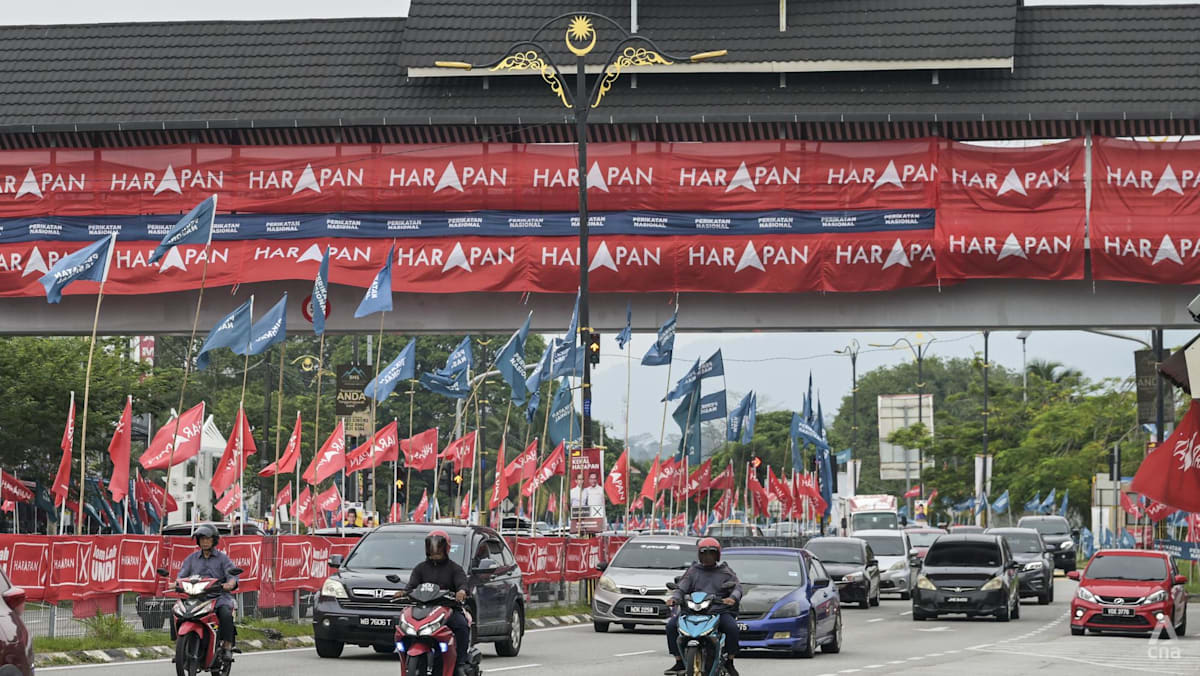
With PN’s cooperation with BN expected to consolidate the Malay vote, Adib said the election would provide a test of whether the pact could become a viable model in other parts of Malaysia.
“How the Malays vote in Negeri Sembilan will determine if the alliance should be replicated elsewhere,” he told CNA.
Socio-political analyst Awang Azman Awang Pawi of Universiti Malaya said that although the prevailing view is that BN-PN alliance has the advantage, Anwar’s PH still has a “genuine, though slim chance” of pulling off an upset.
He pointed to PH’s solid support base in urban and mixed constituencies as well as multi-cornered contests resulting from Bersatu’s participation that could split the Malay vote that might otherwise consolidate behind the BN-PN alliance.
“The biggest question is whether UMNO’s traditional supporters are truly willing to vote for PN candidates, and whether PN supporters are equally prepared to transfer their votes to BN,” he told CNA.
“Vote transfers agreed upon at the leadership level do not necessarily translate fully at the ballot box.”
Echoing Adib, Awang said a PH victory would provide Anwar with “much-needed political breathing space” following PH’s heavy defeat in Johor, while also countering the narrative that support for the federal government has declined.
“(A PH win) would demonstrate that Johor’s ‘blue wave’ cannot be automatically replicated across the country, as Negeri Sembilan has a different demographic composition and political culture,” he said.
Blue is BN’s official colour and is used in its logo and prior to the Johor polls, its leaders have said that a victory there would serve as a catalyst for a wider “blue wave” comeback, strengthening its position as a key political force.
Read the full article here


