



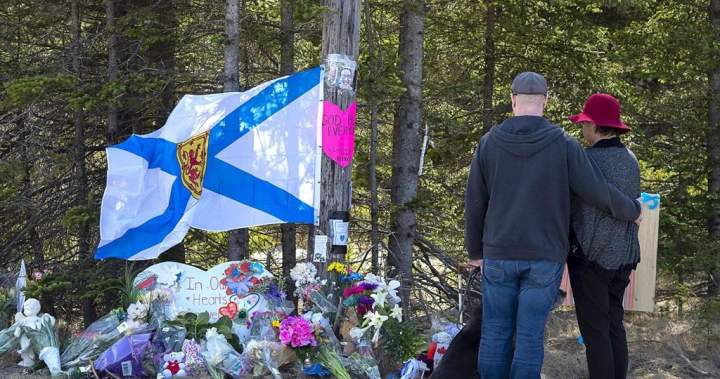
The final progress monitoring report on the implementation of recommendations from the inquiry into the 2020 Nova Scotia mass shooting included gender-based and intimate partner violence for the first time.
The chair of the independent committee, Myra Freeman, said Monday that the province is in better shape than in 2020, but some say more needs to be done to address the culture of violence.
“Whether people like it or not, we have to note that the findings found that this all sparked off because of an incident of intimate partner violence, which was a massive red flag,” said Liz Leclair, an advocate who speaks out against gender-based violence.
“It rarely gets mentioned.”
The April 2020 attacks began in Portapique, N.S., when the shooter, Gabriel Wortman, assaulted his partner, Lisa Banfield.
In total, 22 people were killed during a 13-hour rampage that included multiple shootings and fires. Wortman was ultimately shot and killed by RCMP.
The final report released Monday highlights that of the 130 recommendations released in 2023, 40 still require “significant work.”


Get breaking National news
Get breaking Canada news delivered to your inbox as it happens so you won’t miss a trending story.
Freeman noted that gender-based violence was one of those areas.
“We know that change takes time and government cannot address gender-based violence, intimate partner … violence by themselves,” she said.
Freeman added that the epidemic requires large-scale societal change, however, Leclair says she doesn’t see enough being done.
“The patterns I continue to see coming out of the premier’s office and the cabinet and caucus of the government do not in any way, shape or form indicate to me that they take this as seriously as they should,” said Leclair.
Kristina Fifield, a trauma therapist who sat on the most recent monitoring committee, agrees that not much has changed since 2020.
“Survivors are continuing to experience harm and system-induced trauma and systemic injustices and being failed or not believed when they’re trying to get support or when they’re seeking justice,” she said.
Premier Tim Houston issued a statement Monday, asserting the province’s commitment.
“We must break down barriers and improve safety and resilience in our communities,” he wrote in part.
“We must continue to work together to realize the significant and systemic change that is required to address complex and interconnected issues facing our society.”
But Leclair says in order to see significant change, front-line organizations need sustainable core funding.
“I think stabilized core funding would allow a lot of these organizations to work on really significant systems-level change pieces and do the advocacy work they need instead of having to constantly be writing grants or chasing down more funding,” she said.
Read the full article here


