Google’s Pixel Drop update for June 2026 is packed with new features. It brings AirDrop support to older, budget Pixel phones. Magic Cue, which surfaces information about what’s on the screen, expands to more chat apps. And perhaps most importantly, Android 17 finally has a stable build, with no major bugs or quirks so far.
I installed it on my Pixel 10 Pro this morning and I didn’t expect a feature called Bubbles to become my favorite so quickly. It’s the multitasking upgrade I didn’t know I needed.
At a time when Google seems totally focused on Gemini Intelligence, it’s refreshing to see Android 17 arrive with so many quality features and additions. (Last year’s Android 16 launched with a number of bugs that frustrated Android phone owners.)
The app Bubbles feature, true to its name, allows you to create a pop-up bubble for any app, so you can run it as an overlay on your home screen. But what’s the use and fun in doing that when you can simply run an app in full-screen mode? Let me tell you.
Bubbles is the multitasking boost Android needed
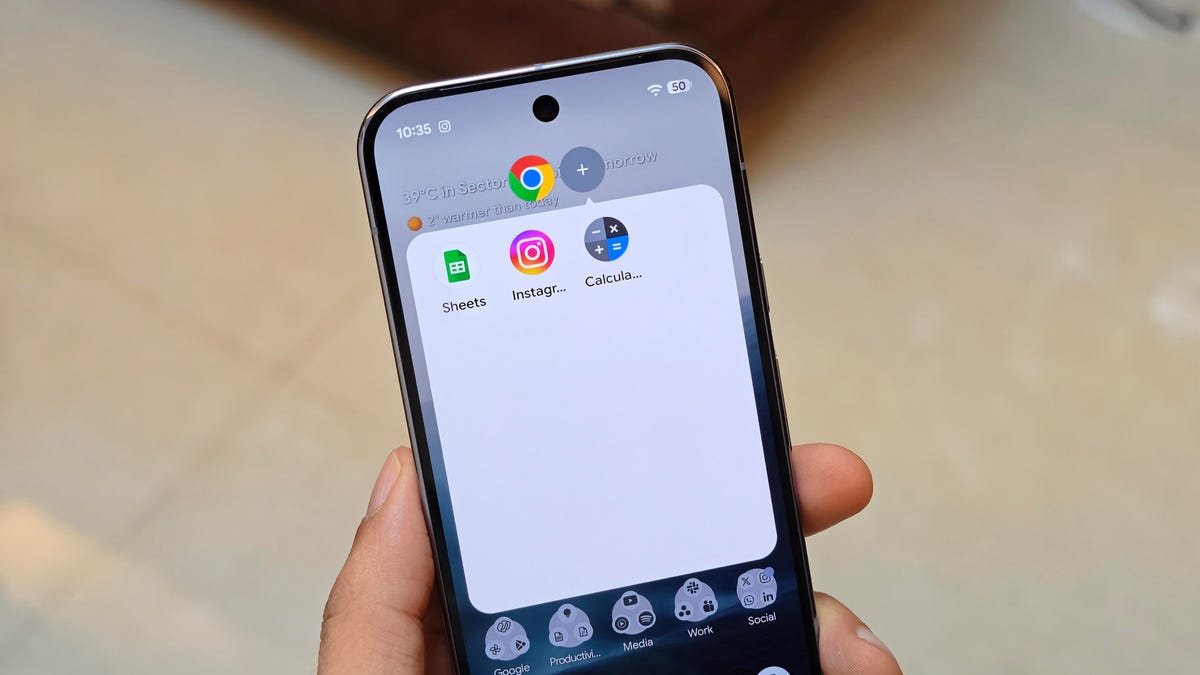
Bubbles let you group multiple apps and run them in a floating window that occupies most of your screen. You simply press and hold on an app icon, tap Bubble and the app opens in a new floating window. You can even add more apps to create a floating taskbar at the top of your screen, making multitasking between apps much faster — without needing to swipe from one to another at the bottom of the display.
Bubbles helped me file invoices quicker than my usual process.
For instance, I had to fact-check something tech-related in an Instagram Reel. So I triggered an Instagram app bubble and added Chrome for Search and Keep for note-taking, putting them within easy reach. This Android 17 feature works well for multitasking on a traditional phone. I still prefer a foldable for this kind of thing, though, since it lets me keep multiple apps open in full-screen view simultaneously.
But most people don’t have a folding phone, making Bubbles all the more brilliant, especially compared to Split-Screen, which feels more cramped than useful on a 6.3-inch screen.
Samsung’s One UI has a similar pop-up window, but Bubbles in Android 17 feels more intuitive and thoughtful. I realized it today when I had to send invoices for the last two weeks.
My invoicing process involves referencing three Google Sheets, a Google Doc file and the Calculator app. Bubbles let me create separate pop-up windows for each Google Sheet without closing my current one to open another. I could then switch between three Sheets, a Google Doc and the Calculator app with a tap.
But the best part is that Android remembers which apps you’ve used in Bubbles. So you can have one-tap access to them instead of going through the whole press-and-hold process for each app every time you need them. As you use more apps in this mode, the system bundles them together and you can quickly switch between them from the Bubbles UI.
It’s fun to drag the bundled apps around the home screen before you close a bubble.
When you’re done, you can swipe up from the bottom of your screen to minimize the apps and group them in a small icon. You can then access these bubbled apps with a tap or swipe them away into a cross (X) to delete them from your screen.
I love how intuitive Bubbles feels and how fast the apps open when I tap on an inactive Bubble. I do wish Google would let me create multiple app groups and add them to my home screen like folders for quick access. This way, I could have one Bubble for my research and work stuff, and another for the apps that help me invoice every 15 days.
How to use App Bubbles on your Pixel phone
It’s really easy to set up and access Bubbles on Android 17.
The Bubbles feature is currently rolling out with Android 17 on compatible Google Pixel phones. You can set it up by following these steps:
- Go to Settings.
- Scroll down to Notifications and under Conversations, tap Bubbles.
- You’ll see a toggle to Allow apps to show bubbles. Turn it on.
- Now, you can press and hold on any app, whether on your home screen or in the app drawer, to create a Bubble.
Follow along this example to create a Bubble.
- Press and hold on Chrome.
- A menu will appear. Tap on the icon at the top-right corner to create a Chrome bubble. On some apps (including Phone), Bubbles might show up in the list of actions you get after a long-press (as opposed to an icon).
You can add more apps to it by following the same process as above.
Once you’ve used multiple apps in Bubbles, you’ll be able to add them by simply tapping the “plus” icon (+) on the Bubble menu. Then, if you want to close a Bubble:
- Swipe up from the bottom of the screen.
- This will create an icon overlay on top of your screen. Press and hold this icon for a closing menu.
- Drag and drop the icon to the X icon at the bottom of the screen.
I’m still testing Android 17, but I’m glad I can be productive on a phone without pulling my hair in frustration. The Bubbles feature is fast, intuitive and fun to use. I can’t wait to explore more of Android 17.
Read the full article here