



Published on
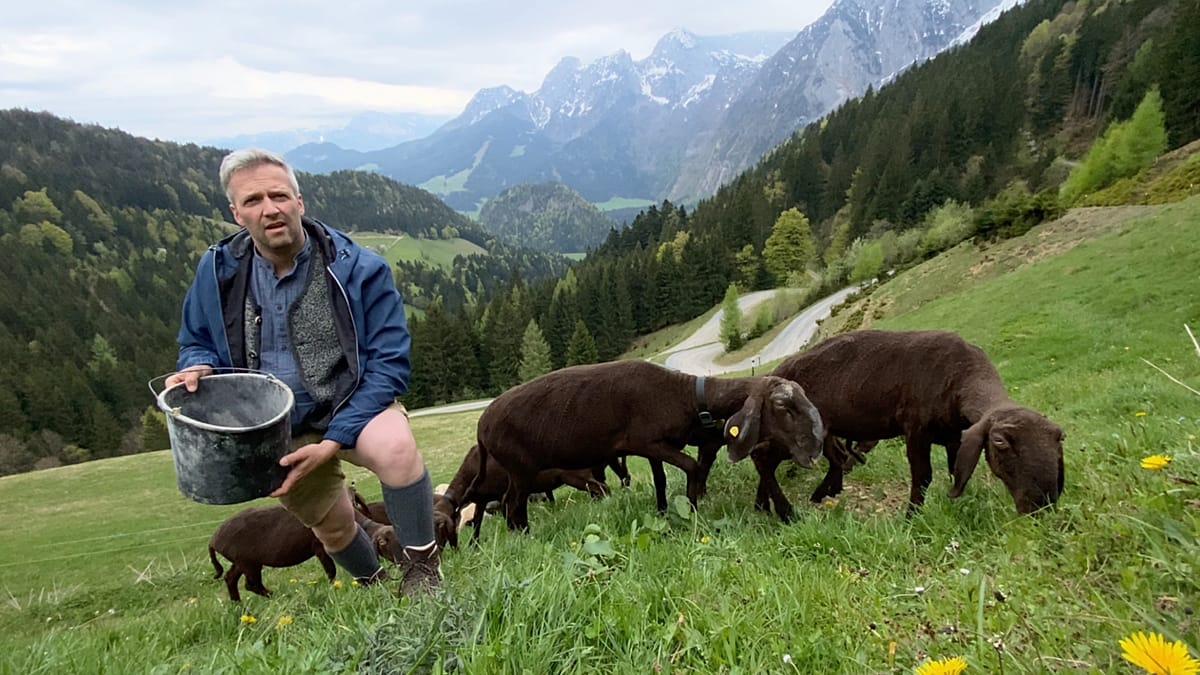
At 46, Josef Quehenberger describes himself as a proud farmer. A former sales representative, fifteen years ago he decided to take over his family farm in Abtenau, a market town near Salzburg. He breeds sheep, cows and turkey. He produces pellets for gardening from sheep wool. He even directly delivers organic turkey meat to his clients. Work is hard but rewarding, he says.“I’m the tenth generation on my farm, and the farm has run through epidemics, two world wars, coronavirus and the Nazis. So it has survived a lot,” he says. “I am happy and proud to be bringing it into the future.”
Josef is not the only fulfilled farmer around. Abtenau has around 6,000 inhabitants and more than 200 farms. Johanna Wallinger settled here 30 years ago. With 200 goats and cheese-making facilities, her farm is now thriving. “We’re doing very authentic farming,” she says. “I think Austria has great potential here, because we can really produce in a natural way that is close to consumers.”
Like Johanna, some 60 local producers bring meat, cheese, yoghurts, vegetables and herbs to a nearby cooperative shop, in a farm-to-fork short-circuit distribution strategy that requires no middlemen. “The basic idea was simply that micro-enterprises market their produce themselves and the added value just remains local,” explains Georg Buchegger, the shop’s general manager.
Public support is widely seen here as a key driver in the thriving farming sector. With its 35,000 members, the Salzburg Chamber of Agriculture provides farmers — especially young ones — with training courses, legal and business advice, assistance in navigating the subsidies system and support with product promotion.
“The problems are exactly the same for Salzburg farmers as for other European farmers. We have bureaucracy and we have markets that are just as challenging,” claims Rupert Quehenberger, the Chamber’s president. “The advantage, which is also our disadvantage, is our structure. We know that we can’t compete with mass producers. The only way we can survive on the market is through quality and where the product is recognisable, where it has a face.”
As a key tool in supporting farmers, Salzburg’s authorities have created and control the use of a coveted label that certifies the local origin of agricultural goods and enhances their market potential.
“We currently have around 2,800 certified products as well as 170 certified restaurateurs and 90 kitchens in public catering, which alone cook 40,000 portions a day. They meet certain criteria for regional products that they process, which we also control,” explains Günther Kronberger, Managing Director at Salzburg Agrar Marketing.
Training new generations of farmers is also considered paramount. Austria has around 70 schools that train the farmers of the future. Winklhof Farming School near Salzburg trains 260 students aged 14-17. Managers here say applications to the state school have skyrocketed in the last five years.
“We are trying to shape young people in such a way that they not only get along in professional life, but also learn the basic skills for their personal lives,” explains Georg Springl, the school’s director.
This training is considered crucial by professional farmers, who also take their role in motivating new generations of farmers in Austria seriously. “If you just complain all the time or see the disadvantages, then the next generation won’t enjoy the job either,” concludes farmer Johanna Wallinger.
Read the full article here


