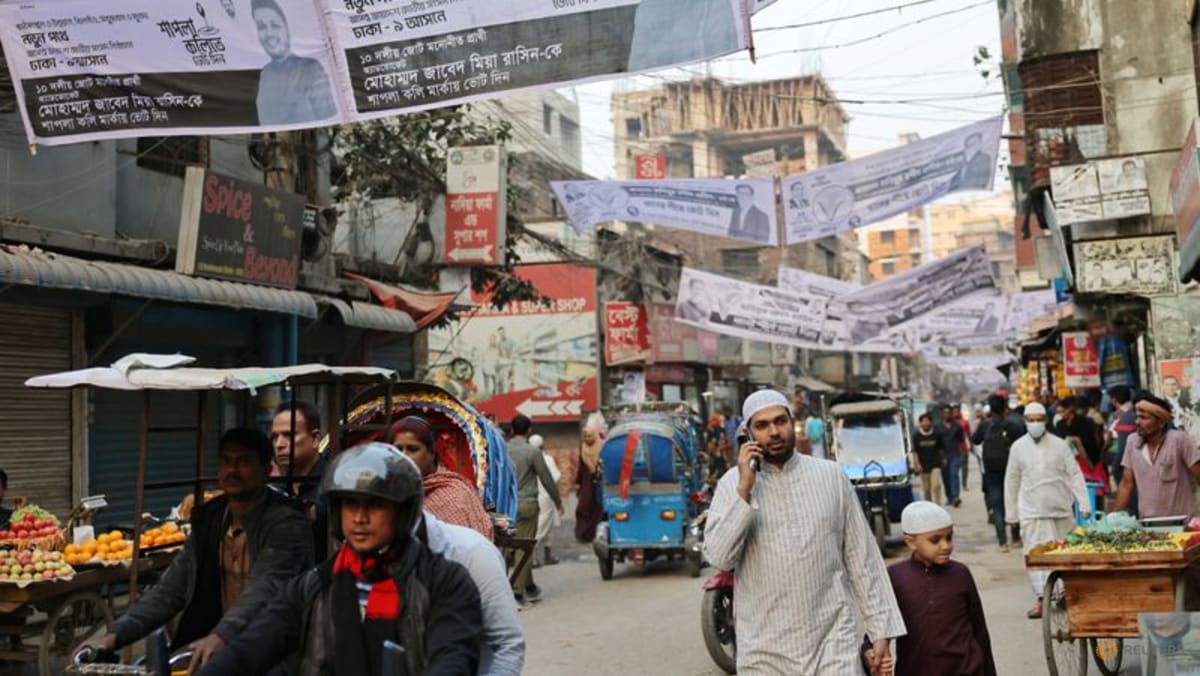
DEFINING MOMENT FOR BANGLADESH’S FUTURE
Two dominant political forces are vying for power.
The Bangladesh Nationalist Party has returned to the political spotlight, promising redemption and renewal after years on the sidelines.
Across the divide stands a coalition centred around Jamaat-e-Islami, an Islamist movement positioning itself as the standard-bearer of meaningful change.
At stake are 300 elected seats in parliament and a referendum on the July National Charter, a document that lays the foundation for sweeping political reforms following the student-led revolt in 2024.
The uprising, which ended Hasina’s rule in August 2024, has been widely described as the country’s democratic rebirth.
Now, the ballot box will test whether that promise can be realised, said observers.
“What’s at stake here, fundamentally, is questions about democratic repair (and) democratic legitimacy – how the conduct of this election takes place, issues of turnout, issues of what the result is,” said Imran Ahmed, a research fellow at the National University of Singapore’s Institute of South Asian Studies.
“It puts to question deep political and ideological tensions at the heart of the country – about where Bangladesh is going, about the identity of Bangladesh.”
Around 40 million people are expected to be voting for the first time.
For the first time in its history, Bangladesh will also allow postal voting, extending participation to millions of citizens living and working overseas.
Read the full article here