



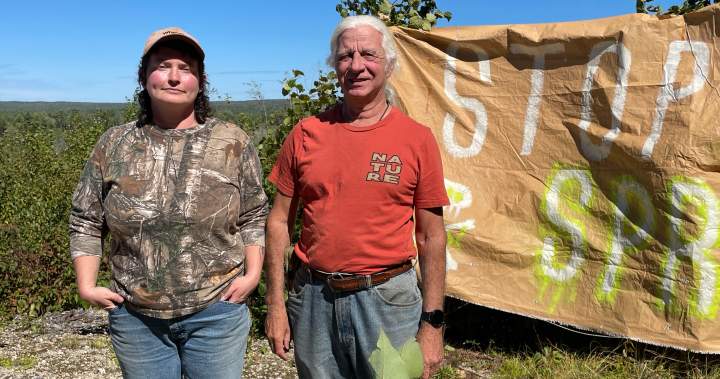
Residents of a small Nova Scotia community are sounding the alarm over planned aerial glyphosate spraying and alleging that regulations weren’t followed when it came to notifying people about the planned pesticide use.
Lenny Hornung is among the concerned residents of Bear River, N.S. who are trying to halt the province’s plans.
He says not enough notice was given, and points out he only learned about it after a neighbour went to pick berries and saw a sign announcing that spraying was planned in the area.
“If she hadn’t gone to pick berries there, we would never have known that (sign) was there,” he said.
The signs indicate spraying has been approved in the area, which is located in Annapolis and Digby counties, from Sept. 16 to 30.
According to documents shared with Global News by residents, a numbered company was approved for spraying along the Thomas, Guinea, and Victory roads on Aug. 19. Community members have filed a complaint with the province alleging violations of the mandatory 30-day notice requirement in Nova Scotia’s Pesticide Regulations.
They’re asking for the spraying to be put on pause until the investigation is concluded.
“The signs themselves are barely visible and then that warning is minuscule on the signs. So government and industry are not doing a good enough job warning the public of the dangers and keeping people safe,” said resident Robin Sturley.


Get daily National news
Get daily Canada news delivered to your inbox so you’ll never miss the day’s top stories.
Glyphosate is typically used in forestry to suppress vegetation that competes with commercially valuable trees.
However, there have been longstanding concerns about its health risks, which have prompted court cases and lawsuits.
There are also questions about how its use could affect wildfire risk.
In 2017, Health Canada re-approved glyphosate for sale in Canada until April 27, 2032, with the caveat that producers needed to have more details on labels.
The Assembly of Mi’kmaw Chiefs is also calling for a stop to spraying in the Bear River area — highlighting the significance of the area to the Bear River First Nation.
“This spraying threatens our ability to safely access and harvest the foods and medicines, and other resources that sustain us,” said Chief Carol Potter in a statement.
“These resources are part of who we are, our way of life, and how we connect with the land. This is about protecting our health as well as our lands.”
It’s a concern Phyllis Harlow, the local beekeeper for Bear River First Nation, shares. She started processing the honey from her hives early to avoid risking her bees coming into contact with glyphosate.
“It’s still warm out, so they’re still foraging. They’re still bringing in all the nectar from the flowers and whether it’s the goldenrod or the English asters, they’re bringing all that in,” Harlow said.
She adds for a community that relies heavily on hunting, fishing and foraging, blocking off certain areas from use isn’t feasible.
“We’re very in tune with what’s around us. And you can’t put up big fences and say, ‘This is our boundary and this one isn’t.’ Because it all flows together,” she added.
Environment and Climate Change Minister Timothy Halman says anyone with health and safety concerns about the pesticide should contact Health Canada.
He confirmed that the residents’ complaint is being investigated.
“So I can tell you process has been followed,” said Halman.
“We’re looking into the concerns that have been raised and I think that’s just good due diligence. We’re a responsive regulator.”
But ultimately, those who live in the area say they want to see glyphosate phased out entirely.
“With these practices and the failure to follow the regulations, we can’t safely do that. And that’s just a failure of the government to regulate the forestry industry,” said Sturley.
Read the full article here


