



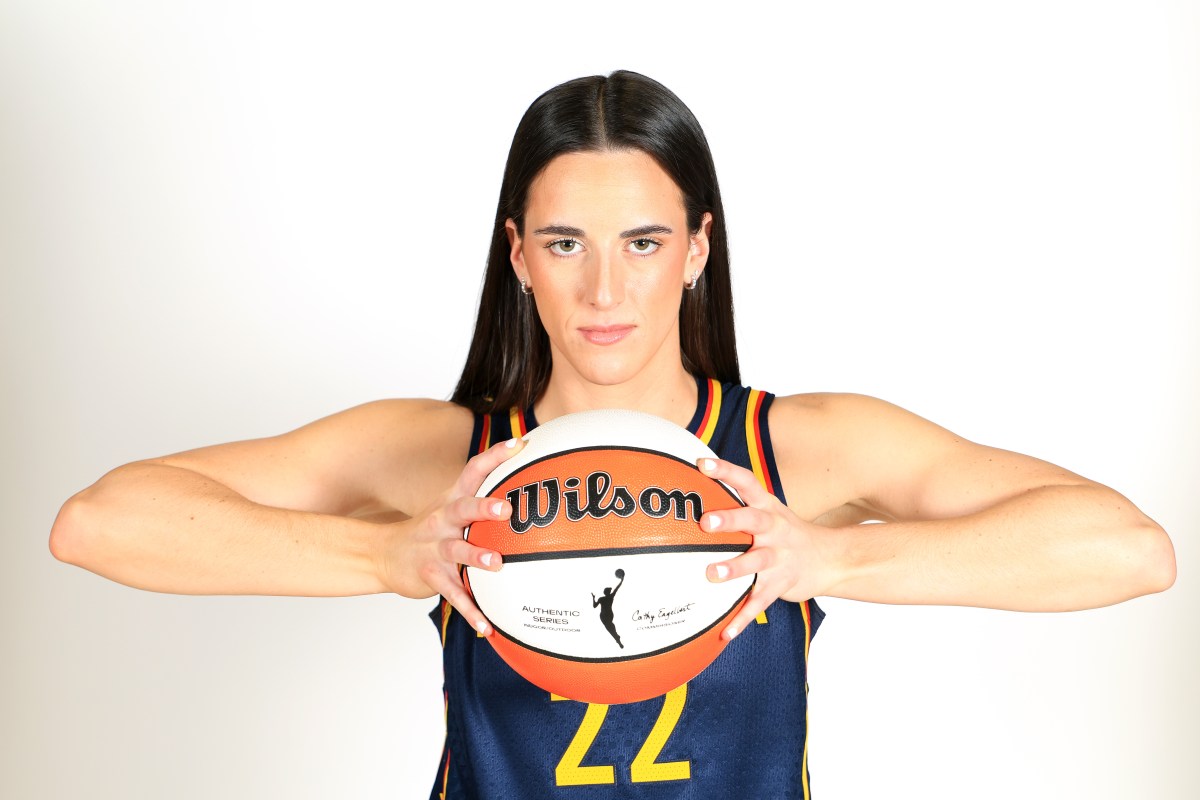
The first real sign that the WNBA might be headed for another ratings explosion in 2026 came during a quiet preseason game in Brooklyn, New York.
On Saturday, April 25, the Indiana Fever handled the New York Liberty 109–91 in a preseason opener loaded with star power.
The headliner, of course, was Caitlin Clark, making her return after an injury-shortened 2025 campaign. She looked rusty in stretches, finishing with seven points, four assists, and three rebounds in 17 minutes, but still flashed the shot-making and playmaking that have made her one of the most magnetic players in basketball.
At the time, it felt like just another preseason matchup. Now, just days later, a new development has dropped, and it may be signaling something much bigger.
ION’s broadcast of that matchup reportedly averaged 743,000 viewers, a staggering 76% increase over last year’s comparable preseason window.
For a preseason game, a historically low-priority TV product, that kind of jump is almost unheard of.
And it points directly to one thing: the “Caitlin Clark Effect” is not slowing down.
More news: Boise State Gives Ashton Jeanty, Kellen Moore Unique Honor in Blue Turf Reveal
Clark has been a ratings engine since the moment she entered the WNBA in 2024. A generational player coming out of Iowa, where she became the NCAA’s all-time leading scorer, she brought an entirely new wave of fans with her.
Her arrival sparked record-breaking interest. Clark’s debut games quickly became the most-watched WNBA broadcasts in years, and the league went on to post its most-watched regular season in 24 years, with an average of 1.19 million viewers across ESPN platforms, a 170% increase from the year prior.
That momentum carried into 2025. Even with Clark missing time due to injury, national broadcasts still averaged roughly 794,000 viewers through the first 56 games, up about 21% year-over-year, while ESPN windows climbed to around 1.3 million per game, marking its most-watched WNBA season in network history.
Beyond raw ratings, Clark’s impact extends into marketability and cultural relevance. She has become the league’s central draw, with her games routinely outperforming others and her presence driving ticket sales, sponsorship demand, and media coverage.
At this point, the “Caitlin Clark Effect” is expanding the WNBA’s audience baseline, accelerating mainstream visibility, and helping push the league into a more commercially powerful era.
It’s surely no coincidence that the WNBA just locked in its largest collective bargaining agreement in league history, guaranteeing players like Clark massive boosts in salaries and long-term earning potential.
The new deal, which begins in 2026, represents a seismic shift in the league’s economics. Team salary caps are expected to jump from roughly $1.5 million to $7 million, while average salaries will surpass 583,000, and top-end supermax deals begin at about $1.4 million.
Clark’s salary alone is projected to skyrocket from under $100,000 early in her career to well over $500,000 under the new structure, with even more upside as the cap continues to rise.
More news: NCAA Finalizing Massive March Madness Overhaul, Fans Erupt Online
More news: Dan Hurley Strikes Again as UConn Lands All-Conference Transfer Guard
The 2026 WNBA season tips off May 8, and the league is entering a pivotal moment.
Expansion has pushed the league to 15 teams, adding new markets and inventory, while media distribution is broader than ever, with games spread across major networks and streaming platforms.
Layer Caitlin Clark’s drawing power on top of that, and you have the ingredients for a breakout season.
If a preseason game pulling 743K is the baseline, the sky’s the limit for what the 2026 regular season could look like.
Read the full article here


