A lot has changed in the AI industry in the four months since OpenAI released ChatGPT Images 1.5. We’ve seen a heated race to build agentic tools, an unprecedented deal with the Pentagon and unending AI slop.
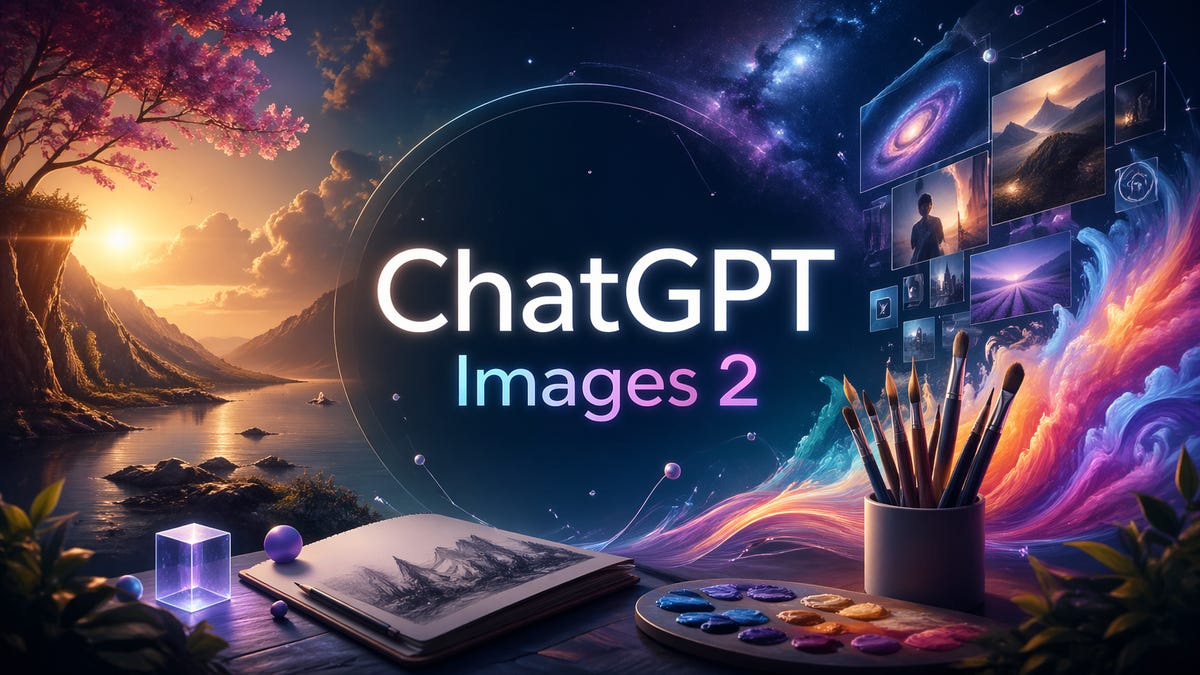
Now, OpenAI is back in the generative media game. The company announced on Tuesday that it’s releasing ChatGPT Images 2, its next-generation image model.
ChatGPT Images 2 is meant to create text-heavy designs, like in this matcha advertisement and fake magazine cover.
It may seem strange that OpenAI is releasing a new image model just a month after announcing the shuttering of its once-viral Sora AI video app in order to focus on building enterprise-ready “core products.” But it’s clear from how the new model was built that OpenAI isn’t backtracking on that goal.
ChatGPT Images 2 is designed to produce text-heavy images, including infographics, scientific posters, study guides and marketing materials. The days of weird Sora videos and Studio Ghibli-inspired memes are over.
Now, the company is building AI that can do what it calls “economically valuable creative tasks.”
“The aperture and use cases for visual intelligence just expand so broadly, and we believe that this is so critical to ChatGPT’s vision for developing your own personal assistant, because your creative assistant is a huge part of who you are as an individual,” Adele Li, product lead for ChatGPT Images, told reporters in a press briefing.
(Disclosure: Ziff Davis, CNET’s parent company, in April 2025 filed a lawsuit against OpenAI, alleging it infringed Ziff Davis copyrights in training and operating its AI systems.)
In these examples, you can see how much better ChatGPT Images 2 is at rendering legible text.
OpenAI has been chasing the dream of a super app, a one-stop shop for all things AI, built out of its Codex platform. ChatGPT Images 2 is bringing the creative piece of that puzzle.
The new model naturally improves typography, iconography and composition to produce more professional AI images. It can generate text in multiple languages. AI image models have notoriously struggled with creating legible, factually correct text. ChatGPT Images 2 is OpenAI’s best model for that yet. Google previously improved its text rendering with Nano Banana Pro, but even that “best of the best” model struggled with accuracy.
ChatGPT Images 2 is rolling out to all users now. Your generation limit depends on your plan: The more you pay, the more AI images you can generate.
Developers using the model in the API can create images in 2K and 4K resolution, though these higher resolutions are still in beta and may be wonky. Paying users can also create images using thinking and reasoning models, which help them search the web for information, compile it into a readable design and double-check their work.
“Image model” doesn’t seem like quite the right term for ChatGPT Images 2, though it is technically correct. ChatGPT doesn’t capture the fantastical surrealism of AI imagery like Midjourney, nor offer anywhere near the editing tools of Adobe Firefly.
But it’s catering to a group of users in the middle of the spectrum of Midjourney’s artistic enthusiasts and Adobe’s professional creators: those who need to create attractive content.
Like Anthropic’s newly released Claude Design, OpenAI’s ChatGPT Images 2 is aimed at working professionals. Teachers can use it to create study guides and illustrated lesson plans. Marketing managers can create social media posts and visual assets.
You can create up to eight images from a single prompt, like a three-page report, that maintain visual consistency across all of them.
You can make longer reports with ChatGPT Images 2, all matching pages.
This is the second half the AI-generated key lime pie recipe. Notice the visual consistency.
One downside is that if you want to tweak an AI image, you’ll still need to regenerate it. With more text-heavy designs, that’s more likely to be necessary, so you’ll run through your credits quicker. OpenAI said it’s focused on maintaining its iterative, prompt-based editing flow to keep it easy to use.
OpenAI’s safety procedures haven’t significantly changed since its last image model. It still includes metadata through the C2PA standard, so AI images’ origins can be identified. Abusive and illegal imagery is still prohibited in OpenAI’s policies, an important guardrail for AI companies to effectively enforce, given recent examples of AI-generated deepfakes and nonconsensual intimate imagery.
Read the full article here