



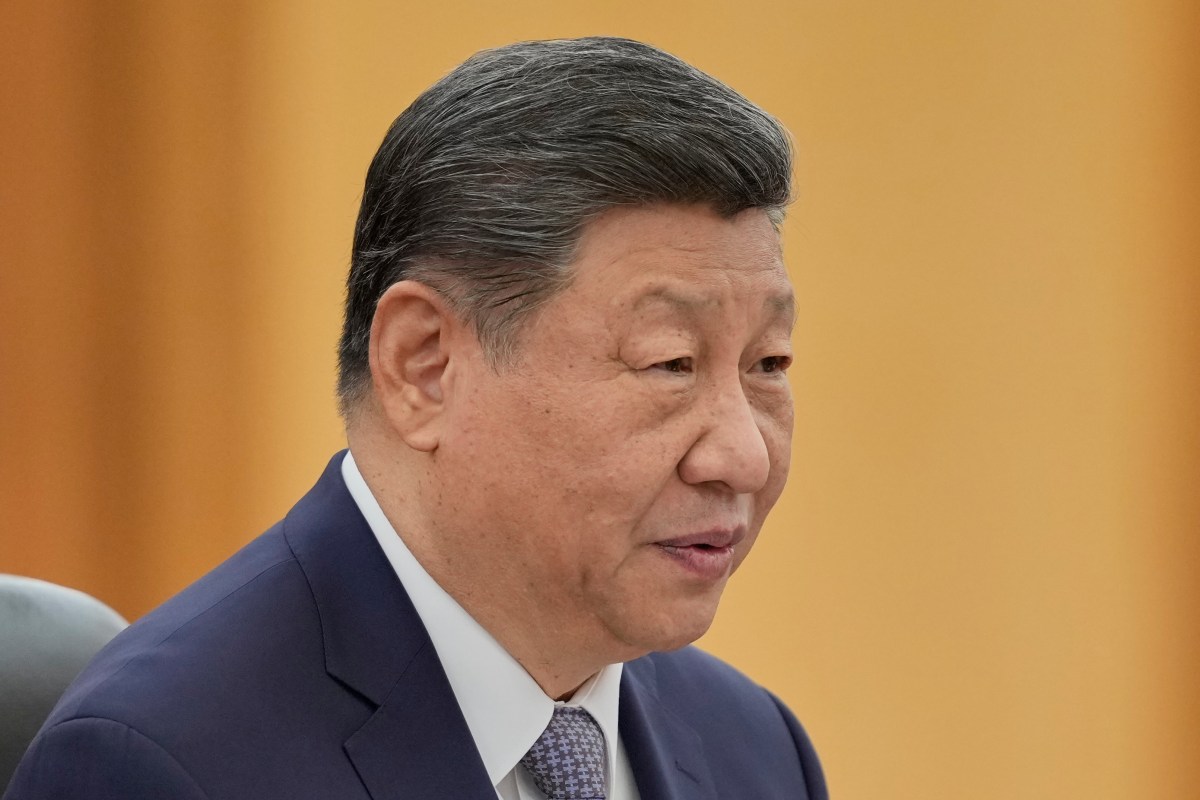
Chinese President Xi Jinping met with U.K. Prime Minister Keir Starmer at Beijing’s Great Hall of the People on Thursday morning, as London sought to reset ties.
It was only Xi’s second public appearance since the weekend’s high-profile ouster of two top Chinese military officials—including the effective second-in-command of China’s armed forces—but by all appearances it was business as usual for the Chinese leader.
Why It Matters
General Zhang Youxia and Joint Staff Chief Liu Zhenli have been placed under investigation for corruption and “serious” political offenses, China’s military said on Saturday. Both were considered loyal to Xi and sat on the country’s powerful Central Military Commission (CMC). Their removal brings the body—numbering only seven at the start of Xi’s third term—down to two, including Xi himself.
Starmer was the first British prime minister to travel to China in eight years. His visit followed those of several close U.S. allies making overtures to China, the world’s second-largest economy, after a year of volatile trade and foreign policy moves by President Donald Trump.
Newsweek reached out to the Chinese Foreign Ministry via email with a request for comment.
What To Know
Britain’s ruling Labour Party has made important contributions to the development of Sino-British ties, Xi told Starmer. As long as the two countries “overcome differences and respect each other,” they could “deliver results that stand the test of history,” the Chinese leader added.
Starmer led a delegation of nearly 60 representatives from the sport, culture and business sectors. While he has stressed that reengagement with China is necessary, he has pledged not to sacrifice economic cooperation for national security, according to an official statement released by his office on Tuesday.
Xi said the international order was under great strain as “unilateralism, protectionism, and power politics run rampant,” according to a statement released by China’s Foreign Ministry spokesperson Mao Ning.
“International law can be truly effective only when all countries abide by it. Major countries in particular should set an example, otherwise the world will revert to the law of the jungle,” he said.
Starmer’s visit comes on the heels of Finnish Prime Minister Petteri Orpo’s own talks with Xi, also on Tuesday, the first by a Scandinavian leader since 2017. Canadian Prime Minister Mark Carney and Irish Taoiseach Micheál Martin made similar trips to Beijing earlier this month.
Elite Chinese politics often is described as a black box, and the extent of Zhang and Liu’s alleged crimes remains unclear. Officially, their misconduct is centered on corruption. Unofficially, Zhang—a popular veteran of the Sino-Vietnamese War of 1979—may have posed a political threat to Xi’s rule.
As the former first vice chairman of the CMC, which governs the military affairs both of the Chinese state and its long-ruling Communist Party, Zhang was among Xi’s most senior advisers with combat experience. His removal raises questions about China’s military readiness and about Xi’s priorities at home and abroad.
If there are concerns, China’s most powerful leader in a generation has not let it show.
What People Are Saying
British Primer Minister Keir Starmer said in a press statement: “For years, our approach to China has been dogged by inconsistency—blowing hot and cold, from Golden Age to Ice Age. But like it or not, China matters for the U.K.
“As one of the world’s biggest economic players, a strategic and consistent relationship with them is firmly in our national interest. That does not mean turning a blind eye to the challenges they pose—but engaging even where we disagree.”
What Happens Next
Starmer is scheduled to meet with China’s No. 2 official, Premier Li Qiang, on Thursday as part of the British delegation’s four-day visit concluding on Saturday. He has vowed to raise human rights issues and other areas of concern during discussions with his Chinese counterpart.
Read the full article here


