



ABANDONING OF A SHARED PRINCIPLE
For years, Washington and Beijing at least nominally shared the goal of a denuclearised North Korea. But recent diplomatic signalling suggests that this shared foundational principle is being abandoned. While Washington blurs the lines through personalised summiteering, Beijing is engaging in a quiet, linguistic retreat from nuclear disarmament.
Seoul faces a narrowing margin where neither great power is actively prioritising its core security demand: actual disarmament.
This shift was particularly evident during Chinese Foreign Minister Wang Yi’s recent visit to Seoul – his first in five years. When discussing the peninsula, Wang’s readout notably welcomed the two Koreas moving toward “peaceful coexistence” but entirely omitted the word “denuclearisation”.
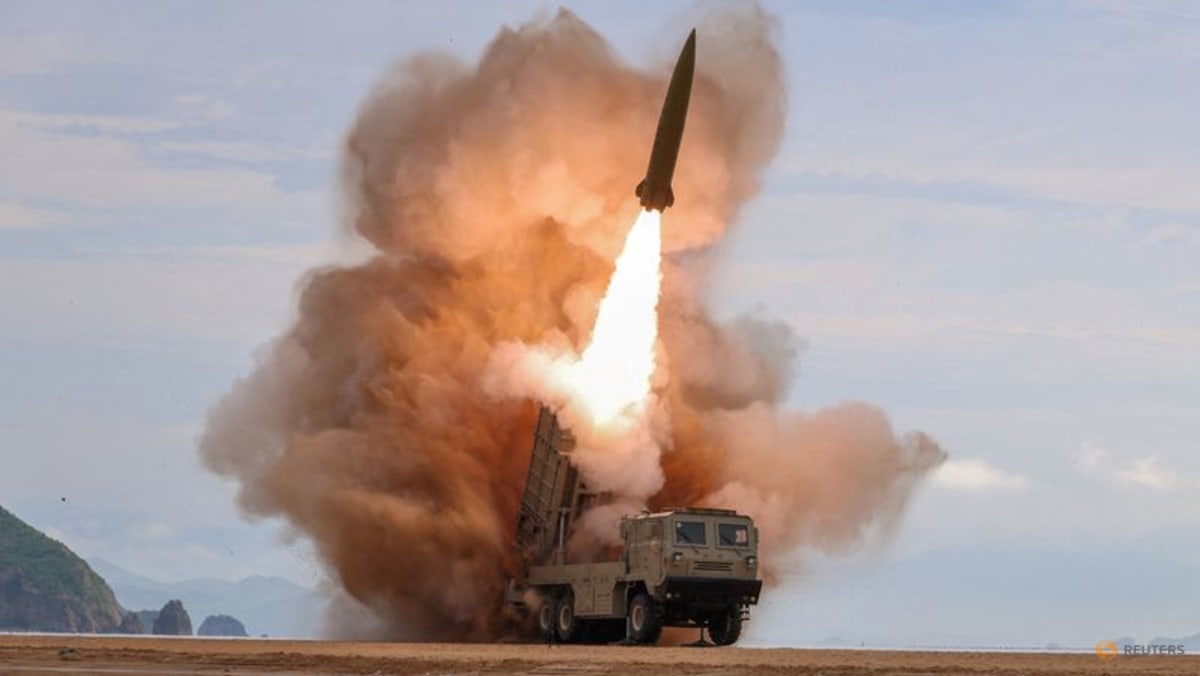
The profound hollowness of this Chinese-brokered “peaceful coexistence” was violently exposed shortly after Wang departed South Korea, when Pyongyang launched a barrage of around 10 short-range ballistic missiles that South Korean officials assessed were likely 600mm super-large multiple rocket launchers (MLRS) – a system North Korea claims can carry tactical nuclear warheads targeting South Korea.
Beijing is moving toward acquiescence. It stops short of granting North Korea legal recognition as a nuclear-weapon state, but it is clearly prioritising the management of the nuclear reality over near-term disarmament. China’s preference is not necessarily for a heavily armed North Korea, but for a stable one that does not precipitate a regime collapse, a regional war or a windfall for Washington.
This is where the danger of fresh summiteering between Trump and Kim becomes acute. If Trump approaches a new summit treating Kim’s substantial nuclear arsenal as an accepted baseline fact, he risks validating Beijing’s “status-quo management” approach.
Read the full article here


