



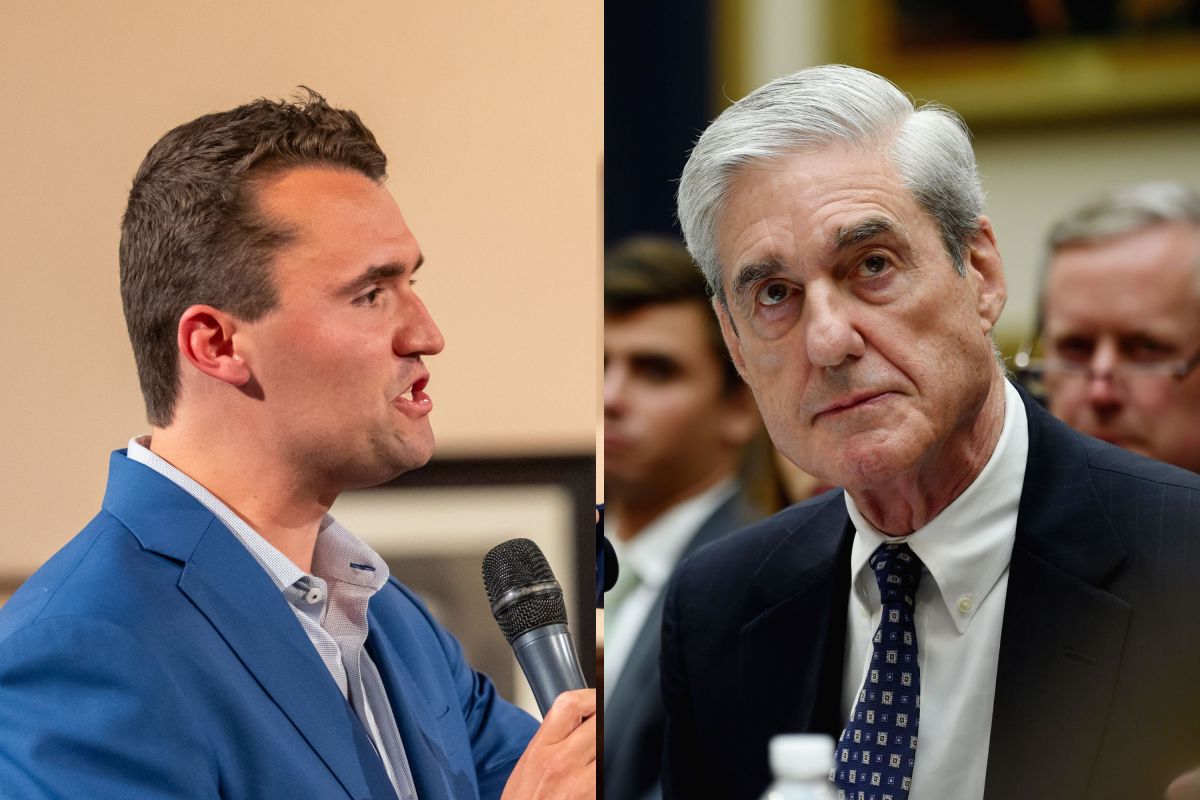
The deaths of two politically divisive figures—former FBI Director Robert Mueller on Friday and conservative activist Charlie Kirk last September—have prompted sharply different reactions across the political spectrum. In both cases, expressions of mourning were accompanied by a smaller but highly visible wave of celebratory or mocking commentary, much of it circulating on social media.
As those reactions spread, so did the backlash. Commentators and social media users have begun explicitly comparing how Americans responded to Mueller’s death with the fallout that followed Kirk’s assassination. The comparison has become a flashpoint in a broader debate over political polarization, double standards, and whether norms governing public discourse are applied consistently when ideological opponents die.
Why It Matters
How Americans react to death—particularly the death of a political adversary—has increasingly become part of the country’s wider cultural divide. While celebratory reactions remain a minority view, their visibility online often shapes public perception and fuels arguments about moral consistency and political tribalism.
The comparison between reactions to Mueller’s and Kirk’s deaths has resonated because both episodes involved high‑profile figures, intense political emotions and questions about accountability.
What to Know
Mueller died at age 81 after a long battle with Parkinson’s disease. He was best known for serving as special counsel in the Justice Department’s investigation into Russian interference in the 2016 U.S. presidential election with President Donald Trump’s campaign.
Shortly after news of Mueller’s death became public, Trump posted on Truth Social: “Robert Mueller just died. Good, I’m glad he’s dead. He can no longer hurt innocent people!” The comment quickly circulated online, drawing condemnation from Democrats, and some Republicans, while being defended by Trump allies who viewed Mueller’s investigation as politically motivated.
The reaction revived memories of the response to Kirk’s murder in September 2025. Kirk, the founder of Turning Point USA, was fatally shot while speaking at Utah Valley University. His death was widely condemned across the political spectrum, with leaders from both parties denouncing political violence and offering condolences to his family.
At the same time, a smaller number of social media users mocked or celebrated Kirk’s death, often citing his outspoken views on gun policy, LGBTQ issues, and race. Those posts triggered swift backlash and, in some cases, disciplinary action by employers and institutions—moves that themselves sparked debate over free speech and proportionality.
What People Are Saying
Reaction to Mueller’s death was sharply divided online.
Liberal commentator Ed Krassenstein wrote on X: “This is disgusting and despicable. Trump literally just celebrated Robert Mueller dying. Mueller did so much good for America.”
MS NOW journalist Ken Dilanian highlighted Mueller’s military service, writing on X: “In an era when many young men were trying to avoid Vietnam, Mueller volunteered for the Marines and waited a year for an injured knee to heal so he could serve.”
Some conservatives defended Trump’s post as an expression of long‑standing resentment toward the Russia investigation.
Richard Grenell, a long-time Trump ally and former acting director of national intelligence, wrote on X: “Mueller was destructive and vindictive. He ruined people for a living. He was a terrible person and responsible for one of the worst manipulations of US intelligence in history – and he did it with full knowledge that he was lying.”
Others criticized the tone.
Fox News chief political analyst Brit Hume wrote on X: “This is the kind of stuff Trump does that makes people not just oppose him but hate him. There was no need to say anything.”
As Trump’s reaction to Mueller’s death spread, some users argued standards had shifted when rhetoric came from a sitting president.
Progressive commentator Harry Sisson wrote on X: “I expect every Republican who was outraged at people for celebrating Charlie Kirk’s death to immediately condemn Trump for saying ‘I’m glad he’s dead’ about Robert Mueller. This is disgusting.”
Following Kirk’s killing, celebratory posts also circulated online, though they were far outnumbered by messages of condolence. Some social media users shared posts that mocked the circumstances of his death by referencing his opposition to gun control; others reacted by suggesting they were “disgusting” and “mentally disturbed.”
Former NFL player Dez Bryant criticized people who appeared “excited” about Kirk’s death, writing on X: “Seeing people who are excited about Charlie Kirk dying are f***ed up human beings,” while others warned that celebrating political violence risked further eroding social norms.
Others took a broad view on Saturday:
Robert P. George, a professor at Princeton University, wrote on X: “When Charlie Kirk was murdered, those of us on the conservative side rightly chastised those of our political adversaries who cheered and celebrated his death. We accused them–again rightly–of shameful callousness and of polluting public discourse and coarsening social life. What President Trump does here merits the same chastisement, for the same reasons.”
James Martin, a Jesuit priest and author, wrote on X on Saturday: “It was just as wrong to celebrate the death of Charlie Kirk as it is to celebrate that of Robert Mueller. May they rest in peace. And may we never forget that Jesus’s message is about mercy.”
Alyssa Farah Griffin, a former top aide to Trump in his first administration and current co-host of The View, on X: “If partisan politics drives you to celebrate the death of your perceived political enemy & the need for social media gratification drives you to post about it—I beg you to get offline. Spend time with family. Read a book. Touch grass. We wonder why so many kids are unwell but miss how many adults in America are unwell.”
Read the full article here


