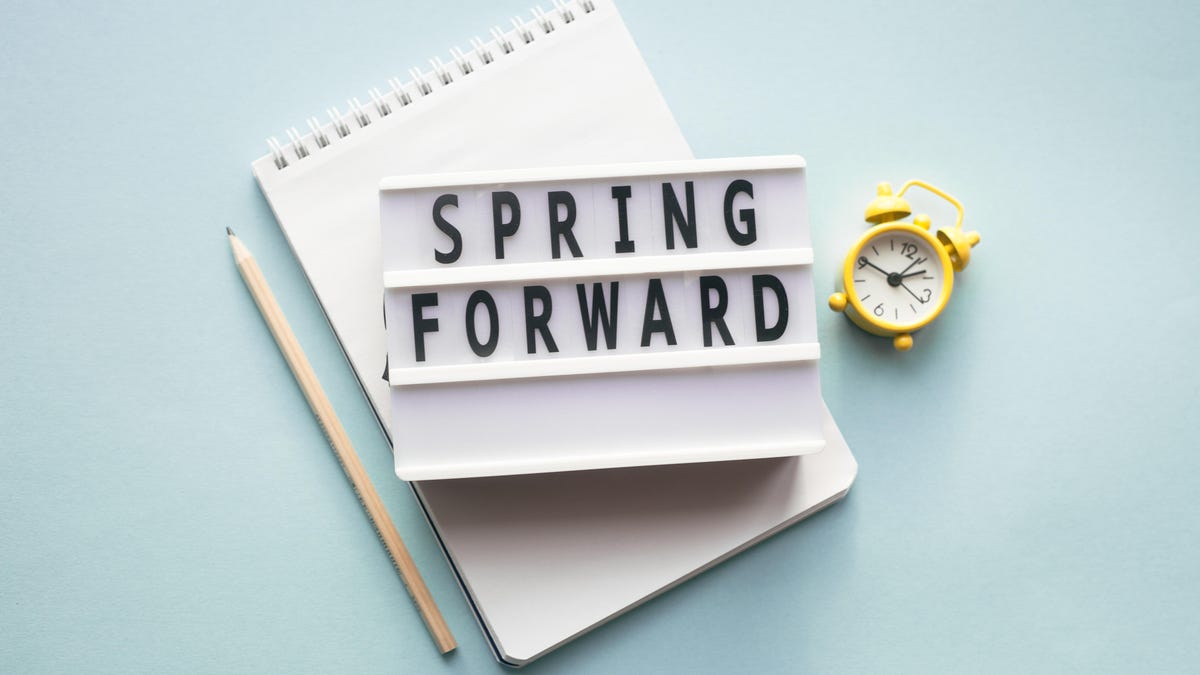
More daylight is just days away. This weekend, clocks will move forward by an hour, and you’ll notice longer daylight in the evenings. Yes, we’ll have more time in the sun, but the change comes with disruptions in sleep patterns and a shift in our circadian rhythm, which is basically our body’s internal clock. And not all experts are in favor of this change continuing.
When does daylight saving time start?
Daylight saving time starts Sunday at 2 a.m. local time. The start of DST usually means you’ll “spring forward.” You’ll lose an hour of sleep, but gain longer periods of daylight in the evening. On the first Sunday of November at 2 a.m. local time, you’ll “fall back” and gain an hour of sleep, but you’ll also deal with darker evenings.
Daylight Saving vs. Standard Time
The difference between daylight saving time and standard time boils down to how you adjust your clock for more or less daylight.
We’re wrapping up standard time, which is the local time in your time zone. On Sunday, we’ll be in daylight saving time, which moves the clock forward an hour. You’ll notice that daylight lasts longer. Daylight saving time is during the spring and summer.
Why aren’t experts fans of time changes?
Nasha Addarich Martinez, CNET’s managing editor, says most sleep experts don’t like time changes because any time change disrupts our circadian rhythm, even if it’s only an hour.
“This can lead to chronic sleep loss and reduced sleep quality — especially REM and deep sleep phases,” Martinez says. “The sleepiness also poses safety risks,” such as driving while sleepy.
It can also be extremely difficult for people with young children or babies, given their feeding and sleeping schedules, she adds.
Several active groups are campaigning for the US to stay on standard time. A group called the Coalition for Permanent Standard Time aims to legally standardize time across the country for several reasons. Delayed sunrises and sunsets mean darker commutes, depression and misalignment from your body’s internal clock, they say.
Will time changes ever end?
Maybe. Your state government can’t change time zones or how long Daylight Saving Time lasts, according to the Bureau of Transportation Statistics.
However, individual states can choose to exempt themselves from Daylight Saving Time without needing the Department of Transportation’s permission, and some light-and-sun-filled areas already have.
If you’re tired of time changes, these states and territories don’t observe DST.
- American Samoa
- Most of Arizona
- Guam
- Hawaii
- Northern Mariana Islands
- Puerto Rico
- Virgin Islands
You’ve likely seen headlines that make it sound as if a change is coming, and the country as a whole might eventually stop with all this clock-changing.
The Sunshine Protection Act of 2021 was a bipartisan bill passed by the Senate in 2022 but remained in the House, according to Congress’s website. Republican Sen. Rick Scott of Florida introduced the Sunshine Protection Act of 2025-2026, but there have been no other updates.
In the meantime, here are three ways to reset your body’s internal clock and how to adjust to Daylight Saving Time. You may want to start shifting your bedtime 15 minutes earlier each night this week and seek out the sun early in the morning, even if it means getting up earlier.
Read the full article here