



Both the ABC and SBS are to be commended for pushing back against Jillian Segal’s demand to adopt the International Holocaust Remembrance Alliance’s definition of antisemitism (“ABC, SBS reject federal government, special envoy’s definition of antisemitism”, May 19). The core definition of antisemitism is undoubtedly accepted by the ABC, SBS and the broader community. However, accepting that criticism of Israel is antisemitic will undermine efforts to rid our society of this prejudice. The Executive Council of Australian Jewry should recognise this, rather than deride the pushback as ludicrous. People in my orbit do not support Israel’s destruction of Gaza or the advancement of West Bank settlements, yet simultaneously fiercely oppose racial hatred of Jews, which is the simple definition of antisemitism. For Segal to recommend that institutions such as the ABC and SBS have funds withheld just for protecting their journalistic integrity brings her capacity as special envoy to combat antisemitism into question. Bruce Hall, Avalon
Would the ABC and SBS deny black people the right to decide what is racist and hateful towards them? Deny women the right to explain what misogyny is? Deny gay people the right to define homophobia? No, that is outrageous. We have learnt as a society to believe victims, to respect victims, to learn from victims – in all cases except Jews. When Jews say that unfettered hatred towards the existence of Israel harms Jews here in Sydney, here on Bondi Beach, why aren’t they believed? Were the gunmen at Bondi interested in a 10-year old’s opinions on the policies of the current Israeli government, or were they fuelled by hatred. There is no “context” here. Anti-Zionism is the newest form of Jew hatred. ABC and SBS are part of the problem by not calling this out. Tmne Blair, Randwick
I am encouraged to see SBS and the ABC back their capacities to think and reason for themselves. I am less sure about the University of Sydney – which last year spent nearly half a million dollars on a review to combat antisemitism – knowing that I have a pair of Oxford dictionaries at home, one from 1996 and the other from 1951. Neither accuse me of antisemitism, in spite of my strong disapproval of Israel’s actions. If anyone from the University of Sydney should be reading this, these two dictionaries can be yours for the one-time only price of $441,789. Let me know. Hugh Thomson, Echunga (SA)
It is disappointing that the ABC and SBS won’t adopt the IHRA’s definition of antisemitism. It’s by far the most authoritative definition, having been formulated by an international panel of experts. It has been adopted or endorsed not only by Australia, but 45 other countries including most Western democracies, some of which are notably critical of Israel – the Council and Parliament of the European Union, the Organisation of American States and even UN Secretary-General Antonio Gutteres. As your writer Calum Jaspan points out, the definition states that “criticism of Israel similar to that levelled against any other country cannot be regarded as antisemitic”, so those who claim it prevents legitimate criticism should explain how it is legitimate to criticise the Jewish state in ways they wouldn’t criticise any other state. Apparently, it’s contentious that the definition’s examples of antisemitism include claiming Israel’s existence is a racist endeavour. Many states define themselves by a religion or ethnicity, so surely it’s antisemitic to claim that doing so is racist only when Jews do it. Jamie Hyams, Australia Israel & Jewish Affairs Council
Gillham on key
Kudos to pianist Jayson Gillham for taking a stand against persistent, inexcusable attempts to stifle free speech in this country (“Pianist tells court he kept MSO in the dark before speaking out on Gaza”, May 19). We must always be allowed to shine a light on dark, unjust deeds without fear of punishment. The Melbourne Symphony Orchestra should be ashamed of themselves for being so weak. Julius Timmerman, Lawson
Immigration elephant
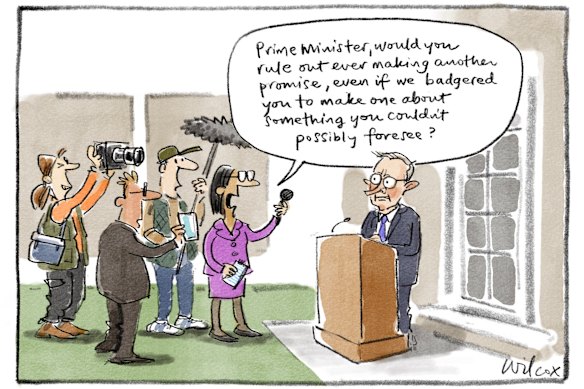
The recent tranche of letters, opinion pieces and even Tuesday’s Wilcox cartoon (Letters, May 19) reinforces my long-held belief that it is impossible to have a rational discussion about immigration policies at any level without the whole mess being overridden by personal vilification and shouts of racism. It’s the elephant in the room all right. Shhhh, and pretend it’s not there. Ross MacPherson, Seaforth

US kowtowing
Peter Hartcher’s opinion piece on Donald Trump and China makes ominous reading (“One key takeaway from Trump’s China visit should worry Australia”, May 19). Trump has already sold Ukraine’s leader Volodymyr Zelensky down the river. Now it’s Taiwan’s turn to be abandoned. Trump is tough when it comes to nations weaker than his, so Iran has been heavily bombed, Venezuela attacked and Cuba strangled to the economic brink. Enter China and Russia with their own nuclear arsenal and Trump backtracks and fawns over them. We can only watch on sadly as the once great USA kowtows to dictators. Frank Carroll, Moorooka (Qld)
Commander’s commandments
I see Trump did a Bible reading from the Oval Office at the national prayer day (“Prayer rally one for true believers” May 19). I wonder if he has read the bits that say “Thou shall not commit adultery” and “Thou shall not covet thy neighbour’s property”? The second part would make Venezuela, Cuba, Greenland and, to a lesser extent, Canada feel a lot safer from this sabre-rattling egomaniac. Ron Wessel, Mount St Thomas
Business as usual
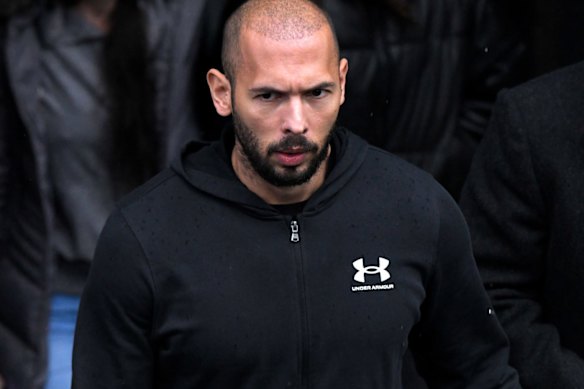
One criticism of the capital gains tax changes that I am sick of hearing is that they will make it hard for young people to start a business (“Labor insider adds to backlash over CGT overhaul”, May 19). As always, business comes first and the implication is that the only worthwhile human endeavour is to run a business and strive to become a tycoon. Everything else is worthless by this measure – artistic creativity, being an excellent analyst, technician, doctor, nurse, lawyer, farmer – all nothing against a successful businessman. Sounds like they are channelling controversial social media personality Andrew Tate, who holds that you are not a man unless you become a successful entrepreneur. With his dangerous, misogynistic rhetoric, Tate is hardly a role model. Nicholas Triggs, Katoomba
Voters are gradually realising that Labor’s tax-grab budget is ultimately going to increase house prices and rents. Raising the CGT across all assets only increases the financial attractiveness of the tax-free family home. The only way to level the playing field would be to gradually phase out the CGT for all long-term investments, thereby eliminating the current incentive to plough non-productive capital into tax-free homes. William Lloyd, Denistone
It’s time to call a spade a spade. Each negatively geared investment property has been stolen from a first home buyer using funds embezzled from taxpayers to deliver a 50 per cent interest rate advantage. Grandfathering past purchases simply continues the sanctioning of theft. Michael Britt, MacMasters Beach
One would expect there will be fewer investors bidding at real estate auctions after last week’s property tax reforms. That will not only be a relief to young people hoping to buy a home, but also to residents living in coastal towns like mine. Over the past few years, more and more coastal homes have been sold to investors who have converted them into short-term rentals – basically a licence to print money. Buy a house on the coast using a huge mortgage. Charge exorbitant rents during the summer and weekends. Use negative gearing to help pay off the mortgage. No annoying long-term renters who are hard to evict. After five years, sell and pocket a large capital gain. Then buy another house. Rinse and repeat. The winners of this arrangement are the Airbnb owners. The losers are the residents and the workers who service the coastal towns, who have to move further and further away when long-term coastal rentals disappear. Treasurer Jim Chalmers’ reforms will slow but not stop this trend. It is now up to state and local governments to regulate short-term rentals and save coastal communities from becoming soulless resorts. Mike Reddy, Vincentia
Death and taxes
James Massola tells us that inheritance taxes are a hard sell (“Tax scare flimsy, but it might stick”, May 19). Really? With the Boomer generation getting ever closer to meeting their maker, this demographic fact has important economic implications. A disturbing New York Times article revealed the phenomenal intergenerational transfer of wealth about to happen. High net-worth American Baby Boomers are about to pass on to their children an estimated $US16 trillion ($22.4 trillion), and this will lead in the coming decades to a massive concentration of wealth among the children of the already wealthy. Rather than tax the living, why not tax the dead to help pay for the future government expenditure? Almost all the well-off countries with whom we like to compare ourselves – the OECD – have some form of death or inheritance tax. If Australians want to explore extra sources of revenue and at the same time avoid the implications of continuing dynasties of extreme (obscene?) wealth, then an inheritance tax ought to be high on the agenda. Carl Boyd, Cooks Hill
Angus Taylor’s blatant scare tactic about a “death tax” is doubly deceptive. There’s nothing dead about assets being held in a trust but still earning income. And the proposed tax is on that income, not on the assets that produce it. All that’s changed (and all that should change) is their ownership and who benefits from their earnings. But let’s not spoil a good scare campaign with a vicious pack of facts. Adrian Connelly, Springwood
Nothing to fear
David Astle’s reflection on why we struggle to talk about death touches a profound Western discomfort. As the writer Alastair Macdonald observed, “the meaning of life is that it stops”. Perhaps that is precisely why we avert our eyes. Death reminds us of impermanence and of what David Astle describes as our fear of becoming nothing (“Why do we find it so difficult to talk about dying?” May 16). Travelling recently through Nepal, Bhutan and Tibetan Buddhist regions, I was struck by how openly death is acknowledged. At Pashupatinath Temple cremations unfold publicly beside the river: grief, ritual, ash and acceptance are not hidden away. In Hindu and Buddhist traditions, death is seen less as annihilation than transition – earth returning to earth, consciousness continuing in altered form. The late Vietnamese monk Thich Nhat Hanh wrote that after death, “I will continue to be in many forms”, in trees, clouds and those who remember us. Tibetan Buddhists similarly teach that fear lessens when impermanence is accepted rather than denied. As an emergency physician, I have seen that with compassion and good palliative care, dying can often be peaceful. Advanced societies prolong life brilliantly, yet frequently conceal death itself. We need to normalise conversations about mortality, not treat them as taboo. Joseph Ting, Brisbane (Qld)
David Astle recognises that we have difficulty talking about dying, but has missed the elephant in the room – if the topic does come up, the person is not said to have died, they have “passed away” or just “passed”, as though this will somehow make the huge thing less serious. Barbara Rogers, Freshwater
Boris’ legacy
In light of the increasing number of share bikes left, well, just about anywhere, I find myself strangely drawn to one of the few positive things in Boris Johnson’s legacy (“Suburban Lime Bike wave and the battleforSydney’s footpaths” May 19). The so-called Boris bikes had to be returned to a docking station to terminate the hire and end the payment period. Contrast that with the green and blue clutter that contaminates Sydney. Is it too late to move to docking stations and promote cycling, while not alienating the rest of the community? Eric Scott, Bondi Junction

Dog act
Exclusive Brethren would have a fit wandering my neighbourhood to witness people who worship dogs (Letters, May 19). And the Brethren are quite right – dogs are dirty and demanding creatures with appalling table manners. They’ll dribble water across the floor after a drink, make the odd awful smell, roll in or eat things that are truly disgusting, and doggy dreamland generally includes an operatic performance featuring loud snoring. They’ll hog childrens’ beds while radiating concepts of “inclusion and equity”. Yet given a choice between instruction from, to quote correspondent David Swanton, “a bunch of pale, male and stale” members of a secretive religious sect who “could well do with taking a dog for a brisk walk and lose some excess weight”, I think we’ll leave two letters rearranged and keep faith with “Devotion to Dog”. Ronald Elliott, Sandringham (Vic)
I’m surprised the RSPCA has not taken a public stand on this draconian ruling by the Exclusive Brethren, especially after I read a report that animal shelters are overrun with unwanted cats and kittens. Llieda Wild, Eastwood
Broad church
The proposal by correspondent Allan Gibson to reinsert God (the Christian one) into the Herald’s view of the world is a bad one (Letters, May 19). I grew up reading Dad’s Herald (I got to it before he did) and was surprised, later shocked, that our paper took a religious line in its Christmas and Easter editorials. I learnt later that it was a senior Fairfax employee who gifted these two editorials to Methodist cleric the Reverend Dr Sir Alan Walker each year. If people really think such endorsed commentary is a good idea, look at those countries where religious ideology reigns supreme. Not here, not in these pages, please. Rob Wills, Brisbane (Qld)
- To submit a letter to the Sydney Morning Herald, email letters@smh.com.au. Click here for tips on how to submit letters.
- The Opinion newsletter is a weekly wrap of views that will challenge, champion and inform. Sign up here.
Read the full article here


