



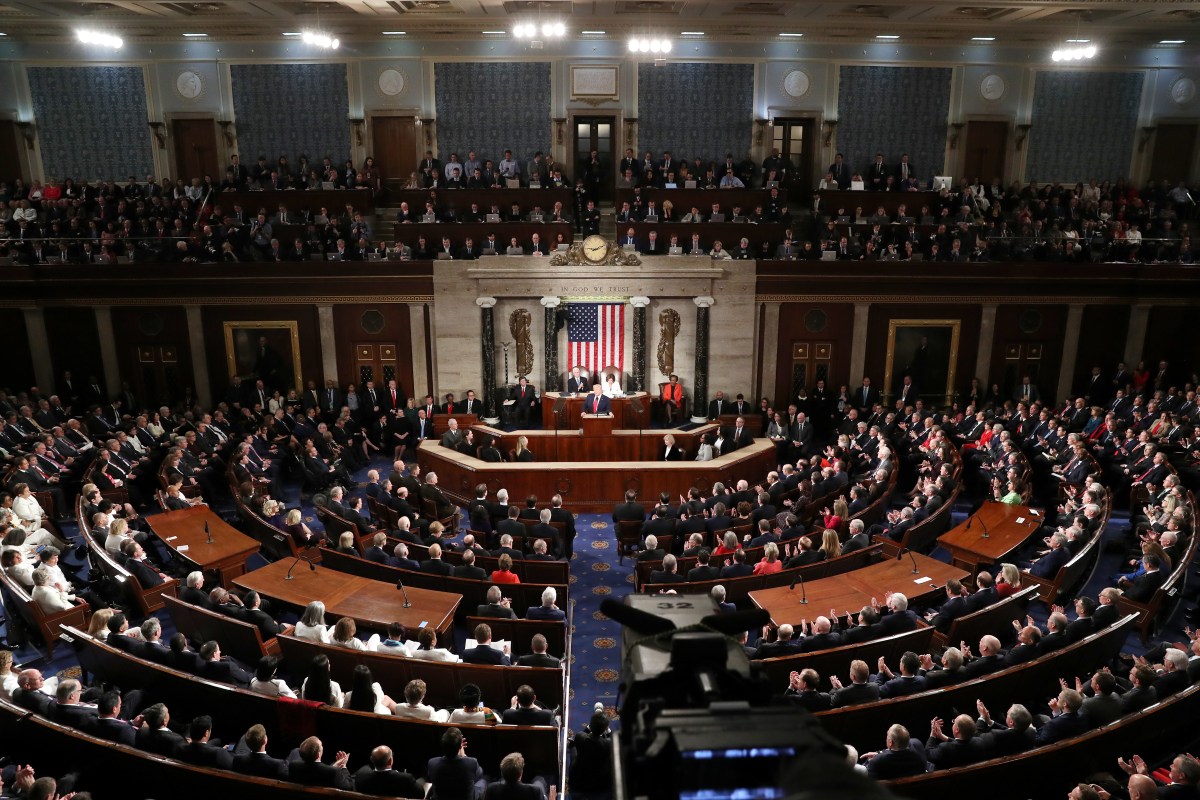
The Cook Political Report shifted six House races Tuesday, with five moving toward Democrats and one toward Republicans, reflecting a broader midterm landscape that appears to be tilting in the opposition party’s favor heading into 2026.
The changes leave Democrats with tangible pickup opportunities. Of the 18 Republicans now sitting in competitive races rated Toss Up, Lean Republican, or Lean Democrat, 14 are in true Toss Up territory, according to Erin Covey, the Cook Political Report’s editor for U.S. House races. Democrats need to flip just three seats to reclaim the majority.
“Democrats have plenty of opportunities,” Covey said in the Cook Political Report’s latest analysis.
Why It Matters
The rating changes come as Republicans face mounting midterm headwinds rooted in economic pressures and foreign policy. Trump’s approval rating has fallen below 40 percent, with gas prices averaging over four dollars per gallon and ongoing military operations in Iran weighing on voter sentiment.
Trump’s handling of the economy has hit a career-low approval rating of 31 percent in recent polling.
What To Know
Democrats lead the generic congressional ballot by an average of five to six points, a significant advantage in an election where control of Congress remains up for grabs.
“The political environment for House Republicans continues to look bleak,” Covey says.
The five races moving left include significant shifts in Ohio. Representative Greg Landsman’s 1st District race moved from Toss Up to Lean Democrat, while Representative Emilia Sykes’ 13th District race moved from Lean Democrat to Likely Democrat.
Two additional races tilted toward Democrats but remained in more competitive territory. Pennsylvania’s 8th District moved from Lean Republican to Toss Up, reflecting challenges facing Representative Rob Bresnahan, who has faced intense scrutiny over his prolific stock trading since taking office.
Bresnahan campaigned in 2024 on a promise to ban congressional stock trading, but has since completed hundreds of trades totaling millions of dollars. He came under particular criticism after selling stock in Medicaid-related companies seven days before voting for a spending plan that slashed Medicaid funding by nearly one trillion dollars.
Two races in districts with large Hispanic populations moved leftward as well. Representative Nellie Pou’s race in New Jersey’s 9th District moved from Lean Democrat to Likely Democrat. Representative Maria Elvira Salazar’s race in Florida’s 27th District moved from Solid Republican to Likely Republican, a shift Covey attributed in part to Democrats’ strong candidate recruitment in the seat.

Colorado’s 3rd District was the only race moving right, shifting from Likely Republican to Solid Republican.
The structural challenges facing Republicans are compounded by retirements. A record 36 House Republicans have announced they will not seek reelection, exceeding the previous record of 34 GOP retirements set in 2018, the cycle that preceded a Democratic gain of 40 House seats. By comparison, only 21 Democrats are not running for reelection.
The political environment historically favors the opposition party in midterm elections, with the president’s party losing House seats in 20 of the past 22 midterm cycles since 1938.
More troubling for Republicans, polling now suggests they could lose not just the House but the Senate as well—a scenario that seemed implausible just months ago.
What People Are Saying
Erin Covey, the Cook Political Report’s editor for U.S. House races, wrote: “Even before President Donald Trump’s approval rating reached a nadir amid spiking gas prices and an unpopular war with Iran, special and off-year elections showed Democrats with a significant enthusiasm advantage and Republicans were trailing the national generic ballot by five to six points.”
Matt Klink, a veteran Republican strategist, told Newsweek: “The public’s anxiety about the economy, specifically their own financial situation, has led to a downward trend in polls for the president.”
Robert Creamer, a Democratic strategist, told Newsweek: “We have to deliver for people, not just argue that they’ve betrayed us.”
Peter Loge, director of George Washington University’s Project on Ethics in Political Communication, told Newsweek: “Elections are ways to fire the people in charge if voters don’t like what’s going on. Economic news has been bad all year and is getting worse. That’s bad news for Republicans because Republicans are in charge.”
What Happens Next
Republicans currently hold a 218-to-214 majority in the House, with three vacancies. With 18 Republicans now sitting in competitive races and 14 of those in true Toss Up territory, Democrats have more pickup opportunities than they did entering 2026.
Read the full article here


