



We’ve come a long way since the “Radio Nurse.”
Back in 1937, the world’s first electronic baby monitor allowed parents to listen in on what was happening in their child’s nursery from another room.
Fast-forward nearly a century, and it’s not just about listening anymore. A wave of high-tech baby wearables has flooded the market over the past decade, tracking everything from sleep patterns to oxygen levels.
The pitch is simple: If adults are already obsessed with health trackers, such as the Fitbit or Oura Ring, why not bring the same data-driven insights to their babies?
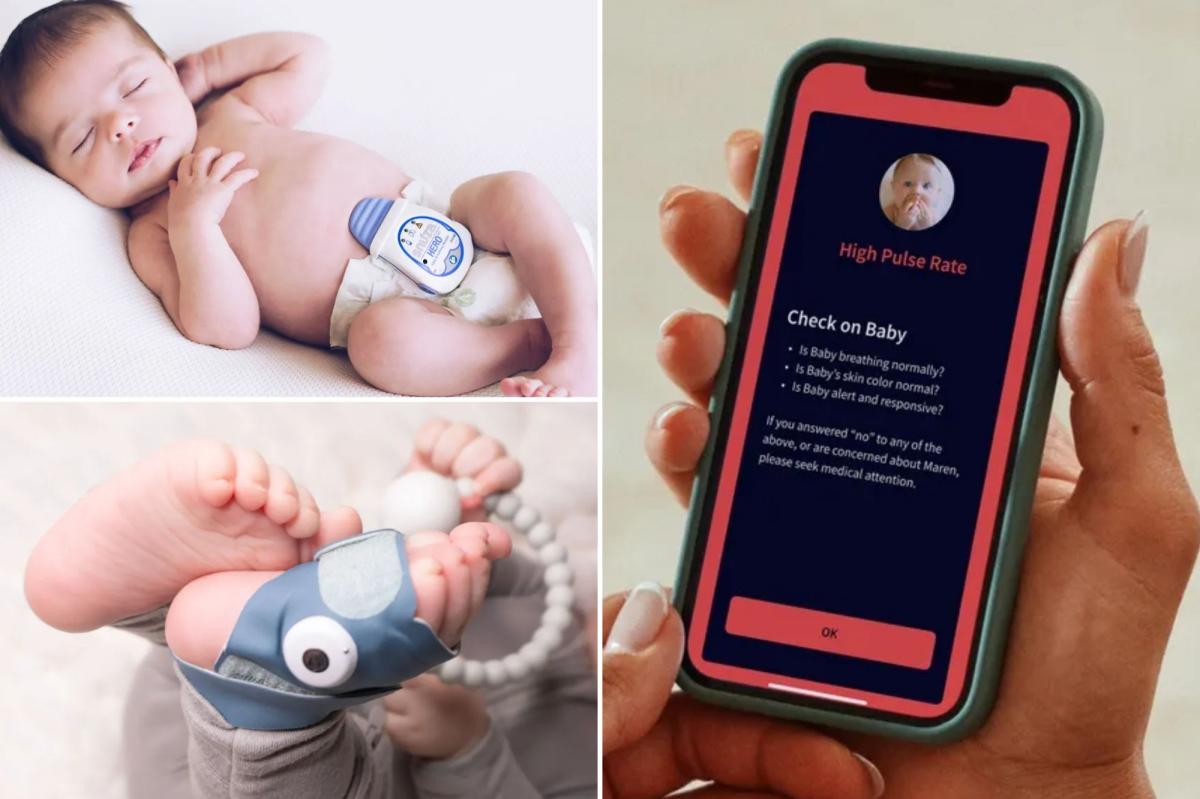
Take Nanit’s Breathing Wear line of swaddles, pajamas, sleeping bags and other baby apparel, which monitors breathing by tracking movement — and alerts parents via an app if no movement is detected.
Then there’s the Snuza Hero, which clips onto a baby’s diaper during sleep. If it detects no breathing for 15 seconds, it gently vibrates to rouse the baby. If there’s still no movement after 20 seconds, a loud alarm sounds.
The Sense-U smart baby monitor tracks a baby’s abdominal movement, rollover and temperature while sending real-time alerts to a smartphone app, along with vibration and audible alarms when needed.
The list goes on — but regulators aren’t fully on board. The Food and Drug Administration issued an alert last September warning parents and health care providers against wearable devices that claim to monitor an infant’s vital signs without federal approval.
While the agency didn’t name names, the warning would apply to many of the products listed above, even if some have earned regulatory clearance overseas or are backed by independent research on their use.
In the US, many of these wearables can be sold without FDA approval because they are classified as general health and wellness products rather than medical devices, allowing them to reach consumers before undergoing formal regulatory review.
And while they may show promise, the FDA has yet to evaluate their safety or effectiveness.
The makers of Nanit Breathing Wear, Snuza Hero and Sense-U stress that their products are not intended to diagnose, treat, cure or prevent any diseases or conditions, including sudden infant death syndrome, or SIDS. Most also warn that the devices may generate false readings.
None of the companies responded to The Post’s requests for comment.
Still, that doesn’t mean the idea of a “smart” baby is off the table. A handful of over-the-counter infant wearables have received the FDA’s blessing — including the Owlet Dream Sock.
Greenlit by the agency in November 2023, the $299.99 device wraps around a baby’s foot and is designed for use from ages 1 to 18 months.
“It uses the same pulse oximetry technology hospitals rely on to continuously track pulse rate and oxygen saturation, along with other data like sleep position and movement,” Liz Teran, Owlet’s chief parent officer, told The Post.
“Parents receive immediate alerts if readings for pulse rate or oxygen level move outside the preset ranges. Dream Sock is FDA-cleared for safety and accuracy across all skin tones,” she added.
Over time, the app also uses sleep and wake data to predict when a baby is likely to show signs of sleepiness, helping parents fine-tune schedules and avoid fussiness tied to being overtired.
Teran said the real-time health data and alerts can help ease parental anxiety, and the data can also be useful during pediatrician visits.
“The shift from ‘intuition-only’ to ‘intuition-plus-data’ changes the dynamic between caregivers and their care teams in a meaningful way,” she said.
One mother, Teran said, kept receiving notifications from the Dream Sock that her baby’s oxygen levels were dropping at night. While her pediatrician wasn’t initially concerned, the mom brought in the data for a second look — and ultimately, a test confirmed a cardiac condition.
But some doctors, parents and other experts have raised concerns that infant wearables could undermine safe sleep guidelines by creating a false sense of security, potentially leading caregivers to let their guard down on established safety practices.
They also point to the risk of false alarms and unnecessary alerts that can fuel stress and anxiety for parents, as well as sleep disruption and medical testing that babies don’t actually need.
“Alarm fatigue is actually something we talk about in medicine when we’re working in the hospital, and all the alarms are going off all the time, but it’s something that parents could also experience at home,” Dr. Joanna Parga-Belinkie, a neonatologist at Children’s Hospital of Philadelphia, told Consumer Reports last year.
“That’s why I worry for parents — they might think they have to have [one of these monitors] based on it being marketed to them as something that’s going to improve the health of their baby, but the data doesn’t exist to suggest that the home monitoring devices really do that,” she said.
In the case of the Dream Sock, Teran said the device has a “very very low rate of false alarms,” most of which come down to fit, Bluetooth range and battery.
Even with concerns about these next-generation devices, Teran said she believes infant wearables could one day become as ubiquitous as traditional baby monitors or strollers.
“While a video or audio baby monitor was something parents accepted for so long, it is simply not enough for today’s parents,” she said. “They want to know what the data is telling them about their baby’s health and sleep, and how to act on it with confidence in real time.”
The impact, Teran suggested, could stretch far past the crib.
“When you start building a health baseline from day one, you’re creating a longitudinal record that can inform how a child is cared for well beyond infancy,” she said. “That kind of early data has the potential to shape outcomes in ways we’re just beginning to understand.”
Read the full article here


