



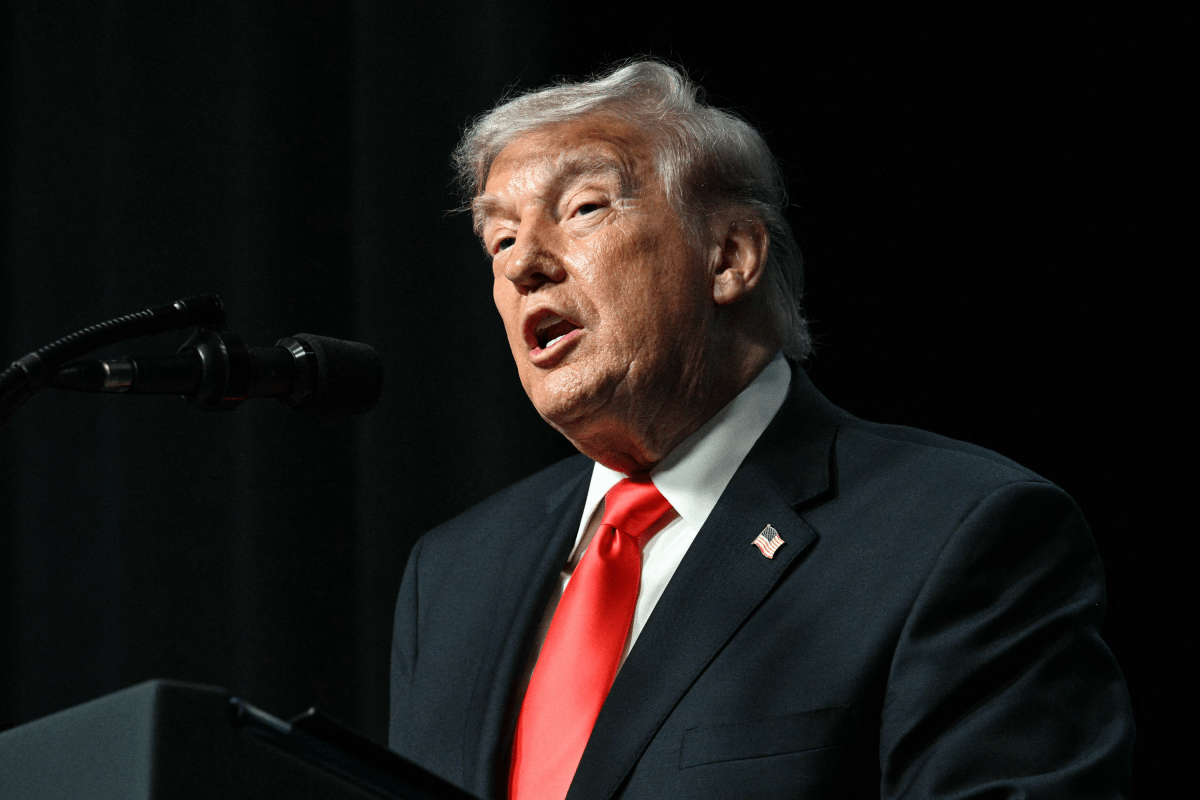
President Donald Trump said Friday during remarks in Florida that the United States would take over Cuba “almost immediately,” suggesting an aircraft carrier could be positioned offshore after the conflict in Iran.
The comments came the same day Trump signed an executive order significantly expanding U.S. sanctions on the Cuban government and its affiliates.
Cuba’s government, foreign companies doing business on the island and U.S. allies in the region could face heightened pressure amid a sharp escalation in rhetoric and economic penalties.
Newsweek has contacted the White House for clarity on what Trump meant.
Why It Matters
Trump’s remarks add a dramatic edge to an already intensifying U.S. pressure campaign against Havana, which his administration has framed as a national security threat.
While the president’s comments appeared partly joking, they followed concrete policy action in the form of broadened sanctions.
Speaking at the long‑running, nonpartisan Forum Club of the Palm Beaches in West Palm Beach, Florida, during a Friday evening event on May 1, 2026, Trump said the United States would be “taking over” Cuba “almost immediately,” a comment that drew attention for its timing and tone.
He made the remark while addressing the crowd and referencing Cuba’s ongoing political and economic problems, according to Fox News.
Trump went on to paint a hypothetical scenario involving U.S. military presence offshore, saying an American aircraft carrier could stop just outside Cuban waters.
According to Trump, the show of force alone would be enough to compel surrender, adding that he prefers to “finish a job.”
Link To Iran Conflict
The president tied his comments to the ongoing U.S.-Israeli war against Iran, saying any move involving Cuba would come on the way back from that conflict.
He suggested that a carrier returning from the Middle East—naming the USS Abraham Lincoln as an example—could be deployed near the island.
The remarks echoed previous statements in which Trump has said Cuba would be “next” after military operations in Iran, although no formal plan or timeline was announced.

New Sanctions Signed The Same Day
Earlier on Friday, Trump signed an executive order expanding U.S. sanctions on the Cuban government, citing threats to U.S. national security and foreign policy.
The order targets individuals and entities linked to Cuba’s security apparatus, energy sector, financial services, mining industries and other parts of the economy.
Under the directive, property and financial interests connected to sanctioned individuals can be blocked, and U.S. persons are largely prohibited from conducting transactions with them.
The order also authorizes secondary sanctions, allowing penalties against foreign companies and financial institutions that do significant business with sanctioned Cuban entities.
The sanctions also include travel restrictions, suspending U.S. entry for certain individuals tied to the Cuban government unless granted an exception in the national interest.
White House Framing
In the executive order, the administration described the Cuban government as an “unusual and extraordinary threat” to the United States, accusing it of repression, corruption and aligning with hostile foreign actors.
U.S. officials have also pointed to alleged ties between Havana, Iran and groups such as Hezbollah.
The White House has argued that increased pressure is necessary to counter what it describes as hostile intelligence and security activity taking place less than 100 miles from U.S. shores.
Response From Cuba
Cuban leaders sharply criticized the new measures. President Miguel Díaz-Canel described the sanctions as “coercive” and said they amounted to collective punishment against the Cuban people.
Foreign Minister Bruno Rodríguez said the government would not be intimidated by U.S. pressure.
Cuban officials have long rejected U.S. demands for political and economic reforms, insisting the country’s socialist system is not up for negotiation.
Unclear Policy Intent
Trump did not elaborate on whether his “take over” remarks were meant as humor, political messaging or an outline of future policy.
The White House did not immediately clarify whether the comments reflected any operational planning beyond sanctions already announced.
What is clear is that rhetoric and policy moved in tandem on Friday, marking another escalation in an already confrontational U.S. approach toward Cuba under Trump’s renewed presidency.
Read the full article here


