



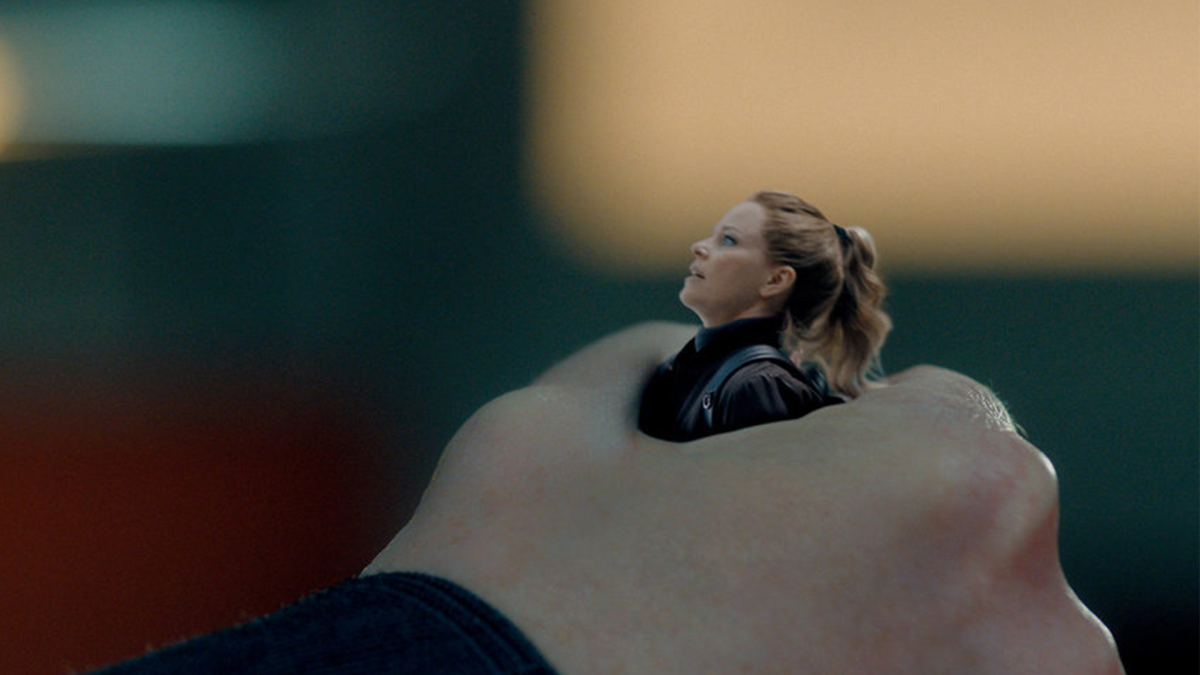
There’s a particular kind of storytelling that uses absurdity as a Trojan horse, sneaking something true and uncomfortable past your defenses while you’re busy laughing. Peacock’s The Miniature Wife does exactly that. The series stars Elizabeth Banks as Lindy and Matthew Macfadyen as Les, a married couple stuck at an impasse: she feels unseen, he feels unheard, and neither is doing much about it. Then a technological accident shrinks Lindy, literally, forcing them to confront the imbalance they’ve been avoiding. “All of us can relate to feeling a little diminished in a relationship,” Banks told Newsweek. “I get to externalize it by shrinking.”
What makes the show work is that it’s not just a sharp metaphor for gender dynamics in marriage. It’s also, unexpectedly, hopeful. Both Banks and Macfadyen serve as executive producers, with the project produced under Banks’ Brownstone Productions, and their fingerprints are all over the tone: messy, funny, surprisingly tender. “If you’re doing something funny,” Macfadyen said, “you can spin it very quickly into something meaningful and painful and then back again.”
Newsweek chatted with Banks and Macfadyen about what The Miniature Wife says about marriage, why absurdity might be the only honest way to tell this story right now, and how hard it is to get something like this made at all.
The following transcript was condensed and lightly edited for publication.
What is it about humor that lets a show like this tell such a complicated story about marriage?
Matthew Macfadyen: I think humor allows you to say an awful lot, because of course it’s the one side of that coin of tragedy. Humor is about pain, and without pain there is no comedy, so it’s all part of the mix. I always feel like if you’re doing something funny you can spin it very quickly into something meaningful and tender, painful and then back again. And if the audience is with you because they’re laughing, then they’re also listening and paying attention. There is something about that. And also it’s a very heightened, absurdist predicament that they’re in, so we can play it completely seriously and actually say an awful lot. Because it’s so absurd. Because of course life is absurd.
Elizabeth Banks: What drew me to this project from the very start was the promise that the tone was going to be anchored by this insane absurdist thing that happens, this shrinking woman. The themes we were going for, of this couple competing with each other and being isolated and broken, they needed a crisis in order to have something to work on together. They were avoiding actually working on their relationship. All of that is very relatable. Using the metaphor of shrinking just highlights the sense of isolation for her. She’s now not even living in his world, let alone being seen by the man she wants to be validated by. All of us can relate to feeling a little diminished in a relationship, and what that power imbalance feels like internally. I get to externalize it by shrinking. I just felt like the whole endeavor was on point. Everything fed the ideas, the themes, the feelings, all of it, even though it’s completely ridiculous.
And hopeful, too. There’s actually a sense that things can get better. That feels important right now.
Elizabeth Banks: Yeah, totally. The big message is that you have to work together, you have to come together. You can’t just keep passing on the trauma from your parents. My character’s mother was icy and diminished her constantly, and his father validated his brothers and never his dreams. All we want is what our parents didn’t give us. That’s very relatable, and we’re trying desperately to let all of that go and just see the best in each other. It takes sacrifice and working together to be the best version of ourselves.
There’s also something about the absurdity that speaks to this particular moment. Sometimes you need a truly absurd story to see something clearly.
Elizabeth Banks: There’s a sense of runaway science in the show too, which feels very in the zeitgeist. We’re kind of losing control, and if you don’t use it for good then it can so easily go bad. All art speaks to the time it’s made in, so there’s no way this wouldn’t be relatable to people right now.
Matthew, you’ve done something brilliant with comedic performance in Succession, finding layers in absurd and high-stakes moments that only really skilled actors can pull off. What is it about a character like this, and working with someone like Elizabeth, that helps you find that balance between humor and humanity?
Matthew Macfadyen: That’s very kind. It ties into what I was talking about earlier: that’s just life, isn’t it? It can be absurd and comic and ridiculous and painful all at the same time.
Elizabeth Banks: Perspective, right? Like, you’re going to take something dead seriously, whether it’s Tom wanting the thing he wants so badly or here, the shrinking and the baseball. And then you step back and think, there are people on the other side of the moon right now. None of this, we’re all going to die. At the end of it just love the people you’re with, figure it out, get happy, be content. It really shines a light on how absurd our ego is, our ambition, our narcissism. I feel like there’s a kinship in the narcissism of Tom and Les.
Matthew Macfadyen: It’s the vanity. We think we know what we’re doing and we’re in control.
Elizabeth Banks: And that any of what we’re doing matters. Like, what?
Matthew Macfadyen: You’d see the news and think, okay, we should have gone further with that. Initially you’d think, this is a bit much, but of course it isn’t. Why not accidentally shrink his wife? Anything’s going on. Yeah, you could have done that with them.
Elizabeth Banks: There are people who think the Earth is flat. Let’s shrink somebody, do you know what I mean?
Elizabeth, Brownstone Productions keeps putting out such distinct, interesting work. Does the moment we’re in dictate the kinds of stories you want to tell?
Elizabeth Banks: All art is made in the time it reflects, but it also reflects its makers. I like stories that are a little left of center, ultimately upbeat and joyful. I make a lot of comedy because I think comedy is sticky and gets people paying attention to things that you can then bring deeper notions to. I love unconventional storytellers and I love women with agency. I grew up watching and playing in my early career as the girlfriend, the wife, the mom. I think about Diane Keaton in Father of the Bride, which is really about Steve Martin. How is Diane Keaton not the star of that movie? What a waste of her. I played a lot of those roles coming up too, because we cast the man first, we put men front and center, we tell stories mostly about men. I like that I get to make things that play with all of that from a female lens.
How hard is it to get stories like this made right now?
Elizabeth Banks: This business loves to keep you humble, there’s no doubt about that. Entertainment right now is like every business: going through this moment of incredible technological advancement and change. The way we communicate and connect is changing so rapidly that humanity is shaken to its core. Everything feels hard because everyone’s afraid of making a wrong move. Nobody wants to lose a job, nobody wants to lose money, nobody wants to lose, period. Taking risk feels almost impossible right now. I feel that for young people, I feel it in the business world, I feel it generally. There’s sand beneath our feet and we’re not sure what we can count on. So when I get to make something with wonderful people, tell a story that I think is moving and funny and entertaining, that’s why I got into Hollywood. When it comes across my desk and I get to say yes, that feels like my purpose and my joy. I don’t take it for granted because I feel like it could stop tomorrow.
Subscribe to the Parting Shot Podcast with H. Alan Scott and the For the Culture newsletter for the latest in entertainment and pop culture and follow @HAlanScott everywhere.
Read the full article here


