



Published on
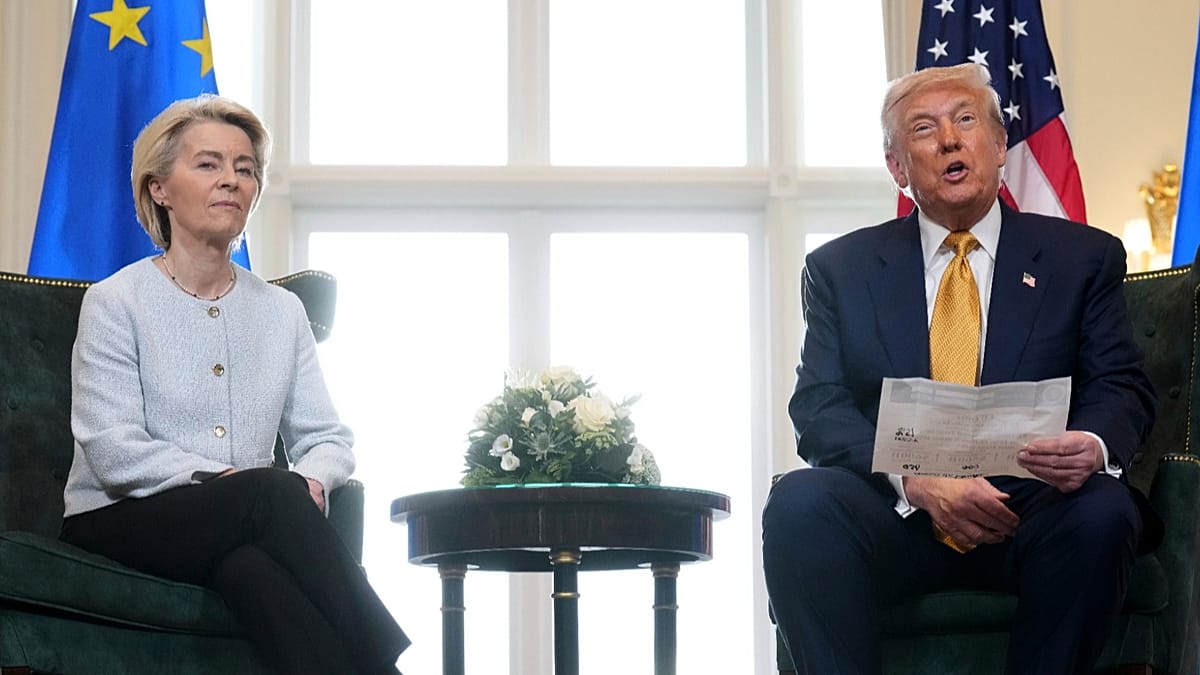
Political groups of the European Parliament reached an agreement on Tuesday on the EU-US trade deal, which was struck in July 2025 by US President Donald Trump and European Commission President Ursula von der Leyen and still needs to be ratified.
The agreement sets US tariffs at 15% on EU exports, while the EU committed to cutting its tariffs on US goods to zero, but its approval has proven controversial in recent weeks due to Trump’s threats to take control of Greenland.
The Parliament froze the approval process in January after Trump said on social media that he would impose a 10% tariff from February on eight European countries for having taken part in a military mission in the Arctic.
Works resumed a few weeks later, with representatives of the Parliament’s political groups fine-tuning the details of the legislation needed to implement the deal.
The final compromise they have reached will be formally voted on by the International Partnership Committee on February 24 and by a Plenary session as early as March.
It includes a “sunset clause”, which would see EU tariff relief expire at the end of March 2028, unless explicitly renewed, and a “suspension clause”, which would be activated in the event the US violates the deal’s rules.
“After the Greenland issue, we introduced a clear criterion for the territorial sovereignty of the European Union, to the set of criteria for a possible suspension”, said Socialist MEP Bernd Lange, lead negotiator on the file.
The Parliament’s version of the trade deal will also feature a safeguard mechanism to address the impact the reduction of tariffs for US goods could have on the EU market.
It also includes an automatic reintroduction of tariffs if the US does not reducing its own tariffs to 15% for a list of more than 400 steel-related products, which was agreed last July but which has not yet happened.
After the final vote in the plenary session, the Parliament will have to negotiate the terms of the agreement with the EU countries, and some of the conditions may change.
Read the full article here


