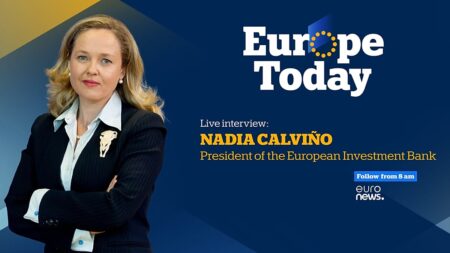



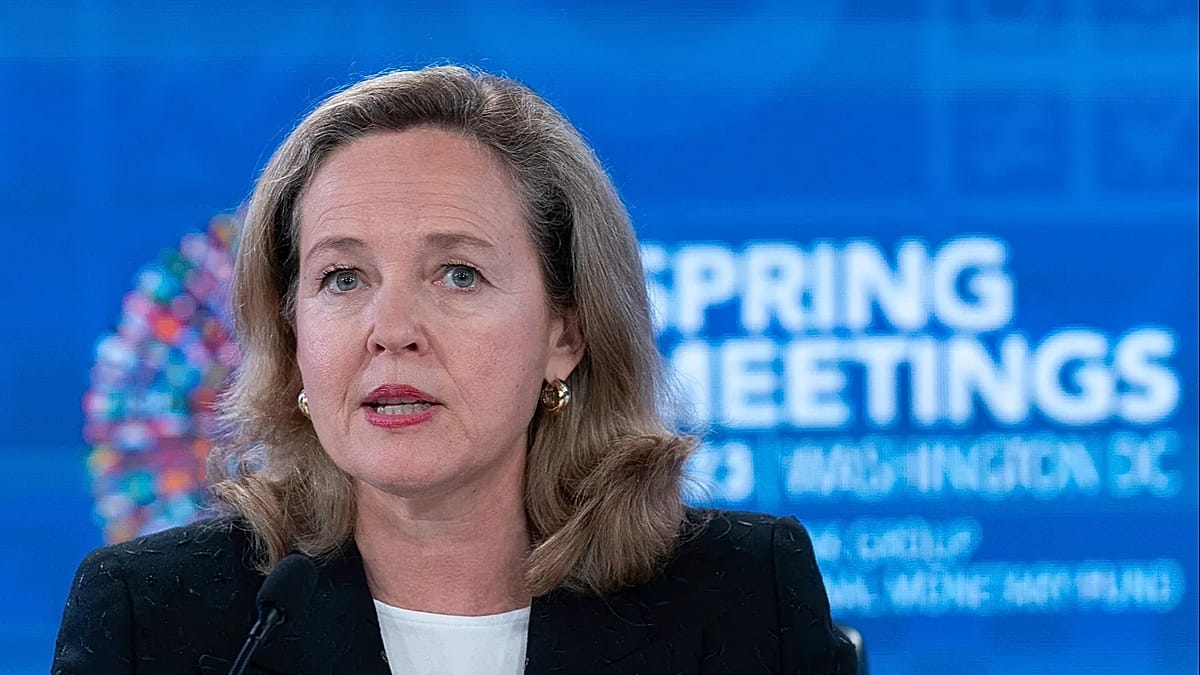
European Investment Bank President Nadia Calviño called on the EU to stay united after a week of unprecedented criticism from the Trump administration which suggested the 27-member bloc is in decline and must reverse course to avoid a “civilisational demise”.
“I have never been prouder to be European,” she told Euronews’ flagship morning show Europe Today when asked about a controversial US government security strategy which described Europe as economically in decline, drowning under illegal migration and suffocating as a result of overregulation.
Asked if she fears civilisational collapse, Calviño, who leads the largest public bank in Europe, said the continent was far from it.
“Our unity is our strength, that’s very, especially when so many people are interested in dividing us and weaking the European Union,” she added.
European leaders have pushed back on criticism from the administration and Trump himself, who described the continent’s leadership as “weak” and too politically correct.
European Council President António Costa, who heads the group of 27 EU leaders, demanded respect for the bloc’s internal democratic processes.
Calviño said the experience showed the world is changing and Europe must adapt. That means new partnerships and a stronger economic footing.
“It’s very clear that a new world order is in the making, and it will be very different to the past,” she said.
“We’re not going back to the 80 years of peace, stability and transatlantic strategic alliance. We have to build new partnerships around the world and ensure that the European economy is strong so it can shape this new world.”
Her comments echo remarks from top European officials this week, including Defence Commissioner Andrius Kubilius, who suggested the EU must set its own course rather than waiting for Washington to set the pace.
“It’s a new mindset,” he told Euronews in an interview filmed before the US national security strategy was released.
From an economic perspective, Calviño said the EU must run a dual track of integration and simplification of rules, which involves cutting red tape and excess bureaucracy.
“We need to simply the rules, we need to speed up, and we need to integrate our markets further,” she added. “And we need to invest – invest big time – to have the right infrastructure for this new economy.”
Read the full article here