



Pay up, “comrade!”
A Rockaway homeowner was left fuming after he calculated he’ll pay more property taxes than ex-Mayor Bill de Blasio will likely pay for two properties in trendy Park Slope worth millions more on the open market.
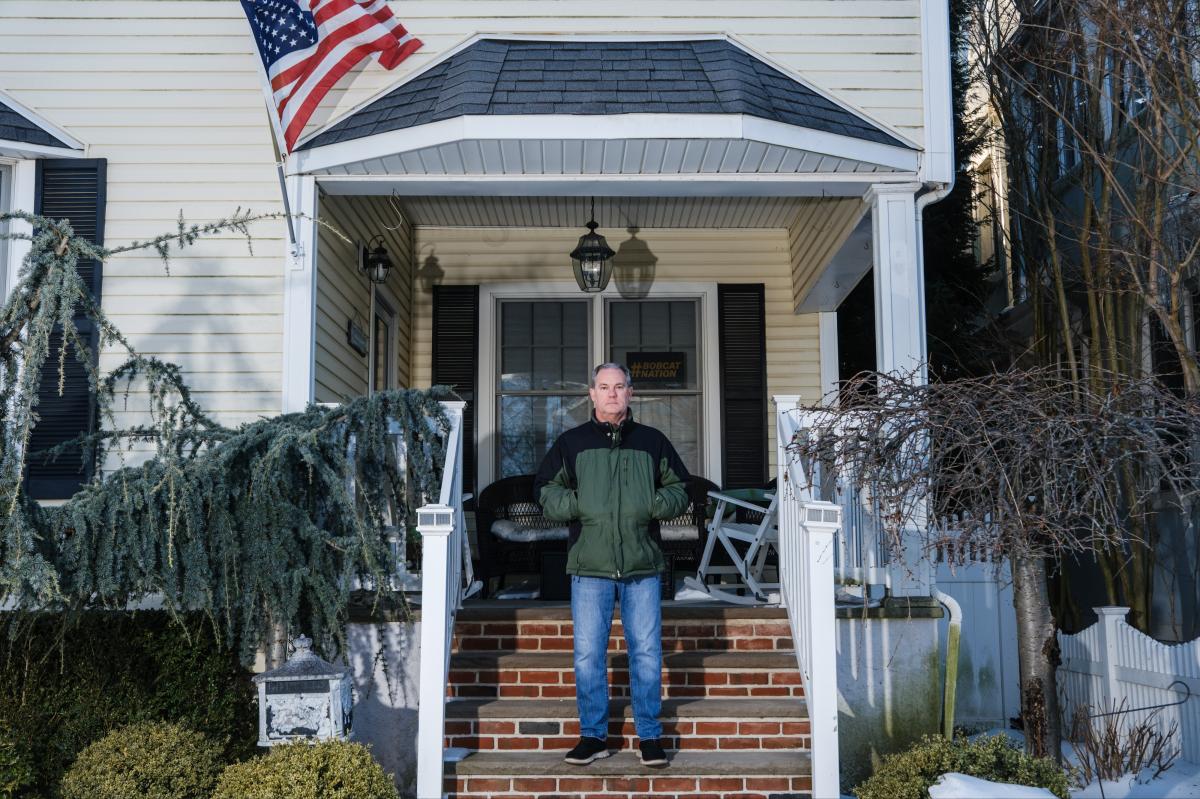
Robert Rose, who owns a house on the Rockaway peninsula, said he hit pay dirt as he started looking for examples to expose the outrageous inequities in how New York City collects property taxes.
Rose’s property tax is estimated to be north of $15,100 — while de Blasio and his estranged wife, Chirlane McCray, are estimated to have a combined property tax bill of about $13,700.
“It doesn’t make sense,” Rose said. “I’m getting ripped off, and de Blasio is getting a break. Comrade de Blasio, pay your fair share!”
Rose said he had “no beef” with middle-class New Yorkers in Park Slope.
“My issue is with the hypocrisy of the ‘Rules for thee but not for me’ from leftist socialists like Bill De Blasio, who push unnecessary social programs but fail to pay their own share in the process, like the property tax example that we went over,” he said.
“Inevitabl,y the burden gets passed to the hardworking middle-class taxpaying American.”
Even de Blasio agreed that Rose has a legitimate grievance.
“Robert absolutely has a point,” the former mayor told The Post. “This example illustrates why I created a commission which proposed a total overhaul of the property tax system in order to create more fairness among neighborhoods.”
But the recommendations were never acted on.
Any major change in the property tax system would require approval by the state Legislature as well as the mayor and City Council.
Rose’s one-family home at 145th Street has a market value of $1.9 million and an assessed value of $76,378.
But he’s paying $1,374 more in property taxes than de Blasio pays on two properties — even though one of the properties has a market value $1.2 million higher than Rose’s home.
That’s because his property is assessed at a higher rate than the de Blasio properties, bumping his taxes higher.
De Blasio’s one-unit home on 11th Street has a market value of $3.199 million but assessed value of just $43,656 — resulting in an estimated property tax bill of $8,662.66.
The two-unit home on 11th Street has a market value of $1.953 million but an assessed value of only $25,796, with an estimated property tax bill of $5,118.70.
The group Tax Equity Now New York [TENNY} filed a lawsuit alleging New York’s property tax law discriminates against many lower income, minority homeowners.
The Rose-de Blasio property proves the case, though Rose is white, said TENNY policy director Martha Stark, a former city finance commissioner.
“These inequalities are the predictable result of the City’s failure to follow the law. New York City does not assess homes uniformly, even though uniformity is required, leaving homeowners all across the City systematically over-assessed,” Stark told The Post Sunday.
“The City has both the authority and the obligation to fix this,” she said.
Mayor Zohran Mamdani said during his successful campaign for City Hall that fixing the inequities in the property tax system is a priority.
The democratic socialist said he wants to hike property taxes for “richer and whiter neighborhoods” in brownstone Brooklyn and Manhattan to ease the burden on homeowners in the outer boroughs.
“Shift the tax burden from overtaxed homeowners in the outer boroughs to more expensive homes in richer and whiter neighborhoods,” his proposal said.
He noted the city’s wealthier nabes pay just a fraction of their just tax bill because assessed
values are artificially capped to stay low under state law while actual market values soar in high-demand neighborhoods.
Mamdani said the city can fix the inequities by pushing class assessment percentages down for all homeowners and adjusting rates up for homes with soaring market values.
He claimed that would effectively lower tax payments for homeowners in neighborhoods like Jamaica and Brownsville while raising the amounts paid in the most expensive Brooklyn brownstones — the affluent lefty homeowners that voted for him.
But no changes were made when the city Finance Department released its preliminary assessment rolls for city properties last month, after Mamdani took office.
Albany is a big cause of the problem, TENNY said.
The legislature approved a law which took effect in 1983 that created classes of properties of which could be taxed at different rates. One-and-two-family homes are in one class, while co-ops, condos and apartment buildings are in another.
The law protected homeowners from an immediate tax spike, and allowed their continued protection from rapid property tax increases, even if homeowners’ property value increased faster than the shares of properties in other classes.
Read the full article here


