



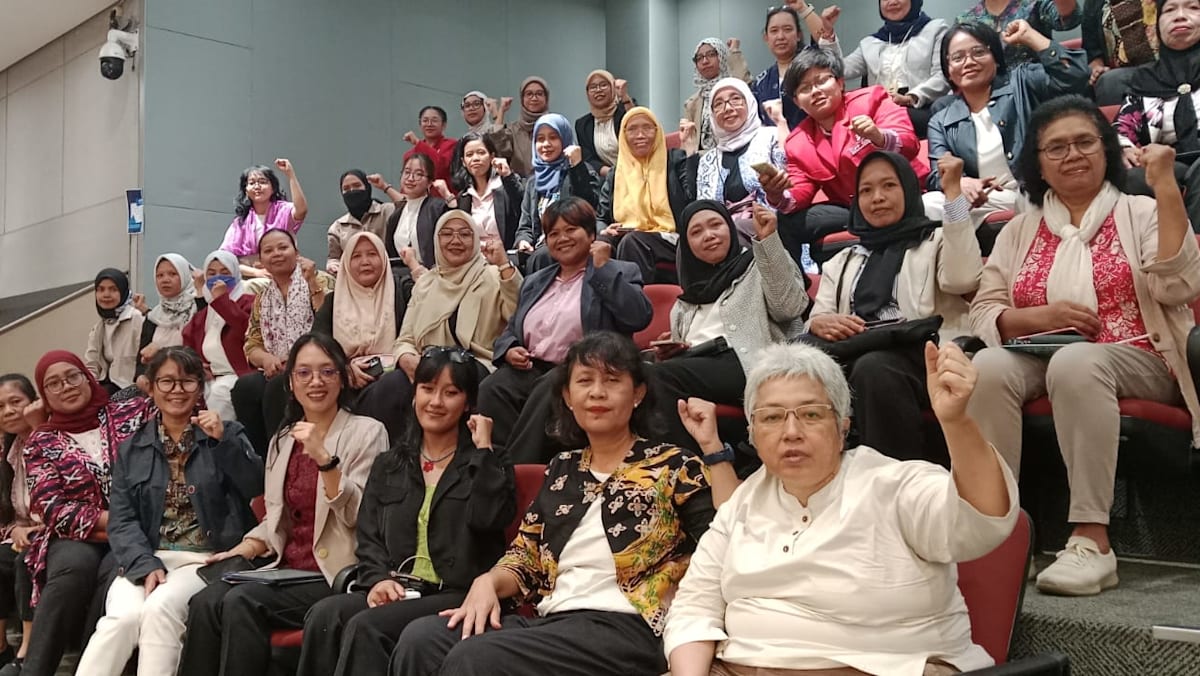
The National Network for Domestic Workers Advocacy (Jala PRT), a civil society organisation that focuses on advocating for the rights, protection, and well-being of domestic workers, told CNA that the law contains at least four main points.
These are: recognition of domestic workers as workers; regulation of wages, working hours, and types of work; oversight of domestic worker placement agencies; and the involvement of neighbourhood leaders in mediating disputes with employers.
However, experts say the law does not fully protect domestic workers.
Several key protection elements such as working hours as well as monitoring and mediation mechanisms are not clearly regulated and may pose challenges going forward.
“The effectiveness of this law will depend on how it is implemented through more technical regulations,” said El Bram Apriyanto, a labour researcher at the National Research and Innovation Agency (BRIN).
TWO DECADES WITHOUT PROTECTION
Before the law was passed, there was no specific legal framework protecting Indonesia’s domestic workers, who number around 8 million, according to Jala PRT.
Yet many cases of rights violations and abuse have long affected workers in the sector.
In a statement in April 2025, the National Commission on Violence Against Women (Komnas Perempuan) said the domestic sphere often becomes a grey area that conceals physical, psychological, economic, and sexual violence against domestic workers.
There is currently no centralised system for tracking violence trends against domestic workers.
However, a domestic workers’ organisation, the Sapulidi Domestic Workers’ Union (SPRT), said that it received 1,103 reports of violence from its members in 2025.
This figure is higher that Jala PRT’s reports, which averaged about 800 cases of violence per year from 2021 to 2024 and about 600 cases per year from 2017 to 2020.
According to Jala PRT, some workers experienced unpaid wages, dismissal, or wage cuts when they fell ill and could not work.
They were unable to claim health insurance, often did not receive wage increases despite years of service, and were not entitled to severance pay.
These figures are believed to represent only the “tip of the iceberg”, as many cases go unreported.
One of the most recent cases occurred just a day after the law was passed, on the night of Apr 22, involving two domestic workers, R, 26, and D, 15, in Central Jakarta.
R is now fighting for her life in intensive care at Mintohardjo Naval Hospital, while D tragically lost her life after both jumped from the fourth floor in a desperate attempt to escape alleged abuse by their employer.
Police named three suspects in early May: the employer and two recruiters, for alleged wrongdoing including child exploitation, unlawful confinement, and human trafficking.
Read the full article here


