



NEWYou can now listen to Fox News articles!
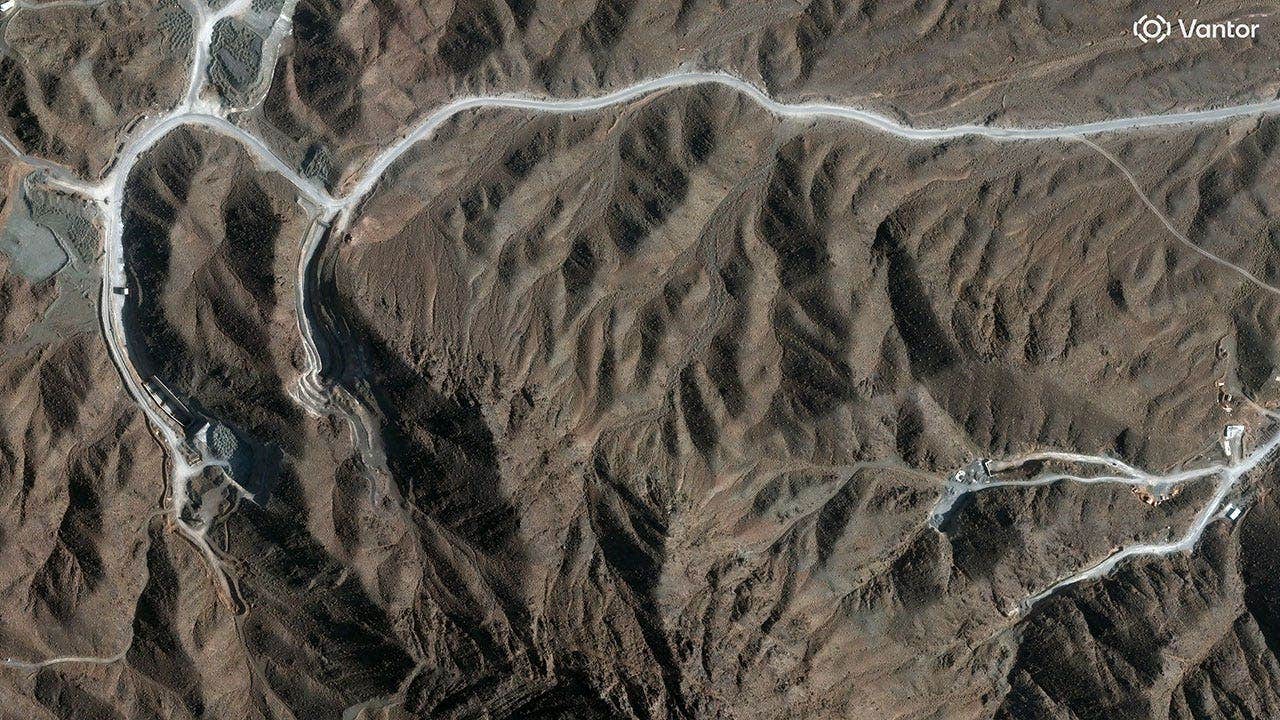
New satellite imagery shows Iran has added new defenses around tunnel entrances at Pickaxe Mountain, the deeply buried nuclear-linked site President Donald Trump has repeatedly threatened to strike, as Russia and China on Thursday vetoed a U.S.-drafted Security Council resolution aimed at preserving international monitoring of sanctions on Tehran.
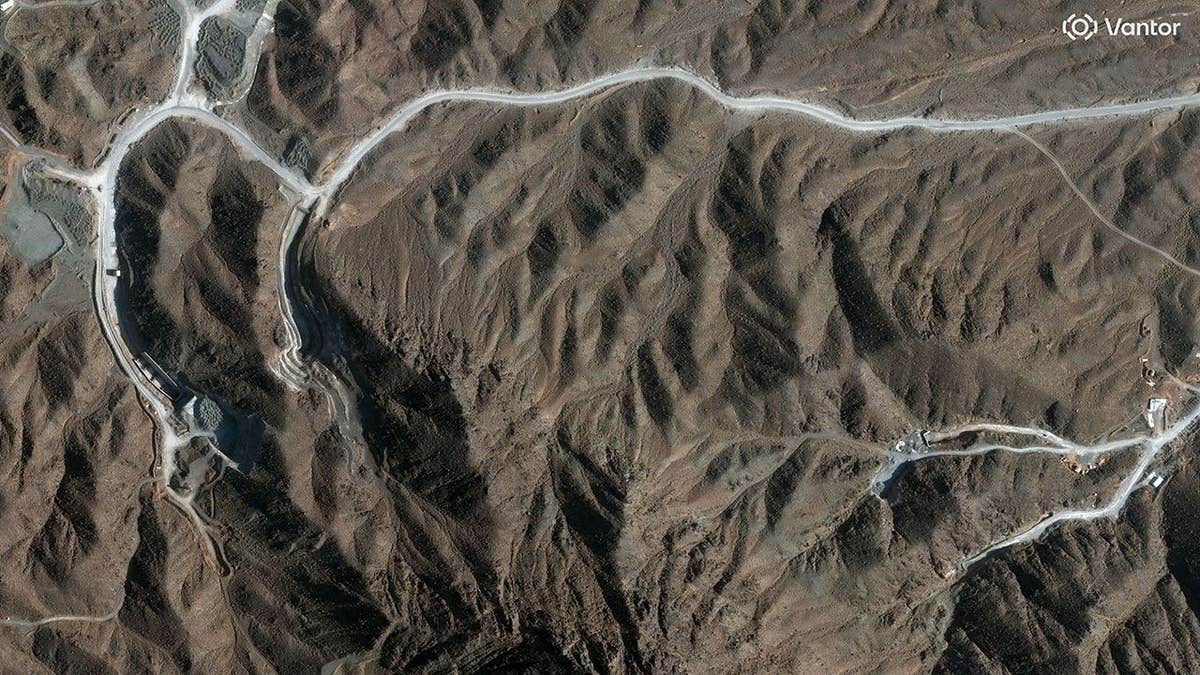
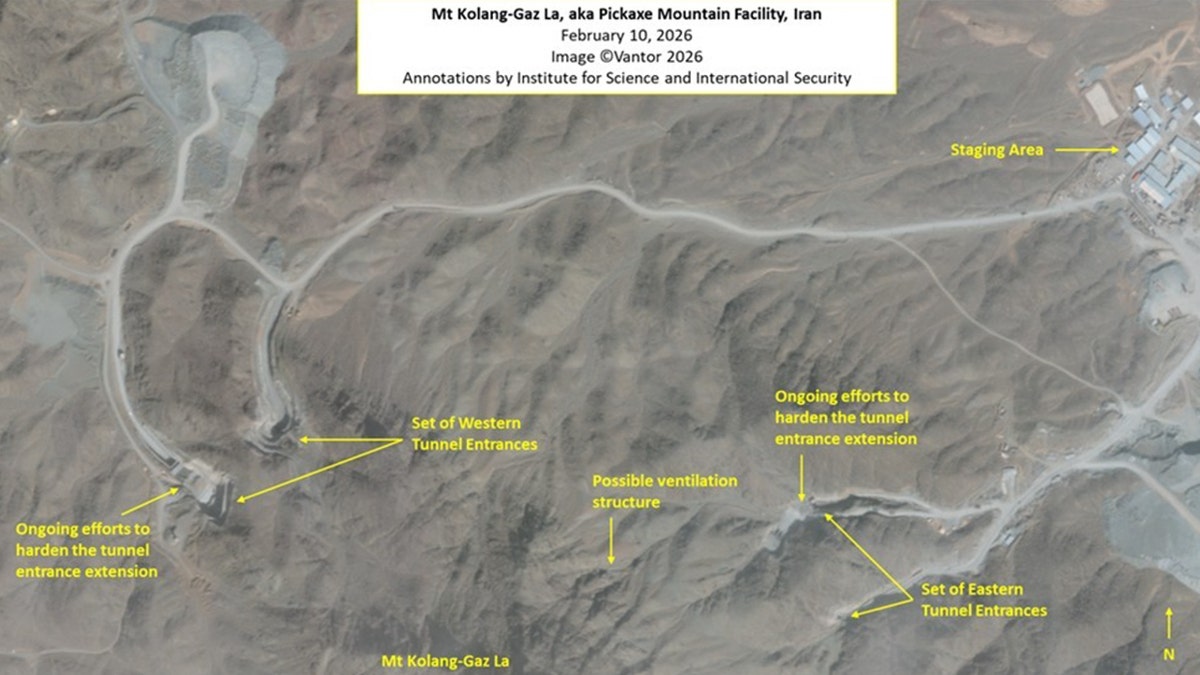
The Institute for Science and International Security said in a report released Thursday that satellite imagery from Sept. 11 shows earthen roadblocks remain in place on roads leading to Pickaxe Mountain’s western tunnel portals near the Natanz nuclear complex. The institute said the continued restricted access reinforces its assessment that the facility is not currently being used for normal operations, while assessing that valuable equipment or materials remain inside.
The report also identified additional soil placed over one western tunnel portal and over a nearby cluster of entrances first built in 2007. The institute said the added soil increases the amount of earth protecting the entrances and helps harden them against aerial bombardment.
EXPERTS ‘DEEPLY’ CONCERNED OVER IRAN’S WORK AT UNDERGROUND NUCLEAR SITE
The findings come one week after Trump issued his latest warning over Pickaxe Mountain.
“We notice there’s a little activity at Pickaxe,” Trump told reporters last week. “I would advise Iran not to get cute because we will have to hit them very hard.”
Trump has repeatedly raised the possibility of attacking the site. In a July 28 “Fox & Friends” interview highlighted by the White House, Trump said the U.S. was watching Pickaxe closely and knew “exactly what’s going on,” adding that Washington could “take out Pickaxe” if diplomacy failed.
Pickaxe Mountain lies roughly two kilometers from Natanz and features multiple tunnel entrances leading into a deeply buried underground complex. Construction began in 2020 following sabotage that damaged an advanced centrifuge assembly facility at Natanz, and Iranian officials subsequently said a replacement underground facility was being built for advanced centrifuge production. Analysts estimate portions of the facility may be buried at least 100 meters beneath the mountain. Iran has said there is no nuclear activity at the site.
TRUMP SAYS US HAS ‘MASSIVE’ MUNITIONS STOCKPILE, VOWS ‘TREASONOUS’ LEAKERS BEING HUNTED DOWN

Behnam Ben Taleblu, senior director of the Iran program at the Foundation for Defense of Democracies, told Fox News Digital that some analysts believe the opportunity for a straightforward strike on Pickaxe Mountain may already have passed.
“The window to strike Pickaxe Mountain, according to some, has already expired because the regime has dug an underground nuclear facility several times deeper than Fordow,” Ben Taleblu said. But he argued that Washington retains military options even if destroying the underground complex itself proves difficult.
“Washington can do what it’s traditionally been able to do with sites that are underground, hardened and fortified, and that’s to bury their entrances and raise the political cost to the Islamic Republic of being able to dig out,” he said.
“While there may not be the perfect munition just yet, Uncle Sam always has a bigger bomb,” Ben Taleblu added. “And in the meantime, what they can do is show that they mean business by burying the entrances.”
NUCLEAR EXPERTS URGE TRUMP NOT TO LET IRAN STEER TALKS AWAY FROM REGIME’S ATOMIC THREAT
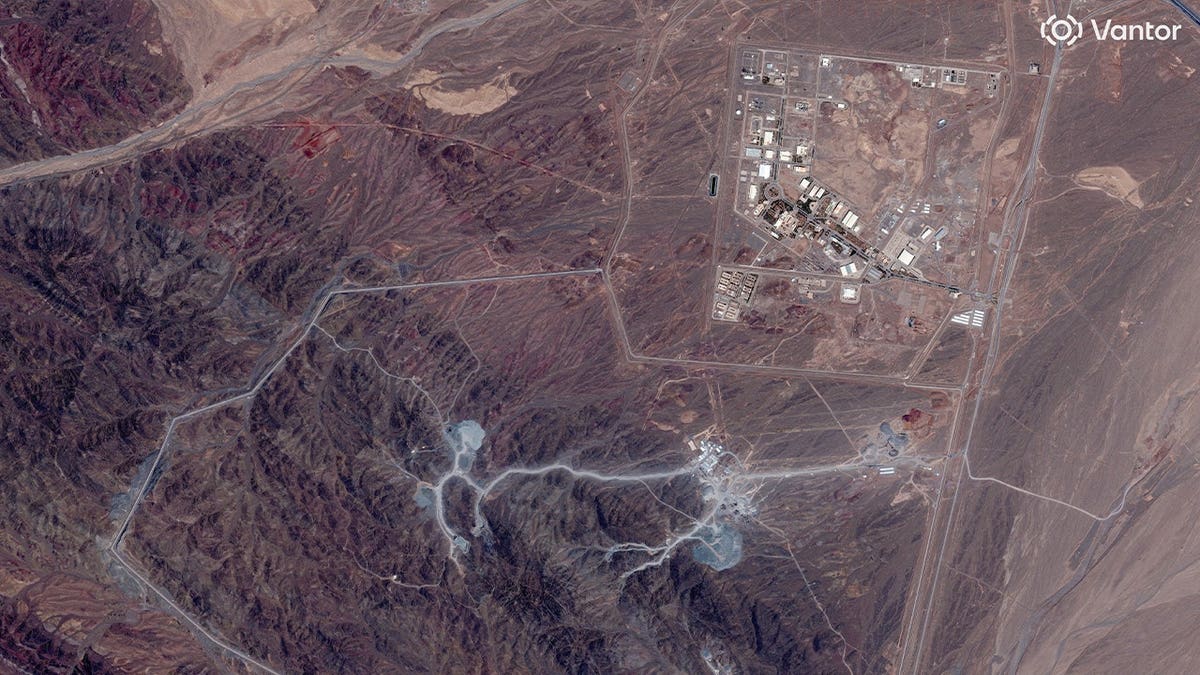
The Pickaxe findings came alongside signs of reconstruction at another sensitive Iranian facility.
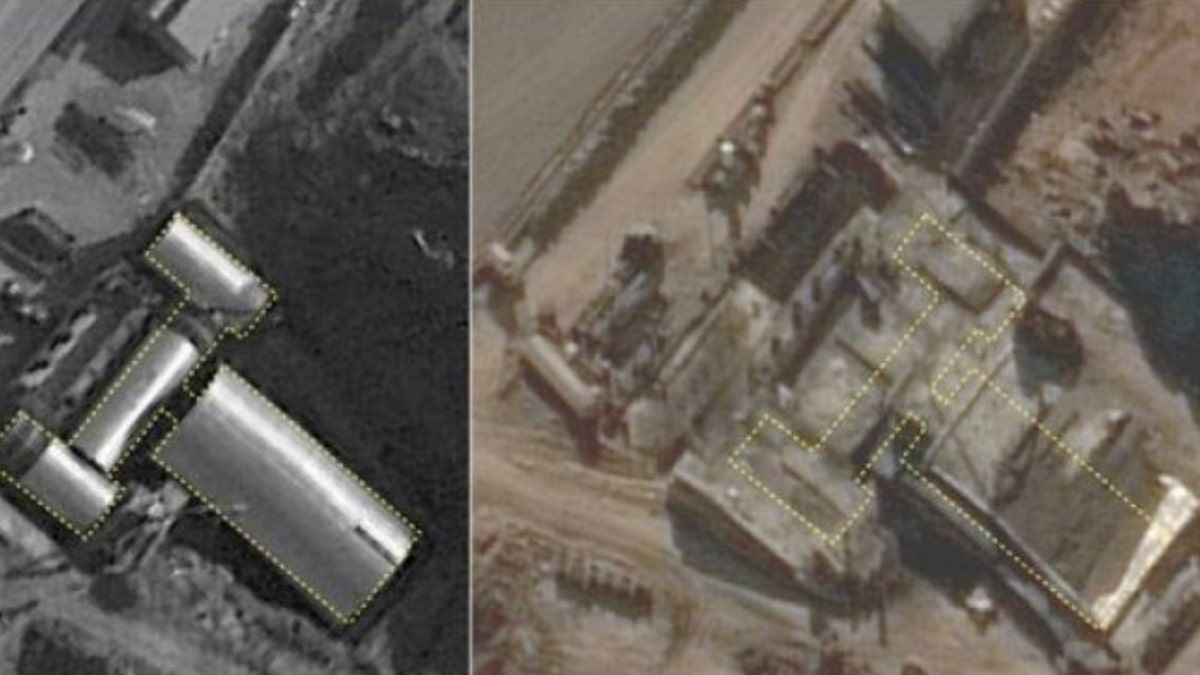
In a separate report Thursday, the institute said Iran was “rapidly moving forward” with reconstruction of Taleghan 2 at the Parchin military complex southeast of Tehran. Vantor Technologies satellite imagery from Sept. 13 shows Iran erected a tarp over the destroyed hardened facility, obscuring work underneath from satellite or aerial observation, while dump trucks, bulldozers, concrete equipment and cranes were active around the site.
The institute said Iran also built new concrete reinforcement that could provide additional protection against aerial attack. Taleghan 2 was struck by Israel in October 2024 and again in March 2026 after Iran had rebuilt and hardened the facility. The institute said significant questions remain about Tehran’s plans for the site.
The military developments unfolded alongside a separate confrontation over Iran at the United Nations.
CHINA ORDERS FIRMS TO IGNORE US IRAN SANCTIONS, DARING US TO ENFORCE CRACKDOWN
Russia and China on Thursday vetoed a U.S.-authored Security Council resolution that would have extended for another year, until September 2027, the mandate of the Panel of Experts supporting the 1737 Iran Sanctions Committee. The measure received 11 votes in favor, while Pakistan and Somalia abstained.
The panel investigates alleged sanctions violations and reports on implementation. The dispute reflects a deeper split over whether UN sanctions suspended under the 2015 nuclear agreement were legally restored through the “snapback” mechanism. Most Council members maintain that the sanctions and related monitoring structures were revived, while Russia and China reject the legal and procedural validity of that position.
A day before the vote, U.S. Ambassador to the U.N. Mike Waltz told reporters in New York that Washington considers the sanctions legally restored.
“The snapback sanctions… occurred, the United States and this U.N. Security Council followed appropriate procedures for that to occur,” Waltz said Wednesday at a news conference attended by Fox News Digital. “Those sanctions are in place and we expect those who are a party to fully enforce those sanctions.”
Waltz said the expert panel is important because sanctioned companies and individuals can attempt to evade restrictions by changing names and corporate structures.
“The president has been clear, and the world community has been clear with resolution after resolution, that the Iranian regime cannot have a nuclear weapon,” Waltz said.
CLICK HERE TO DOWNLOAD THE FOX NEWS APP
Thursday also brought fresh U.N. scrutiny of both Washington and Tehran. An independent U.N. fact-finding mission said it had reasonable grounds to believe two U.S. strikes on civilian sites in Iran in February constituted war crimes, while separately concluding that Iranian authorities committed crimes against humanity during their crackdown on anti-government protests. The mission is investigative rather than judicial, and its findings do not themselves constitute criminal judgments.
Fox News Digital reached out to the Iran U.N. mission for comments but didn’t receive them in time for publication.
Read the full article here


