



Published on
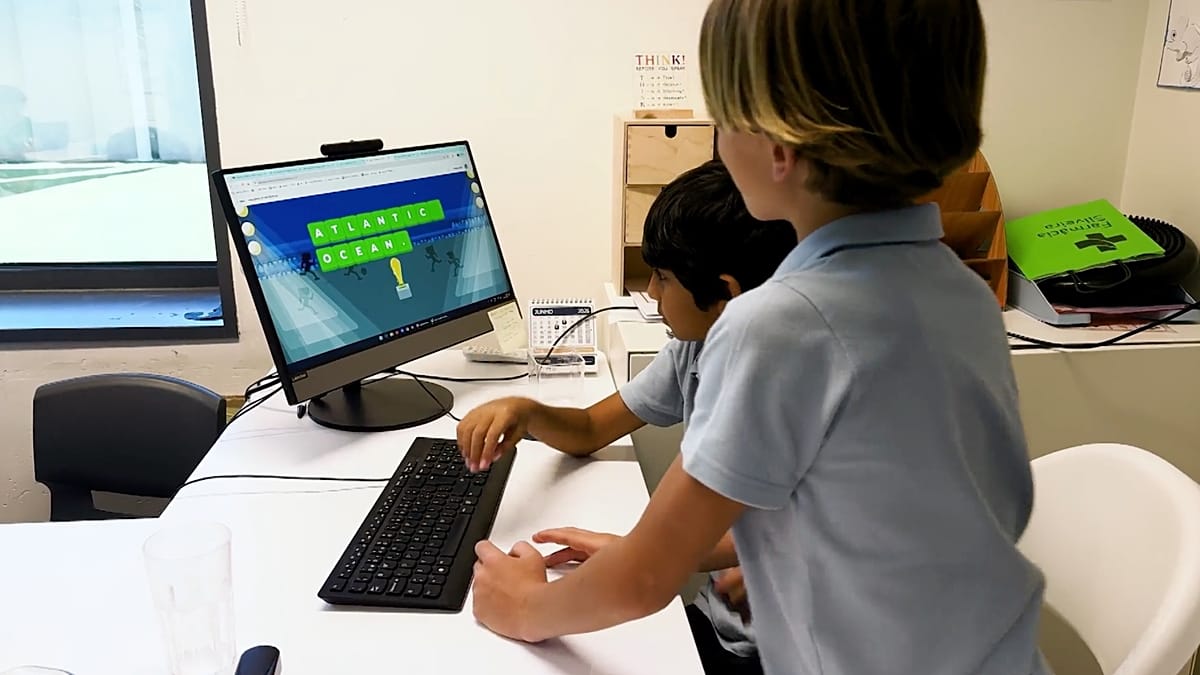
Yet one last lesson has the pupil’s full attention in a primary school class . Tablets in hand, they navigate colourful games, solve puzzles or explore the International Space Station. They are learning coding through Ubbu, a Portuguese computer programming platform for children aged six to fourteen.
“It looks like they’re playing games, but they’re actually working on lots of different things,” says teacher Teresa Cary. “They need to understand how to use a computer, how to make a robot do something. They need logic, it’s actually maths.”
Ubbu was developed by Code for All, a startup founded in 2015 by João Magalhães and a group of friends.
“We believed no one was prepared for the speed at which technology was entering our lives,” he says. “We built a solution for any teacher, school or government that wanted to introduce digital literacy, computational thinking, creativity, and now AI and cybersecurity.”
Available in four languages, ubbu now reaches around half a million children through more than 8,000 teachers in 20 countries.
Children learn by assembling visual coding blocks rather than writing code. “All the narratives are linked to the UN Sustainable Development Goals,” explains pedagogical content creator André Ribeiro. “They create ethical content and learn to use technology for good.”
Project manager Joana Miranda demonstrates a pupil’s project in which robots work together to stop a forest fire. “Knowing how to use technology safely, responsibly and ethically is incredibly important,” she says. Ubbu also aims to bridge the gender gap in technology. We’re achieving a 50-50 audience in schools. Girls see role models and realise there are women in science, technology and engineering.”
Making those skills accessible to every child is central to the company’s mission. Through partnerships with companies and foundations, Ubbu is offered free to public schools in disadvantaged areas of Portugal.
At Amadora Oeste Agrupamento de Escolas’ primary school, on Lisbon’s outskirts, teacher Isabel Cunha says the platform has transformed her classroom. “It captured my pupils’ attention, and from there we explored many different topics,” she says. “After only a year, they know how to use computers and tablets safely, how to navigate the web, I can already see great progress.”
For nine-year-old Arwa, whom we follow home after school, coding is simply fun. For her father, the stakes are higher. “In 10 or 20 years, you won’t be able to do anything without coding, programming or robotics,” he says. “The people who know these things will be the future leaders.”
Read the full article here


