



Representative Pat Fallon, a Texas Republican who chairs the House Armed Services Subcommittee on Military Personnel, said Monday that he believes the United States is likely headed toward deploying ground forces in Iran, arguing that airstrikes alone will not be enough to end the war or remove the current leadership in Tehran.
Speaking on Mornings With Maria on Fox Business, Fallon said he expects the conflict to eventually require U.S. troops on the ground, at least in a limited form, alongside regional allies and with American air support. When asked directly whether that meant U.S. forces would deploy inside Iran, Fallon was unequivocal: “I just don’t see any other way.”
His remarks come as the Trump administration weighs its next steps following weeks of escalating strikes against Iranian targets and a high‑risk rescue mission that successfully recovered a second missing U.S. airman from inside Iranian territory.
Why It Matters
Fallon’s comments carry particular significance because of his position in Congress. As chair of the House Armed Services Subcommittee on Military Personnel, he oversees policy affecting service members and their families—issues that shape recruitment, retention and readiness.
His assessment reflects a growing concern among some Republicans that the current U.S. strategy—focused largely on airpower, intelligence operations, and pressure on Iranian infrastructure—may fall short of producing a durable political outcome. Trump has declined to rule out further escalation, including the use of ground forces.
The idea of U.S. ground forces operating inside Iran would mark a dramatic expansion of the conflict. Iran’s size, population, and internal security apparatus make it fundamentally different from recent U.S. military engagements, raising the risk of prolonged fighting, civilian casualties, and regional spillover.
The issue of hostages also looms large. Over the weekend, U.S. forces successfully rescued a second American airman who had gone missing inside Iran—an operation officials have acknowledged could have ended with the service member captured. The rescue underscored the risk that U.S. personnel operating inside Iran could be captured and used for leverage—one reason officials worked to prevent Iran from reaching the airman first.
What to Know
During the interview, Fallon argued that Iran’s leadership is unlikely to collapse under economic pressure or airstrikes alone, describing the ruling system as ideologically hardened and willing to accept extreme hardship to remain in power.
“I don’t think this is going to end like Venezuela, where you just have a new leader that wants to be at least cooperative with the United States,” Fallon said, contending that Iran’s leaders are fundamentally different from regimes that have fractured under sanctions or diplomatic isolation.
He compared Iran’s remaining leadership to the Taliban, describing a governing structure willing to retain power even if the country is left economically and physically devastated.
Because of that, Fallon said, military force would likely need to extend beyond standoff strikes.
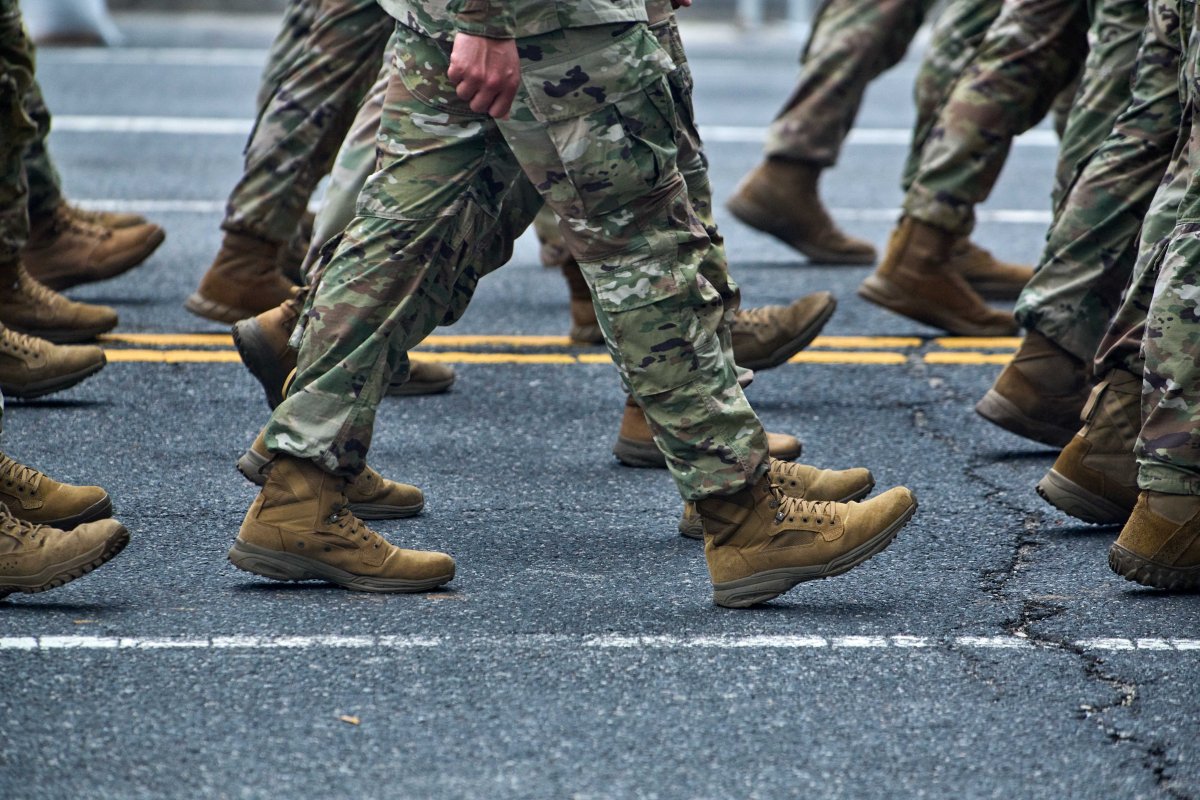
“So, I personally think it’s going to be boots—at least special ops, American special operators—on the ground with allies in the region and air cover,” Fallon said. “We have to change the tact of the Tehran government, or we can’t leave. Can’t leave until the job is done.”
Fallon cited Iran’s scale as another reason he believes airpower alone will not be sufficient. He noted that Iran has a population of roughly 93 million people and a landmass larger than several major European countries combined, making it far more complex than Iraq at the time of the 2003 U.S. invasion. In fact, it’s about the size of Alaska, or 2.5 times the size of Texas.
At the same time, Fallon argued that internal opposition to the regime could work in the United States’ favor if military pressure intensifies. He claimed that a large majority of Iranians oppose the current leadership and would seize an opportunity to challenge it if the balance of power shifted.
He also pointed to recent U.S. operations inside Iran as evidence of American military superiority, including the successful rescue of the downed airman. Fallon said the mission demonstrated Washington’s ability to operate deep inside Iranian territory while exposing the regime’s inability to stop it.
Still, the rescue also highlighted the risks inherent in such operations. U.S. officials described a race to reach the airman before Iranian forces could capture him—an outcome that would have given Tehran major leverage.
What People Are Saying
Representative Tim Burchett, a Tennessee Republican, to NewsNation last weekend: “I don’t think there’s a will for a ground conflict between America and Iran. I know a lot of Republicans don’t support that, and I know all the Democrats won’t support it.”
Mohammad-Bagher Ghalibaf, speaker of Iran’s Parliament, in state media last weekend: “The enemy publicly sends messages of negotiation and dialogue, but secretly is planning a ground attack. The U.S. is unaware that our men are waiting for the arrival of American troops on the ground to set them on fire and punish their regional partners forever. Our firing continues. Our missiles are in place. Our determination and faith have increased.”
President Donald Trump to the New York Post last month: “I don’t have the yips with respect to boots on the ground—like every president says, ‘There will be no boots on the ground.’ I don’t say it. I say, ‘probably don’t need them,’ [or] ‘if they were necessary.’”
Former GOP Representative Matt Gaetz at CPAC last month: “A ground invasion of Iran will make our country poorer and less safe. It will mean higher gas prices, higher food prices, and I’m not sure we’d end up killing more terrorists than we would create.”
Representative Nancy Mace, a South Carolina Republican, told CNN last weekend: “If we’re going to do a conventional ground operation with Marines and 82nd Airborne, that is a ground war that I believe Congress should have a say and we should be briefed. We don’t want troops on the ground.”
What Comes Next
The Trump administration is expected to reassess its strategy in the coming days as it gauges Iran’s response to strikes and diplomatic back‑channel efforts. Any move toward deploying U.S. ground forces—even in a limited special‑operations role—would trigger intense scrutiny in Congress and among U.S. allies, particularly given the heightened risk of American troops becoming targets or hostages inside Iran.
Read the full article here


