



The European Union’s new Critical Chemicals Alliance (CCA), which has been presented as a strategic response to concerns about Europe’s industrial resilience and competitiveness, has become a front for industries pushing for deregulation and relaxed pollution rules, according to a watchdog report published on Monday.
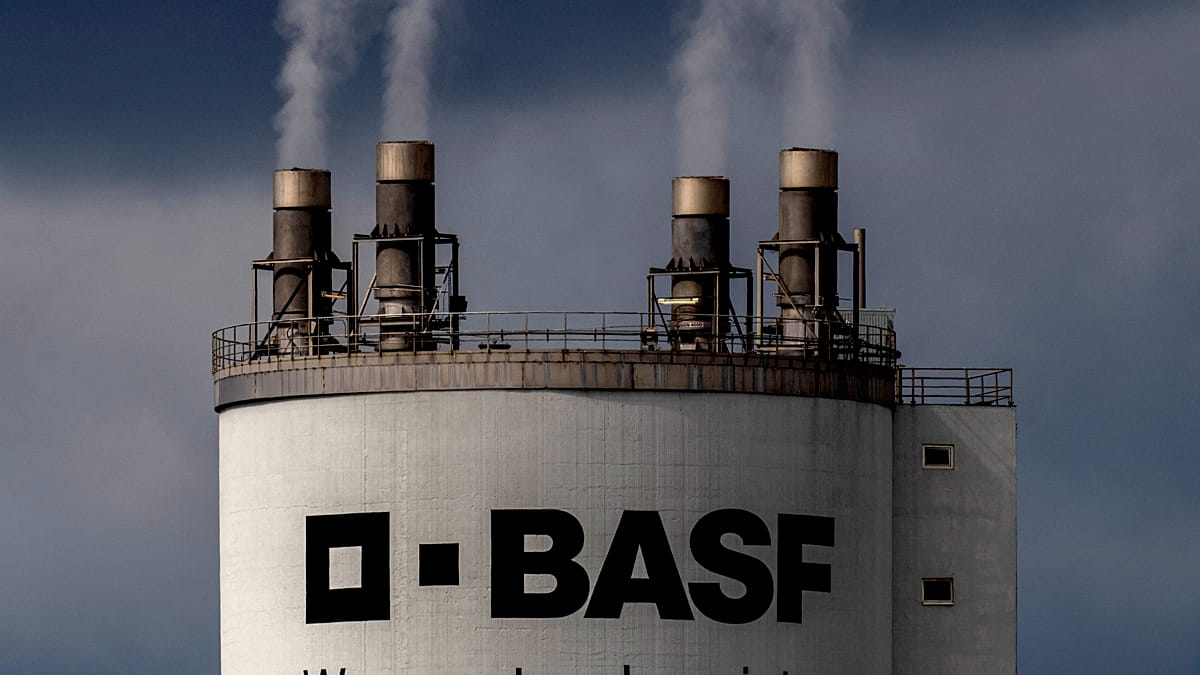
Launched in January 2026 with the European Commission’s endorsement, the CCA includes chemical giants like BASF, TotalEnergies, and Avantium. It was officially meant to identify chemical substances and production sites deemed “critical” to the European economy, potentially unlocking billions in future public support and state aid.
But new research published by the Corporate Europe Observatory (CEO) and European Environmental Bureau (EEB) makes a case that the EU’s competitiveness narrative around chemical production is overwhelmingly shaped by the very industry it is meant to oversee.
“Since the Alliance’s launch, it has been clear that the European Chemical Industry Council (CEFIC) is in the driving seat of this initiative, with the Commission’s industry department unconcerned by the risks of the process being unduly influenced by corporate interests,” reads the CEO-EEB report.
The well-known carcinogen benzene, the dangerous chlorine, petrochemical feedstock such as ethylene and propylene and hydrofluoric acid, linked to “forever chemicals” or PFAS, are among the “critical molecules” the CCA identified for public investment.
The new 30-page report challenges the industry’s repeated claim that European chemical manufacturers are facing an existential crisis due to high energy costs and Chinese competition. It argues that major chemical companies generated hundreds of billions of euros in profits over the past decade and that much of that profit was distributed to shareholders rather than reinvested in modernising production.
Generous free carbon allowances under the EU’s carbon market, the Emissions Trading System, have already provided substantial public support to the chemical industries, the report adds.
Corporate capture?
The authors recall that CEFIC was instrumental in organising February’s Antwerp Declaration, which brought together industry leaders in a plea for “urgent and bold” action to bolster the competitiveness of heavy-industry sectors.
Companies participating in the CCA either manufacture chemicals that could be designated “critical” or operate production sites that might later qualify for public financial support.
The report stresses that CEFIC representatives serve as vice-chair of the group that defines critical molecules and production sites and as chair of the trade working group.
Overall, the watchdogs frame their findings as “structural corporate capture” rather than ordinary lobbying, arguing that public funding should not be granted for the industries concerned without stronger conditions attached and conflicts of interest resolved.
“My impression, based on the way CEFIC presented things (…) the structure of the Steering Board and working groups, was that there must have been substantial preparatory work behind the scenes involving both DG GROW (Commission’s industry department) and CEFIC,” said Tatiana Santos, EEB’s head of chemicals policy.
“My perception was that it was CEFIC running the show.”
CEFIC didn’t reply to a request from Euronews at the time of publication.
Neglected environmental concerns
Although the Commission formally chairs the CCA, the report argues that much of the agenda, governance and technical work has effectively been delegated to industry as its representatives occupy key leadership positions across steering committees and working groups, while environmental organisations have largely been excluded from decision-making.
The authors argue that as a result, key major environmental priorities are largely absent from the CCA – that instead of reducing hazardous chemicals, reducing dependence on fossil feedstocks and cutting overall production of petrochemicals and plastics, discussions have focused heavily on maintaining existing industrial capacity, investment support and deregulation.
The report also warns that climate measures promoted within the CCA, including carbon capture and certain bio-based solutions, risk prolonging fossil fuel dependence rather than accelerating genuine decarbonisation.
Rather than asking which chemicals are economically “critical”, the authors argue, EU policymakers should instead ask which chemicals are socially essential, meaning those necessary for health, safety and vital public functions as well as direct public investment.
“The concept of ‘essentiality’, the societal value of chemicals and making public funding conditional on driving detoxification are not even on the radar of the Commission, let alone running the CCA process,” reads the report.
The Commission didn’t reply to a request from Euronews at the time of publication.
The European Parliament and the EU Council have recently voted to simplify chemical regulations, drawing criticism from green groups who claim that necessary environmental protections and industrial and economic demands are at odds with the new rules.
Read the full article here


