



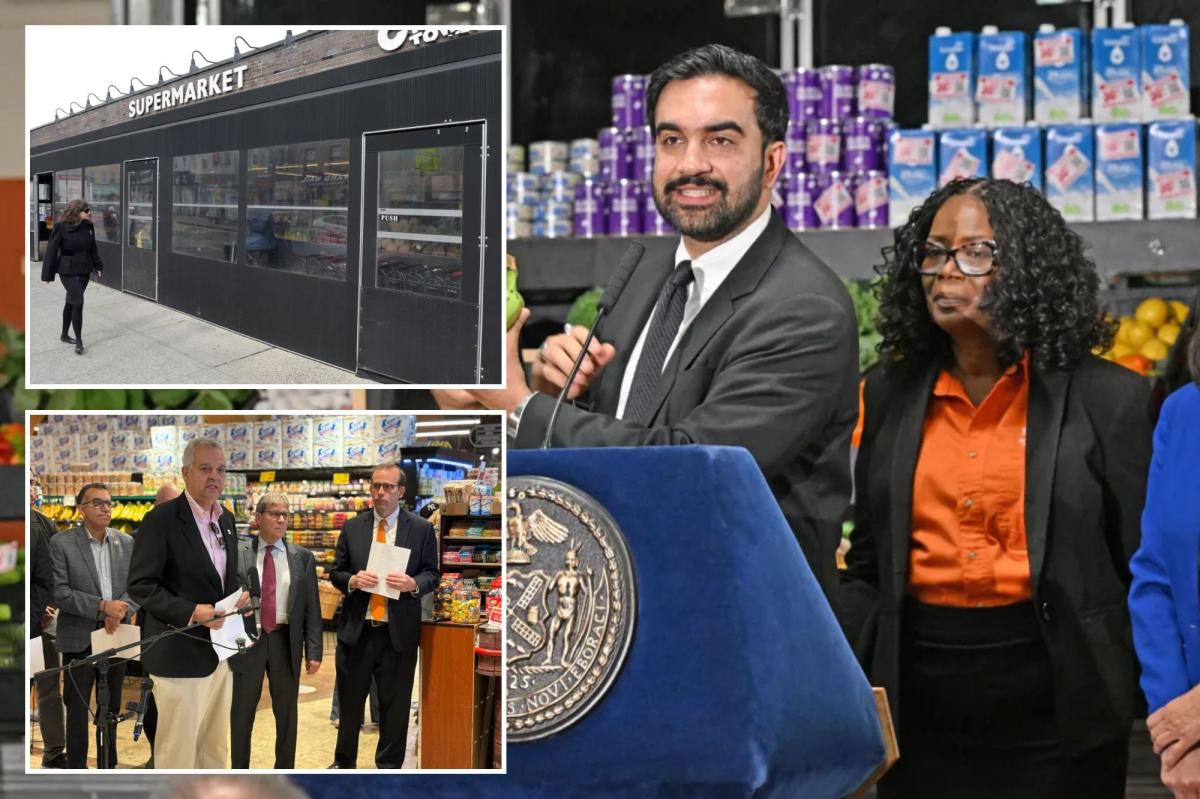
Grocers filed a federal antitrust lawsuit to block the Mamdani administration’s plan to push forward with city-owned supermarkets — claiming the proposal would create unfair competition for nearby grocery stores and bodegas.
In a lawsuit filed on Wednesday in the US Southern District of New York, the National Supermarket Association asked a judge to delay a city bidding process that seeks an operator for the municipal stores so it can rule on whether the program violates antitrust laws.
Bids to operate the stores are due on Oct. 16, but the complaint asks the court to first make its ruling, with any new bidding deadline to be set 30 days afterwards. Absent that court-ordered process, plaintiffs warned that any winning bidder could later be sued if the court rules against city’s plan.
The suit accuses New York City of “using its own properties to eliminate occupancy costs, immunizing the enterprise from taxes, and then undercutting nearby private businesses through a permanent discount pegged to their competitors’ prices,” according to court papers.
“There’s a good grocery store here today,” said Jerry Nunez, owner of City Fresh Market at 125 E. 116th St., one of the plaintiffs in the federal suit who came forward for the first time on Wednesday. “Our customers support it, and 50 people have jobs because of it. Why should the city put all of that at risk?”
A spokesperson for the mayor insisted that the program will move forward.
“The Mamdani administration designed the NYC Groceries initiative to ensure that the stores we open serve the communities where they are located,” the spokesperson said in a statement.
“By the end of the mayor’s first term, every borough will have a high-quality, affordable grocery store that New Yorkers can count on. We remain confident in both the legality and the necessity of NYC Groceries.”
The complaint was filed on behalf of the NSA and two grocers in Harlem and the Bronx by attorneys at the America First Policy Institute, a conservative nonprofit chaired by Larry Kudlow, President Trump’s former top economic advisor.
“They want to keep this procurement event from happening, where the city is running a competition among private companies that will run the facilities,” said William Kovacic, a law professor at George Washington University and a former chair of the Federal Trade Commission.
“If the plaintiffs succeed in getting an injunction, they have delayed the rollout of the program and that’s an advantage to them.”
The second plaintiff is Rafael Nunez, who owns C-Town Supermarket at 809 Southern Blvd in the Bronx – or about a 10 minute walk from the municipal store planned in the former Spofford Juvenile Detention Center in Hunts Point.
“We pay high rent, taxes, insurance and energy costs,” Nunez said of his Bronx store, which opened 42 years ago when the neighborhood was known as “Fort Apache” after the Paul Newman movie about a crime ridden precinct.
“We were here when this neighborhood was struggling,” Nunez said. “Now that the neighborhood has come back, I don’t think the city should use taxpayer money to make it harder for the businesses that helped it get here.”
The first municipal store is scheduled to open next year in the Bronx. The Harlem store is slated to open in 2029, while opening dates for the stores in Brooklyn, Queens and Staten Island have not been disclosed yet.
The central claim of the lawsuit is that the city’s plan to offer a 30% discount on basic items at the municipal stores amounts to “predatory pricing.” If a private grocer lowered its pricing to compete with the city-owned stores, there’s nothing stopping the municipal stores from lowering their prices further, the grocers argue.
The subsidized stores have the ability to continuously undercut competitors because they would not be expected to pay rent or taxes, giving them an unfair advantage, according to the suit.
“If they want protection against the antitrust claims they have to show that the state authorized this program, and thus far we don’t know,” Kovacic said.
“I’m guessing that we will hear something about that in short order from the mayor’s office. The mayor’s office will likely issue a statement showing the state gave them the authority to do this, but if Albany did not sign a statute authoririzng the program, then the city has a problem.”
Last month, another group representing immigrant-owned grocers – the Multicultural Business Coalition – sued the city in state court over the grocery store program alleging that its discriminatory.
Read the full article here


