



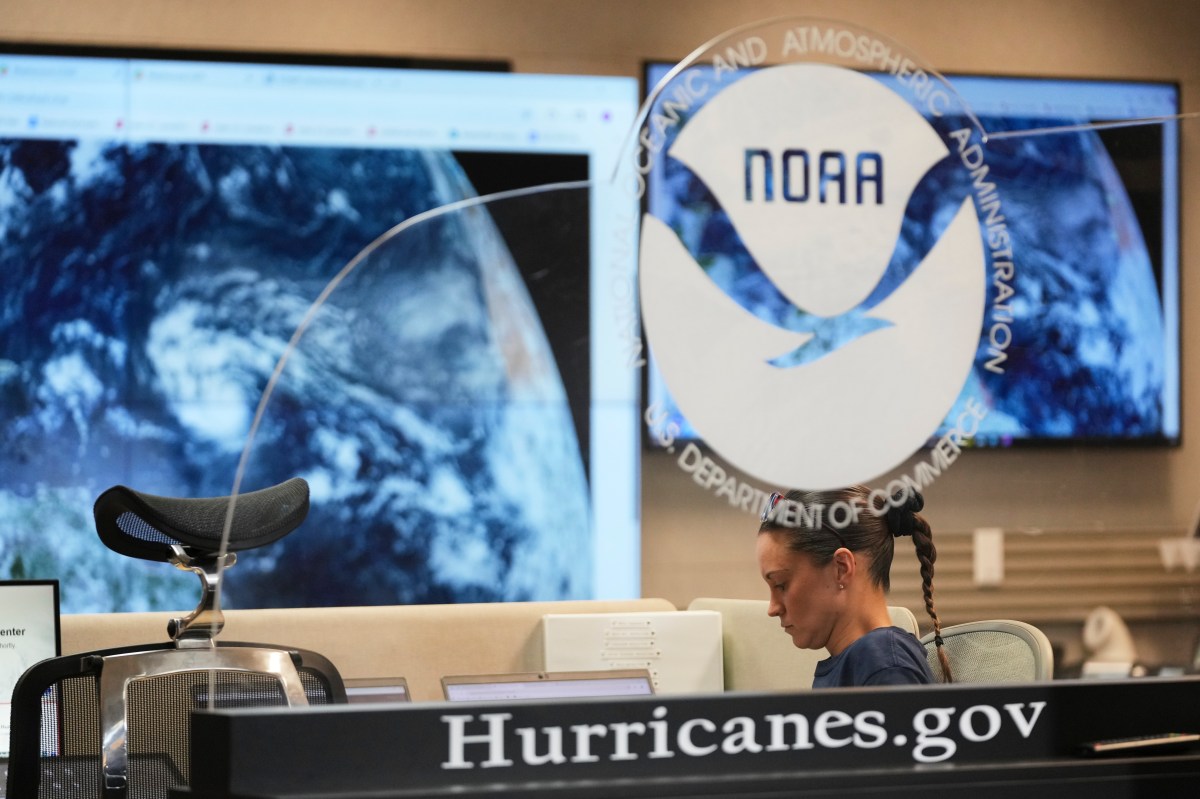
Forecasters with the National Hurricane Center (NHC) are monitoring a tropical system with a high probability of development in the eastern Pacific next week.
The development represents one of the first significant formation signals of the 2026 eastern Pacific season, contrasting sharply with an inactive Atlantic. While the potential system is projected to remain far from the U.S. West Coast, meteorologists note that early-season disturbances can still influence marine conditions and long-range weather patterns.
The Pacific hurricane season typically activates earlier than the Atlantic, though the 2026 season has been unusually quiet so far, with zero named storms recorded as of May 29. Meanwhile, the Atlantic season officially begins June 1, with the National Oceanic and Atmospheric Administration (NOAA) projecting a below-normal season overall.
Current NHC Outlook
In a Saturday morning update, the NHC noted that a broad area of low pressure is expected to form early next week well southwest of the Baja California Peninsula.
Environmental conditions appear favorable for development, and a tropical depression is likely to form by mid-week as the system moves west or west-northwest at 10 to 15 miles per hour. The NHC has assigned the disturbance a high 7-day formation chance of 80 percent.
Meanwhile, the Atlantic basin shows no signs of early activity. As of Saturday morning, the NHC reported no active tropical cyclones in the Atlantic, and no disturbances were being monitored for development.
Forecasters expect the 2026 Atlantic hurricane season to be less active than in recent years. NOAA projects a below-normal number of storms, driven by a period of cooler-than-average sea-surface temperatures and reduced atmospheric instability. Early-season outlooks point to fewer named storms and hurricanes overall—a distinct shift from the hyperactive seasons that defined much of the early 2020s.
Meteorologists attribute this pattern to a combination of waning ocean heat, neutral to weak La Niña conditions, and increased wind shear, all of which act to suppress storm formation. However, forecasters caution that a “below-normal” designation does not equal zero risk. Any single storm that forms close to land or strengthens rapidly can still pose a severe threat to the Caribbean, Gulf Coast, or U.S. East Coast.
Meteorological Context: Cyclone vs. Hurricane
While “cyclone” and “hurricane” are distinct terms, they describe the exact same meteorological phenomenon: a rotating, organized system of thunderstorms over warm ocean water. The terminology changes solely based on geography.
Despite the regional names, these systems share an identical structure, hazards, and intensity scale, and are equally capable of producing damaging winds, storm surges, torrential rainfall, and dangerous marine conditions.
Fiscal Constraints and Regulatory Shifts at FEMA
The impending season arrives amid logistical and budgetary challenges. Federal emergency officials have warned that FEMA’s disaster fund is running dangerously low heading into the 2026 hurricane season, raising concerns that a major storm could strain the agency’s operational capacity without swift congressional intervention.
Structurally, the agency is undergoing a significant transition. President Donald Trump’s January 2025 executive order creating the FEMA Review Council set expectations for swift reform of what many officials consider a bureaucratically tangled agency. The council’s final report, delivered May 7, recommended shifting more disaster-response responsibility to individual states—a process currently unfolding under the leadership of Department of Homeland Security (DHS) Secretary Markwayne Mullin.
“FEMA is not the first responder, but rather a force multiplier standing shoulder to shoulder with states, tribes, and local governments to ensure rapid and effective recovery,” Mullin said in the press release. “We are driving ahead, transforming FEMA into a streamlined, mission-focused agency that delivers results. Our readiness is stronger than ever, and we are prepared to meet any challenge that comes our way.”
Read the full article here


