



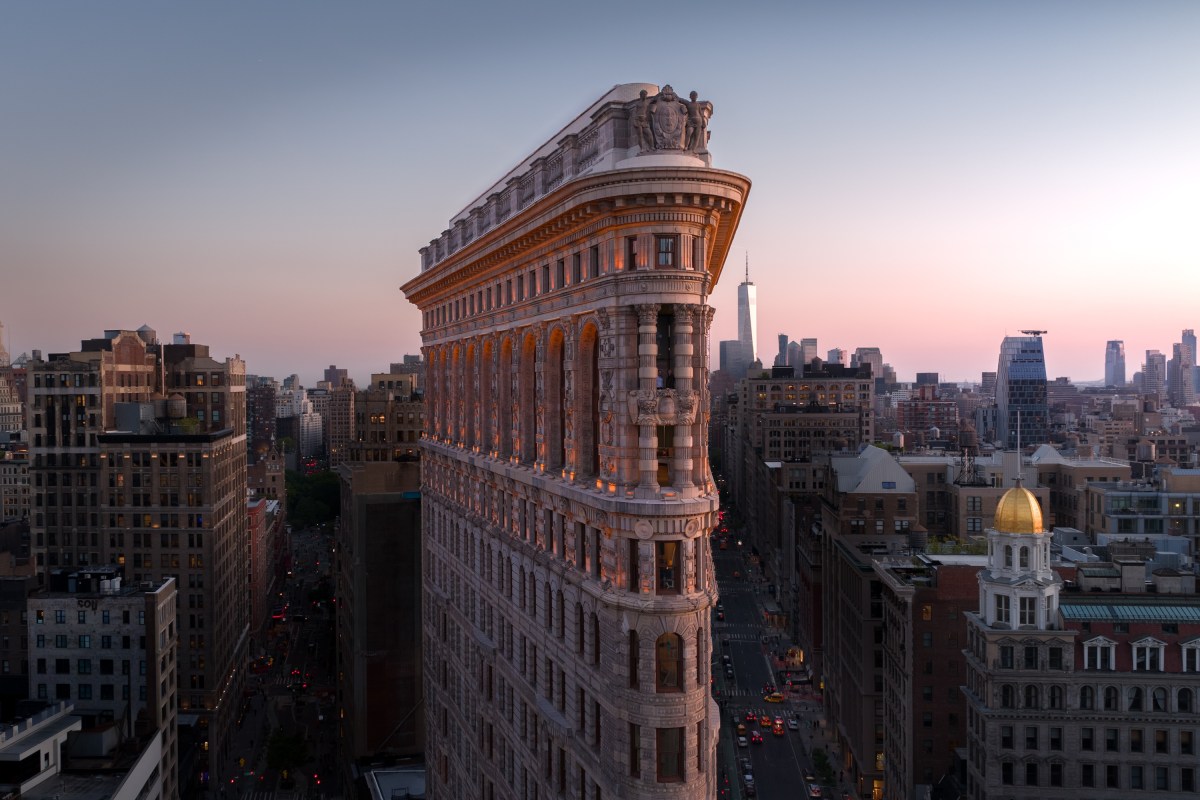
The Flatiron Building, one of New York City’s most iconic landmarks, has been lit up for the first time in its 124-year history, marking a major milestone in its transformation into private residences.
Completed in 1902, the 307‑foot, 24‑storey building is among the world’s earliest skyscrapers, known for its unique triangular form and pioneering steel‑frame construction.
Images of its historic lighting, including a never-before-released new image of the building’s façade, which were shared with Newsweek as an exclusive first, show the upper half of the historic structure glowing softly in the early evening, offering a rare glimpse of the tower as it enters a new chapter.
“The Flatiron Building is now illuminated for the first time in its 124‑year history, marking a major milestone in the landmark’s exterior restoration and residential conversion,” a spokesperson for the project told Newsweek. The lighting installation comes as scaffolding is gradually removed and portions of the restored façade are revealed, signalling a visible turning point in the long‑awaited revival of the building designed by the late American architect Daniel Burnham.
The project is part of a wider trend of historic structures being restored and repurposed across New York City and the country, with nearly half of America’s 125 million buildings being 50 years old, according to the American Institute of Architects (AIA).
In recent years, adaptive reuse has surged, with nearly 25,000 apartments created from converted buildings nationwide in 2024 alone—a 50 percent increase compared to the previous year, according to a report by RentCafe.
According to the AIA, research has shown that reusing existing buildings can avoid 50 to 75 percent of the carbon emissions associated with new construction, reinforcing the growing appeal of preservation‑led development.
The AIA also said that the “reuse and retrofit of older and historic buildings avoids the release of embodied carbon emissions—the carbon emitted by the manufacture, transport and assembly of materials—from the construction of new buildings.”

A Subtle ‘Reintroduction’ of an Architectural Icon
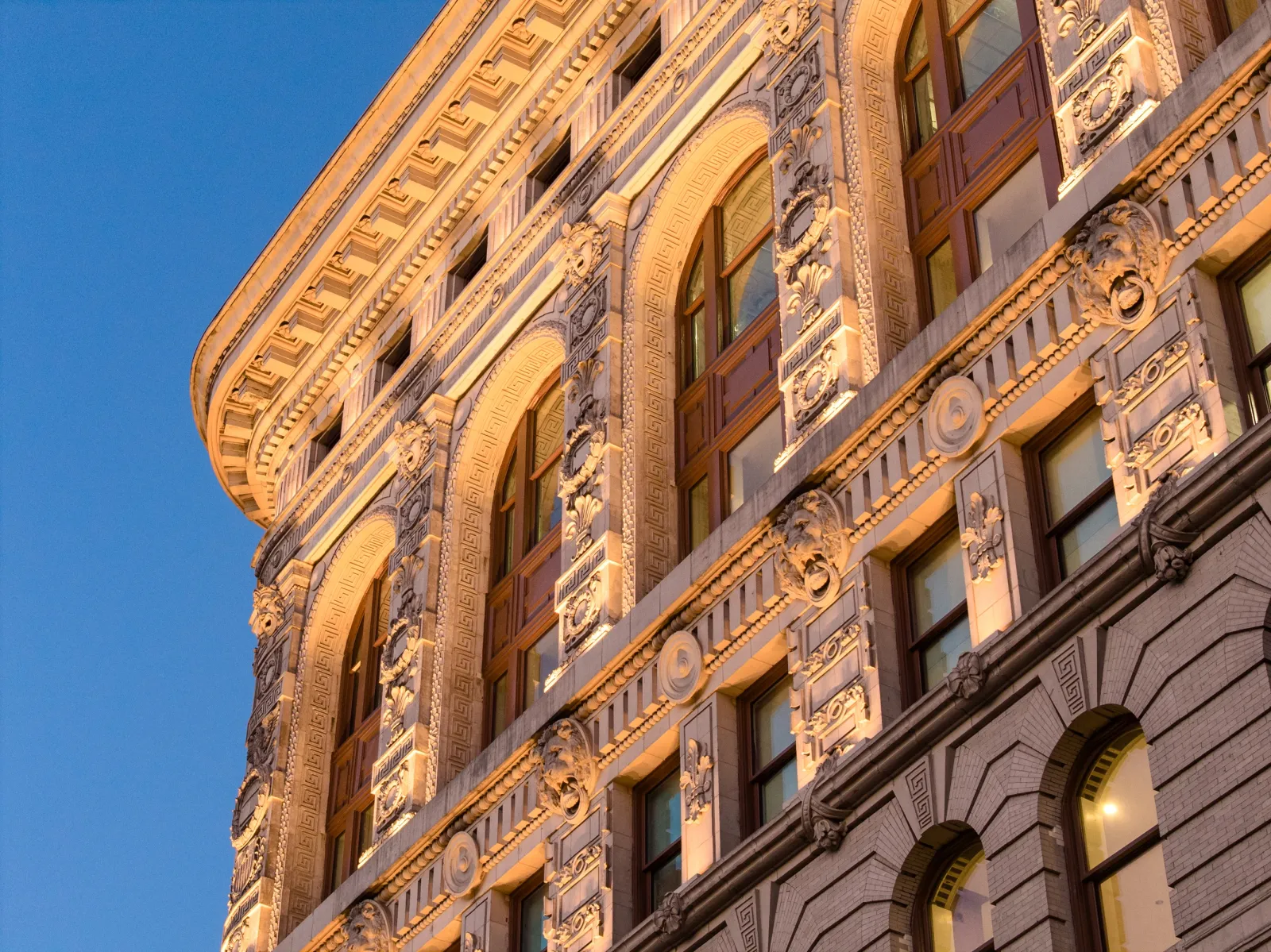
The Flatiron’s new exterior lighting system has been designed to highlight, rather than overwhelm, the building’s historic design. According to the project team, energy‑efficient LED fixtures have been carefully positioned to remain hidden from view while casting a soft glow across the structure.
A spokesperson for the project said the lighting will “subtly and sensitively illuminate architect Daniel Burnham’s architectural triumph from dusk to late night,” enhancing the building’s presence along Fifth Avenue and in nearby Madison Square Park. The new nightly illumination, now active across select floors, is intended to create “sensational” new nightly views while preserving the character of the Beaux‑Arts façade.

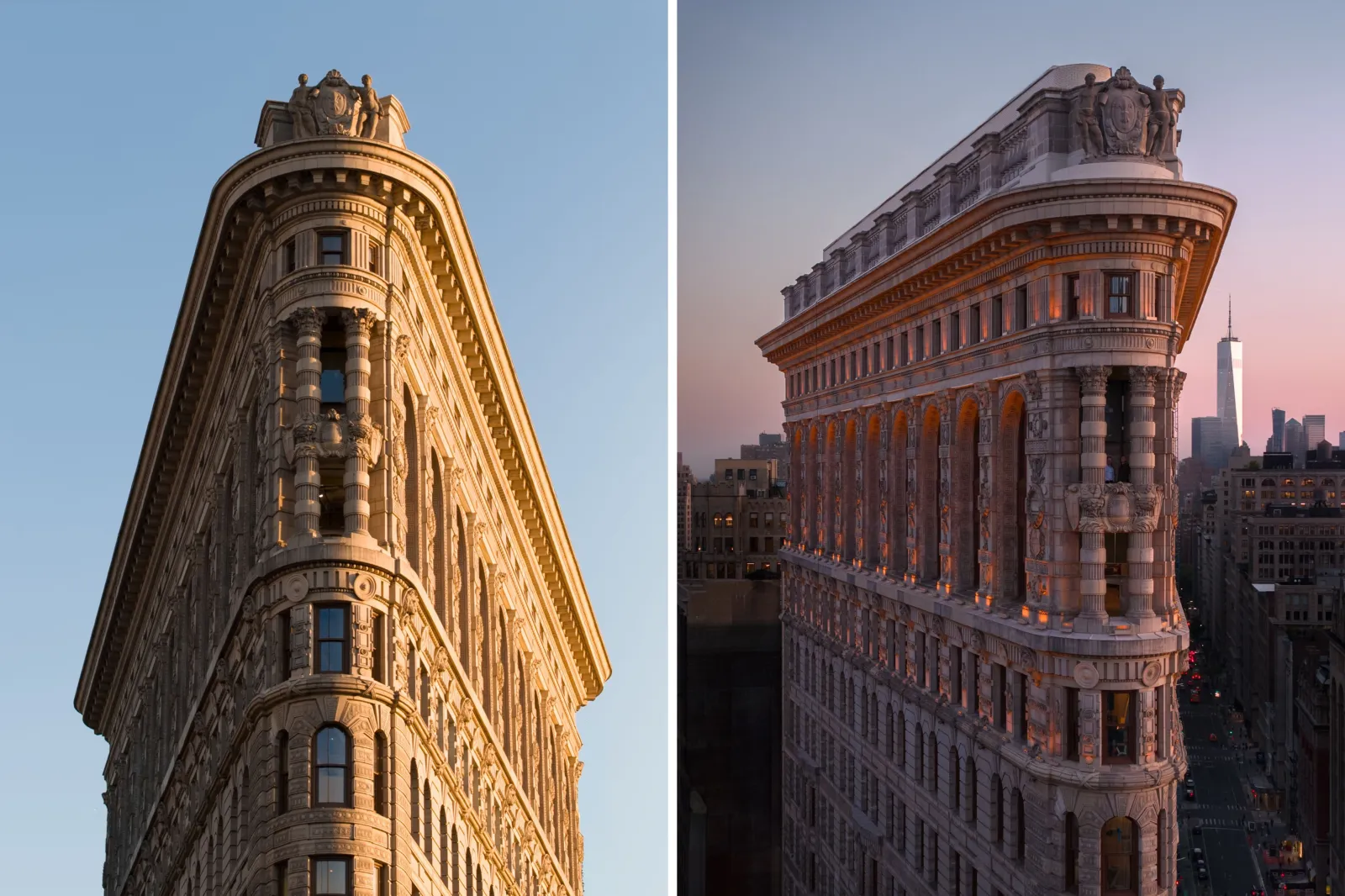
The system was designed by L’Observatoire International, a global lighting firm known for its work on cultural institutions, including the Museum of Modern Art (MoMA), Lincoln Center, and the Guggenheim Museum in New York City.
The lighting installation is just one component of a wider multi‑year restoration effort approved by the New York City Landmarks Preservation Commission. The project is focused on preserving the building’s original Beaux‑Arts façade, which was designed to evoke a classical Greek column through its use of limestone, brick, and terra‑cotta detailing.
As part of that work, developers have conducted a full façade survey, replaced more than 1,000 windows, restored thousands of terra‑cotta elements, and carried out repairs to the structure’s distinctive six‑foot‑tall cornice. A spokesperson said the lighting marks “an important milestone in the landmark’s broader restoration and reintroduction to the neighborhood and streetscape.”

A Residential Transformation
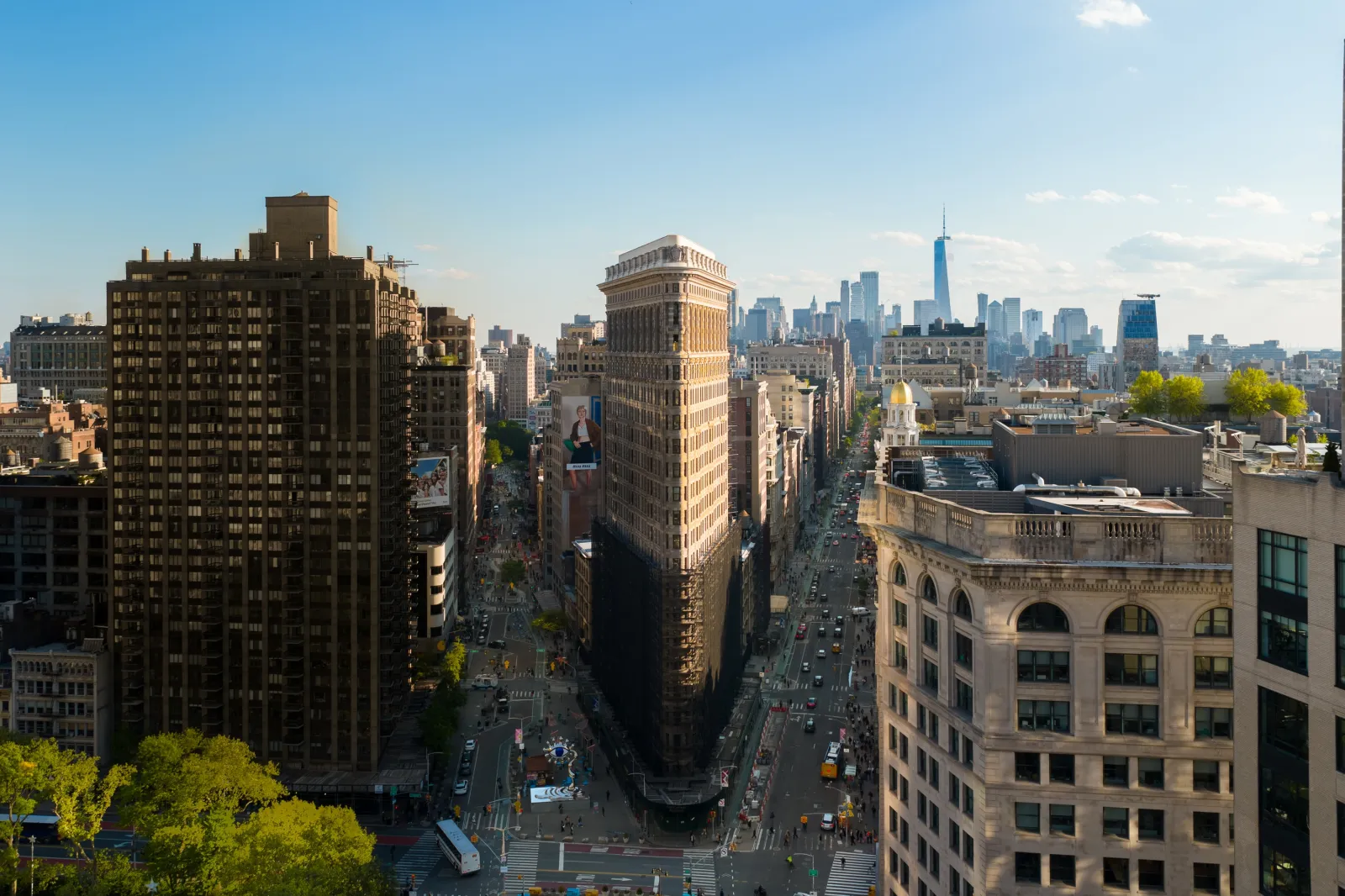
The restoration of the Flatiron Building coincides with its conversion into private residences, marking the most significant change in its history. Developed by The Brodsky Organization and The Sorgente Group, the project is repositioning the landmark as a high‑end residential address, with starting prices of $14.85 million for a three‑bedroom home.
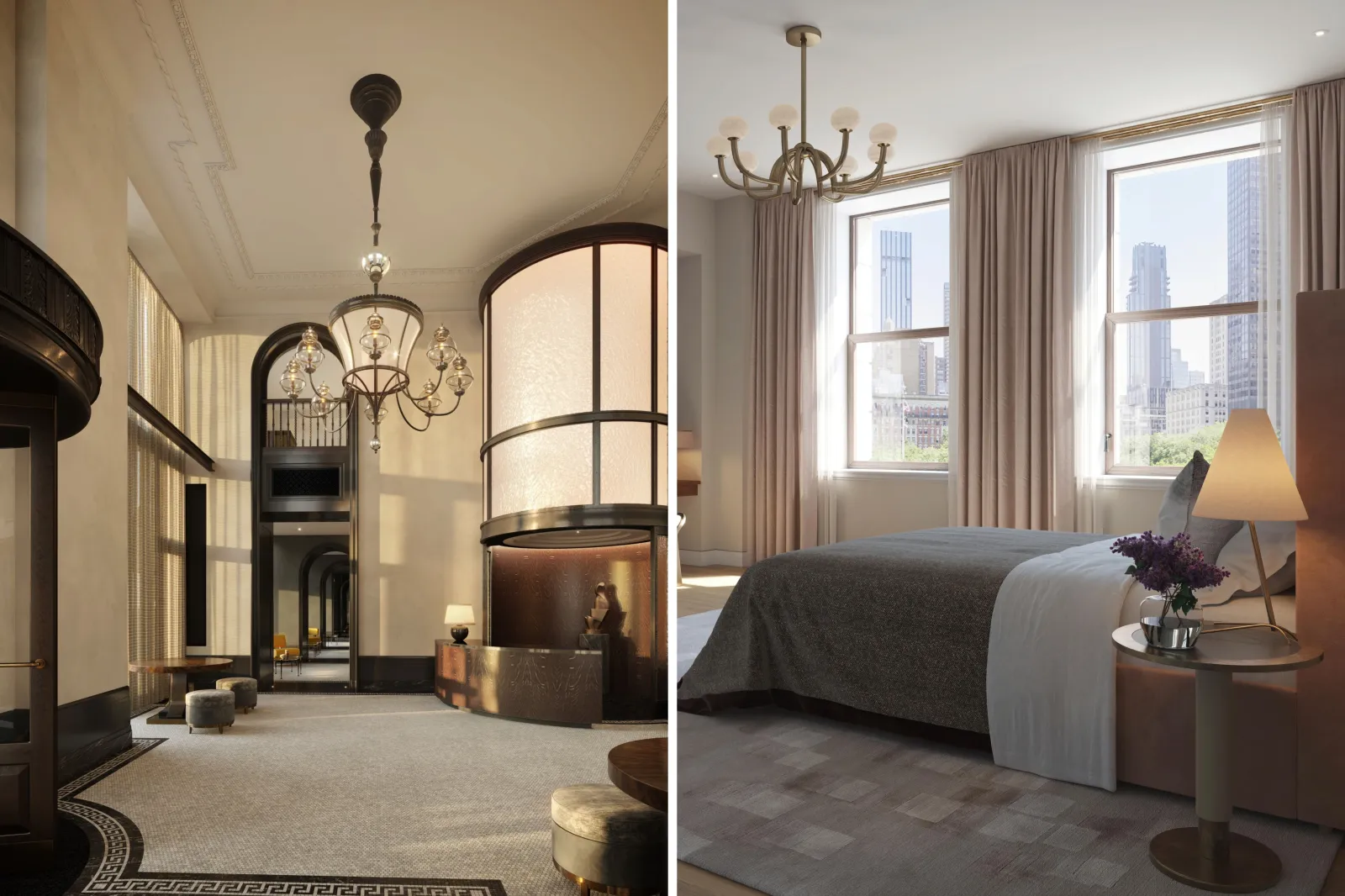
Interiors designed by Studio Sofield aim to honor the building’s past while introducing contemporary elements. The design draws on original materials uncovered during restoration—including historic railings, ironwork, and marble mosaics—integrating these features into a modern residential scheme.
Residents are expected to begin moving into the building this autumn, signalling the completion of its transition from office space into a luxury residential property.
Do you have an architecture or design-related story to share? Let us know via s.kim@newsweek.com, and your story could be featured by Newsweek.
Read the full article here


