



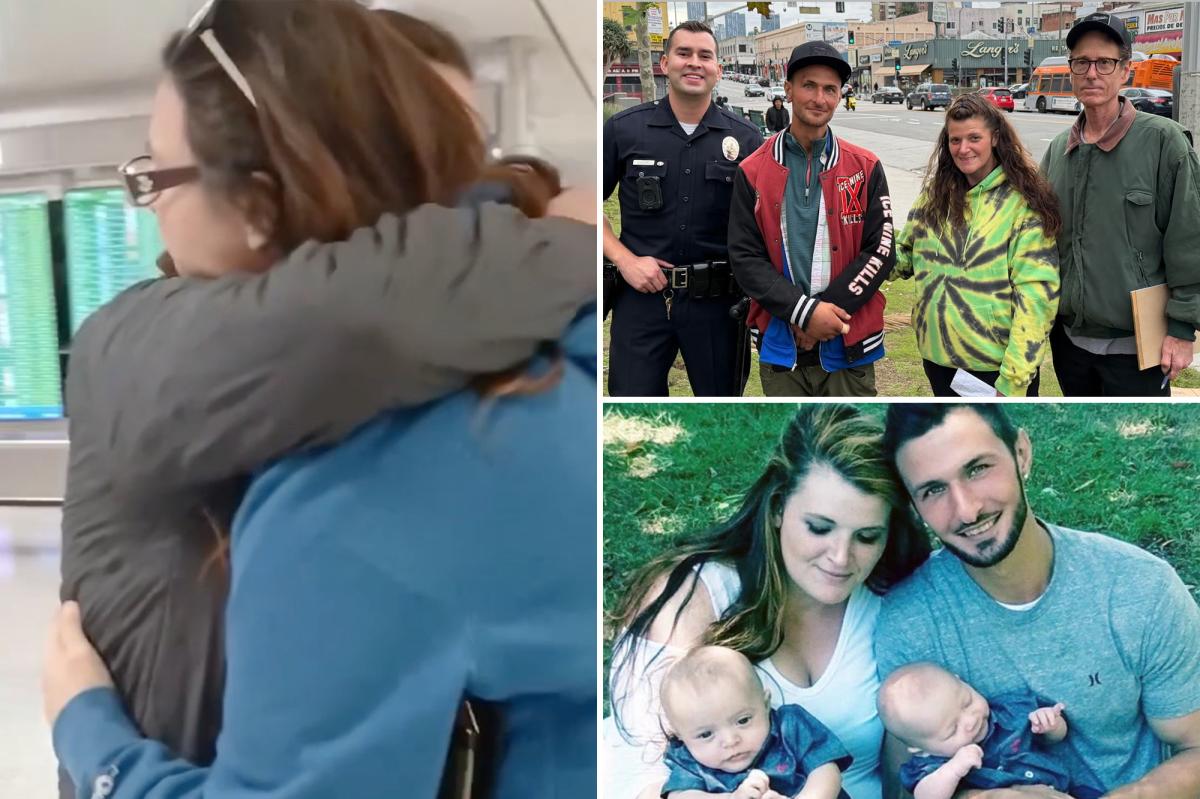
For five months, Susan Ercolino says she was afraid to close her eyes.
Night after night, she stayed half-awake in and around MacArthur Park — flinching at footsteps, jolting at the sound of voices, scanning the dark — because getting some real sleep could mean getting robbed, beaten, or worse.
Exhaustion didn’t matter. Survival did.
MacArthur Park became her home anyway — a place she says never shuts off, never calms down, never gives you a moment to feel human. By day, she described a relentless churn of drug deals, screaming matches, and bodies slumped on the grass.
“It’s like the true living Hell,” Ercolino told The Post.
She described the park as a revolving door of fentanyl, meth, and pills — drugs far stronger and more unpredictable than anything she’d encountered before. Dealers, she said, were everywhere. So were overdoses. Narcan reversals became routine. Sirens blended into the background. Violence wasn’t shocking — it was expected.
“That’s just how it is there,” she said.
Ercolino’s battle with addiction didn’t start in Los Angeles. She said she has spent nearly a decade in and out of treatment, cycling through rehab programs while trying — and often failing — to stay clean long enough to rebuild her life. She said she had stretches of sobriety, including five years clean at one point, but relapses kept pulling her back.
She and her fiancé David, the father of her twins, were struggling in Baltimore when a man known to her only as “Gus” offered what sounded like a lifeline — a trip to California and entry into rehab.
She says the help came with strings — personal information, insurance she didn’t control — and later learned the practice is known as body brokering. “I was brokered,” she said. “We were brokered.”
She says the rehab pipeline wasn’t built around recovery. It was built around billing.
When her insurance was terminated after alleged fraud was flagged, Ercolino says she was put out with nowhere to go. That’s how she ended up in MacArthur Park — a volatile open-air drug market where tents, dealers, and desperation collide day and night.
At first, she tried to survive indoors, paying for hotel rooms with what little money she had. It didn’t last. Addiction tightened its grip — and she says the drugs on the street were nothing like what she knew back East.
Fentanyl, she said, was stronger, faster, and far more dangerous. “I’d never overdosed until I went to California,” she said. “I don’t know what they put in that.”
Violence was constant.
Ercolino says she witnessed repeated stabbings, robberies, and overdoses — and stepped in when others didn’t. Near Sixth Street and Alvarado, she says she heard a man screaming that he’d been stabbed. She ran with towels she carried in her bag, pressed them to his chest, and stayed until paramedics arrived. She said he was pronounced dead for 13 minutes before being revived.
As he lay bleeding, she said, people tried to steal from him.
“It’s always a fight there,” she said.
She says she helped revive multiple overdose victims using Narcan and CPR. She recalls a 15-year-old stabbed twice while people stepped over him. “I can’t watch somebody die,” she said.
Being alone made everything worse. During a week separated from David, she says she was terrified — especially as a woman — and barely slept at all. She describes living in a constant state of alert, too afraid to relax, too exhausted to think clearly.
And she says no one from the city ever offered her help. “Never,” she said.
Her way out came through people — not programs.
Ercolino said one police officer finally stopped and listened when she broke down and said the words out loud: “I’m ready to go home.” The officer tried to coordinate help through the homeless organization Union Station and, when that fell apart, reached out to John Alle — a local landlord who, on his own dime, has helped people escape the streets and get back home by whatever means necessary.
The first attempt unraveled.
Ercolino went to LAX — but she had no ID. By the time she went through TSA questioning, her gate closed before she could get through.
She missed her flight and returned to MacArthur Park — where she spent two more weeks afraid, alone, and convinced she might never get out.
Finally, she checked into a hospital for five days to stabilize. Then she called Alle again.
He said he would buy her another flight home, and he did. This time, she showed up at the airport hours early, secured her ticket, cleared TSA and boarded the plane.
This time, she made it.
“I was just relieved,” she said. “I knew I couldn’t stay here anymore.”
In Alabama, her sister Rebecca picked her up at the airport. Ercolino has seven siblings — six living — and says they welcomed her back without hesitation. When she saw her sister Jackie, she broke down. “I’m lucky I’m breathing still,” she said.
Now she’s home for the holidays — clean, clear-headed, and wrapped in the safety she nearly lost — doing ordinary things that once felt out of reach: shopping for Christmas gifts with her sisters, sitting on a couch without scanning the room, sleeping through the night without fear.
After five months in a place where rest felt dangerous and every night was a gamble, Ercolino said simply being home means everything.
“I’m lucky I’m breathing,” she said. “I just want to do better — and stay alive.”
Through it all, she said, her goal has never wavered — to get sober and be a good mother to her twins. “I want it,” Ercolino said. “I’ve always wanted it.”
Read the full article here


