



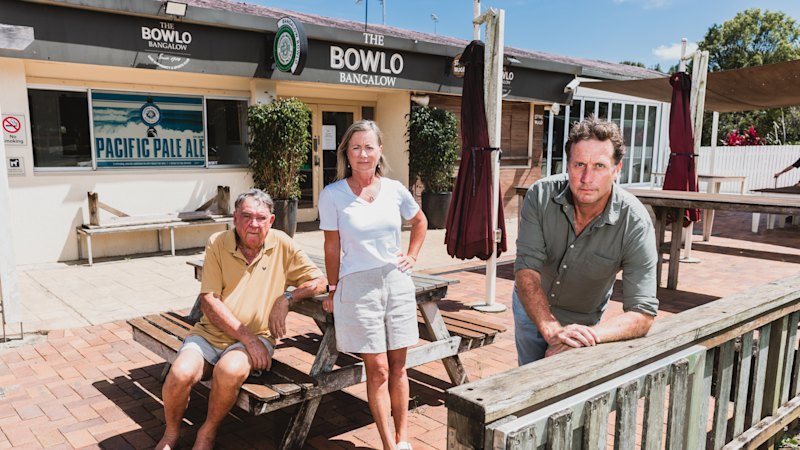
When the Norths Leagues Club galloped into Bangalow on the state’s north coast to rescue the local bowling club from administration, not everybody was sold.
Some locals were worried that Norths would import a gaming-oriented business model into their small community. Others were hesitant about handing their assets to a mega club group that might not have their interests at heart.
But with a dilapidated clubhouse and piling debts, there was little alternative. Norths promised to pay off the club’s debt, renovate the clubhouse and upgrade the bowling green. Members voted two to one in favour of the amalgamation.
Now they feel like they were played.
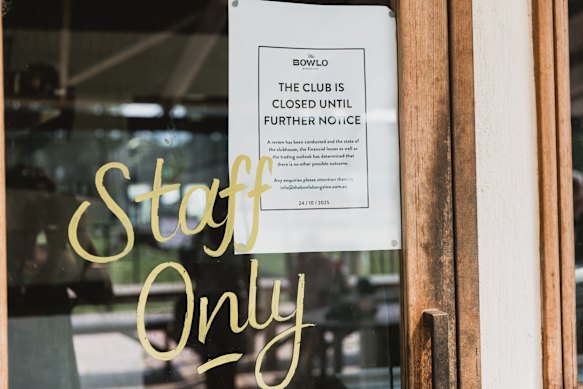
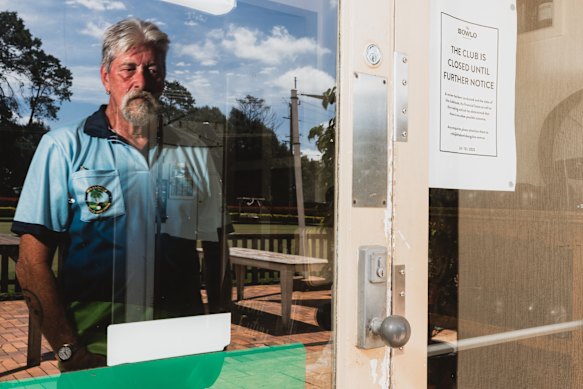
When staff turned up to work in late October, the doors were shut and a sign was stuck to the inside of the door: “The club is closed until further notice.”
Far from getting an upgrade, the clubhouse had fallen into such disrepair that Norths now claimed it was unsafe for occupation. But the trading outlook did not support further investment, Norths chief executive Tony Mathew wrote to the bowlo’s advisory committee. In the three years since they signed the contract, losses had exceeded $900,000.
“The Norths board has determined that the only responsible and sensible course of action is to cease trading from the Bowlo premises immediately,” he wrote.
The 15 staff who were terminated that day soon put up their own sign on the bowlo’s billboard: “FCK YOU NORTHS LIARS $AVE BOW1O”.
Once the backbone of regional and suburban communities, bowling clubs have been reshaped by decades of shifting regulations on gambling policy into whales or krill.
Clubs that capitalised on favourable gambling policies in the 1970s and 80s by stuffing their premises with poker machines were well placed when the Carr government allowed pubs to introduce pokies in 1999.
But those with few or no poker machines have found it increasingly difficult to operate. Their greens are expensive to maintain, their decor is outdated, costs are rising, and their members are ageing. Their boards often lack the experience to compete with pubs, which have grown slick and corporatised on the back of their pokie profits.
About 44 per cent of all small clubs in NSW are currently operating at a loss, according to ClubsNSW. About 80 clubs have closed over the last decade.
An increasing solution has been amalgamation. This enables small clubs to achieve economies of scale, and larger clubs to increase their asset base and borrow against the land. A ClubsNSW spokeswoman said they were “an opportunity to invest in and preserve important community assets”. Among the 68 clubs that have amalgamated since 2015, 90 per cent are still operating.
But amalgamation can also leave struggling clubs with the perception that they have been exploited.
Members of the cash-strapped Paddo RSL accepted an offer from Coogee Diggers last year to bail out the club in return for its assets, including a vastly undervalued 1550 square metre parcel of land on trendy Oxford Street. It was only after the vote that they learned another club had also offered to help their club return to profitability without the same strings attached, resulting in threats of legal action and a complaint to the regulator.
At the Norths annual general meeting on Monday night, the Bangalow Bowlo was the last item on the agenda and not mentioned until nearly 10pm, by which time most people had left.
Attendees recalled that one director in particular became visibly frustrated, repeatedly leaning back on his chair and raising his eyes to the ceiling. When one of the Bangalow locals had the microphone, he made an off-microphone quip that was met with giggles from a fellow director.
The remark might have been anything, but it seemed to Bangalow residents who had bussed eight hours south to attend the meeting that the real joke was on them. On the ride home, local filmmaker Brett Stephens said it out loud. “They’re laughing at us,” he said.
Back in 2022, it was Norths who was the suitor as it looked for clubs to join its collective, which already included The Greens bowling club in North Sydney, Seagulls at Tweed Heads, The Verandah in Beecroft and The Alcott in Lane Cove. The 112-year-old Bangalow Bowlo supported numerous local sporting teams, provided employment and acted as a social hub, but it was unable to meet its liabilities and at risk of falling into administration.
The then Norths chief executive Luke Simmons assured locals in The Echo community newspaper that a partnership would help the bowlo thrive for many years to come. “We have never amalgamated with a club, only to close it and sell off the assets,” he wrote.

Bangalow Bowlo sat on a freehold title that was valued by the auditor-general at $1.08 million in 2022. Within months of amalgamation, Norths had the land revalued at $5.3 million and borrowed against the property.
It originally intended to increase the bowlo’s gambling revenue by transferring poker machine entitlements from Seagulls, its sister club at Tweed Heads. But that plan was upended by an unrelated decision by the NSW Court of Appeal in 2024 that allowed the gambling regulator to impose harm minimisation measures on gaming machine applications.
Norths feared that when it applied to transfer the entitlements, the Independent Liquor and Gaming Authority might decide to wind back the operating hours at Seagulls, which was then permitted to operate its 221 pokies until 3am.
The Norths club group was already facing other financial pressures after two consecutive years of losses and a $7 million debt. In mid-2025, the board installed a new chief executive in Mathew who immediately sought to reclassify the land at The Alcott in Lane Cove as “non-core”, which would allow it to be sold, and entered into discussions to sell Seagulls for $30 million.
He has given Bangalow until July 14 to come up with an acceptable business model before it opens up expressions of interest from other clubs to amalgamate. In December, Norths offered to hand the club back to the community while retaining a $2 million mortgage over the land for 25 years and the right to repossession if the bowlo recorded an operating loss in any given month.
But Bangalow local Asren Pugh said that option did not offer enough security, and the Norths brand had become so putrid that the community wanted to cut ties completely. Residents were considering all options including legal action, he said.
“They promised to fix our building,” Pugh said.
“They knew the building had some issues and that’s the reason people wanted to amalgamate. They’ve breached the MOU, they’ve shut down our club and now they’re trying to get as much money as they can for it.”
Under its memorandum of understanding with the Bangalow bowling club, Norths was required to provide all necessary repairs, upgrades and renovations, to maintain the bowling green, to keep the premises in a good state of repair and to improve trading, among other commitments.
But a building inspection conducted a month after Norths closed the club identified major and minor defects that had built up over years, including mould, leaks, loose taps, subfloor deterioration and a faulty sliding door. “These findings highlight the need for regular maintenance to prevent escalation and sustain functionality,” the inspection noted.
Three months before Norths closed the club, the general manager resigned and was not replaced, leaving bar staff to manage the operations. Regular events such as the open mic and trivia nights were canned.
Mathew said Norths had wanted the bowlo to remain open. “There will always be debate about the degree of maintenance which needs to be undertaken.”
The bowlo’s debts had been higher than anticipated, and it had required capital expenditure. The business had also faced resistance from locals opposed to the amalgamation from the start, he said.
“It should be pointed out, that while the industry overall is strong, not all clubs are performing well,” Mathew said.
“The cost of opening the doors is constantly increasing when many people are experiencing challenges themselves with the cost of living. We have a long record of … trying to support distressed clubs, but this is becoming more and more difficult given our current level of debt.”
The community has raised $1.2 million to take back the club and has been maintaining the green at its own expense. But it became clear to those at the annual general meeting on Monday that unless their plan included a $2 million payment to cover the costs that Norths claims to have sunk, it would not be accepted.
Finally a member of the bowlo’s cricket sub-club stood up. Norths had not listened to the community and did not care about the community, he said. It wanted to sell Bangalow Bowlo to save its own scalp.
It was late now, and the room was nearly empty. The directors gathered to leave.
“We’ll take that as a comment,” Mathew said.
Get the day’s breaking news, entertainment ideas and a long read to enjoy. Sign up to receive our Evening Edition newsletter.
Read the full article here


