



Published on
The EU is the second largest global economy, but old and new regulatory and non-regulatory barriers still obstacle its growth potential and resilience.
The European Economic and Social Committee estimates that the single market’s fragmentation holds back €500 billions of additional GDP per year, leads to higher costs for businesses, reduces competition, and decreases consumer welfare. Non-tariff barriers between member states compare to tariffs of around 44% for goods and 110% for services, so the International Monetary Fund.
These frictions hamper the bloc’s competitiveness, widening the economic gap with the US and China. But the “One Europe, One Market” roadmap plans to change this.
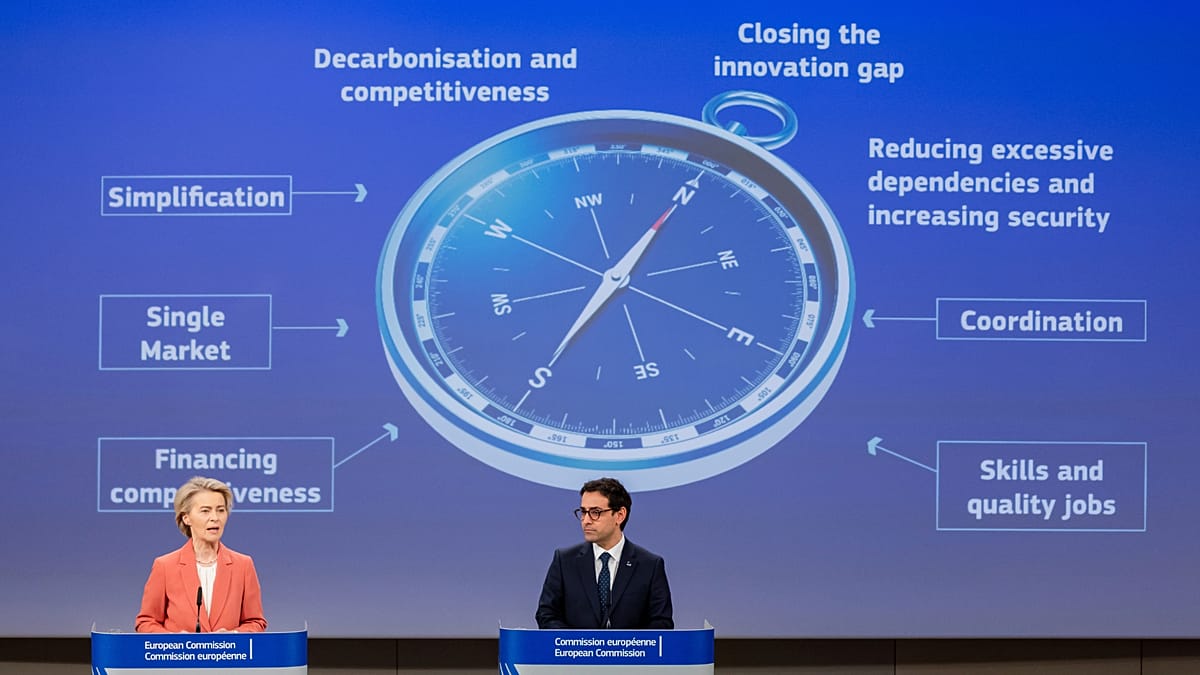
Going beyond the current “four freedoms”, the Commission intends to accelerate the integration of the single European market to boost its competitiveness. Through “One Europe, one market”, the EU aims towards a fully unified single market in strategic sectors, such as trade, digital, and energy by the end of 2027, raising yearly EU GDP growth above the current 3-4% level.
Although in its initial phase, the proposal has already gained consensus among member states who will have their first glimpse at the action plan at the next European Council on 19-20 March.
Want to know about the EU’s plans to deepen its single market? Ask the Euronews AI chatbot!
Read the full article here


