



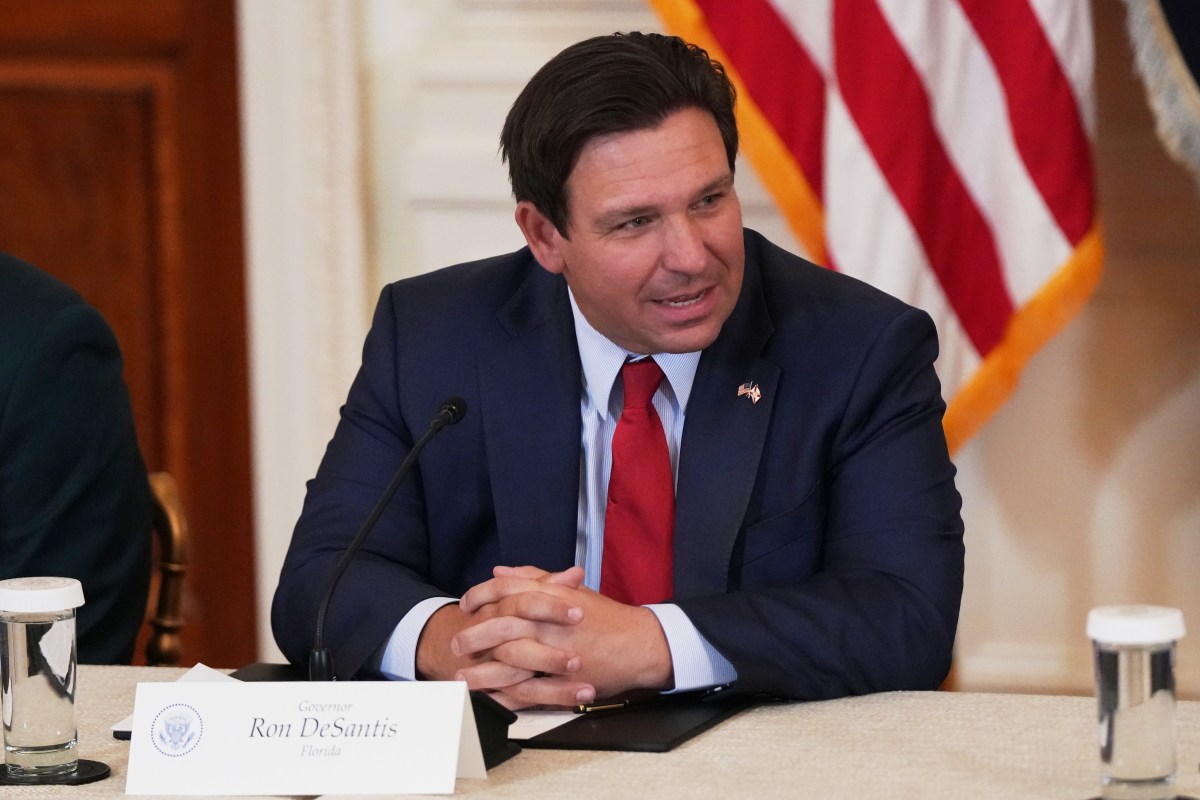
Florida Governor Ron DeSantis is pushing for a phased elimination of property taxes that would benefit local homeowners only, leaving out snowbirds (a seasonal traveler or a retiree) and out-of-state investors already facing higher fiscal burdens.
During a roundtable on property taxes in Brevard County earlier this week, DeSantis said: “Some of those rich people that come from Brazil and buy a big house in Coconut Grove in South Florida… I don’t care if they get taxed. Why would I care about giving them a tax cut? I want to help Floridians with that.”
While wealthy buyers might withstand the blow, the move could ruffle some feathers and accelerate an exodus of snowbirds—the lifeblood of Florida’s seasonal economy—from the state. Many Canadian and Northern snowbirds have already begun to offload their property and move out of the state over the past year, spooked by soaring home insurance rates, homeowners association (HOA) duties, and local surtaxes.
What Reform Is Florida Trying to Pass?
DeSantis has been pushing for the complete elimination of homestead property taxes in the state since last year, though lawmakers have not yet passed a bill that would put the proposal on the ballot in November.
A bill passed by the Florida House before the end of the legislative session (but which failed to be picked up by the Senate) would have gradually increased the homestead exemption over 10 years, fully exempting homesteads from non-school taxes by 2037.
House Joint Resolution 203, however, is now in limbo as a special session on property taxes has not yet been called by the governor. But on Monday, DeSantis said that he believes the reform could still happen, as he sharpened his pitch for the phased elimination of property taxes.

Putting Floridians First
The governor wants to ban local governments from shifting the tax burden onto small businesses, make sure they preserve funding for law enforcement and education, and prevent out-of-state transplants from immediately qualifying for homestead exemptions, arguing long-time Floridians should come first.
“I don’t want every Tom, Dick, and Harry from out of state moving and rushing to buy a home here because they get a tax benefit,” DeSantis said, as reported by the Florida Phoenix. “I think if you move here after this is enacted, you got to pay tax for a certain period of time before you qualify for this,” he added.
“If you have a situation where you are a Florida resident, your homestead property is exempt from taxation, but you could have three houses in your neighborhood that are snowbirds—they can still be taxed. You have the Airbnbs—they can still be taxed,” the governor told the audience gathered for the roundtable on Monday.
“You can do this in a way that would make this workable across all these different things. Not every local government is going to like it, I get it, because why would they? They would rather have no limitations, I get it. But given the numbers, it’s doable.”
The governor did not offer more specific details on his proposal, which has not yet appeared as a formal tax cut plan, or offer a timeline for it. But a third special session on property taxes would have to happen before mid-August, the deadline to print out proposals for the November ballot.
How Would It Impact Residents?
Property taxes have risen all across the country since the pandemic, as home values skyrocketed due to a mix of high demand and low inventory.
While they have risen in Florida as well, nearly doubling since 2019 to roughly $55-60 billion, the state ranked only 28th in 2025 for the amount of property tax burden with an effective rate of 0.79 percent, according to Rocket Mortgage data—somewhere in the middle. By comparison, New Jersey paid the highest effective rate in the nation, at 2.23 percent.
Nonetheless, a majority of Floridians want property tax relief. Three out of four Florida voters said they would support a property tax amendment, according to a recent survey by Stetson University’s Center for Public Opinion Research.
But a March poll conducted on behalf of the nonpartisan Florida Policy Institute (FPI) found that 68 percent of Florida voters would rather keep property taxes as they are rather than face an increase of the state’s general sales tax rate to 12 percent.
This is the increase that Florida lawmakers would have to push for to make up for the loss of revenues caused by the elimination of property taxes and maintain current public services, according to an analysis by FPI.
This increase, which would make the state’s general sales tax rate the highest in the nation, would help lawmakers raise the roughly $43 billion needed to maintain public services currently funded through property tax revenues if these were eliminated.
And What Would It Mean for Snowbirds?
Snowbirds and out-of-state investors who are not permanent Florida residents and do not have their primary residence in the state cannot benefit from Florida’s homestead exemption. This means they already face a higher property tax burden than many of their neighbors.
A proposal for property tax reform like that suggested by DeSantis would specifically target these categories to offset local tax cuts, making second homes and investment properties substantially more expensive to maintain.
For many snowbirds, this might just be the straw that breaks the camel’s back. Last year, New Yorker Colleen Terry told Newsweek that she was leaving Florida because she “refused to be robbed by that state.” Terry had bought a condo in St. Petersburg in 2009 which she used as a vacation home and rented out in the winter months.
“I could never legally ‘homestead’ to benefit from the generous tax reduction but the tax burden initially seemed fair, but I had no complaints,” she said.
Nearing retirement, she started spending more time in Florida, but found her HOA fees were so high that she sold the condo and bought a villa in The Mainlands, a 55+ community.
“The first year was affordable and I enjoyed it. The second year my property taxes went from $1400 to $4,000,” she said. “My homeowners insurance doubled to $2800 on an 834 square foot home. My electric bill was $175 when the home was vacant in July. It was a struggle to keep up with the bills so I sold the property in August,” she added.
“But what angered me the most was that my friends and neighbors who homesteaded four to five years earlier were paying low property taxes. […] Clearly, the governor is catering to his voters, but quickly Florida will run out of suckers like me who will soon see the light.”
Terry has since left Florida and is giving “Arizona a try.”
Canada’s Snowbirds Flying Away From Florida
Canadian snowbirds in particular have already drastically cut their visits to Florida over the past year. According to a December 2025 survey by Snowbird Advisor, only about 70 percent of Canadian snowbirds were planning to spend the winter in the U.S., down from 82 percent the year prior. Instead, they were choosing international destinations like Mexico, Panama and Greece.
In the same year, a poll by Canada’s oldest real estate company, Royal LePage, found that 54 percent of Canadians were considering selling their homes in Florida within the next year.
Many are also trying to sell their homes in the Sunshine State, but struggling to offload their property in the midst of a sluggish market characterized by low demand and growing competition among sellers, Realtor.com reported.
Canadians alone own a residential property portfolio in Florida estimated to be around $60 billion, which means they pay over $600 million annually in property taxes, according to Sylvia Cesaratto, Consul General of Canada in Miami.
Driving these people out of the state could deliver a blow to the state’s economy that would hurt one its engines—tourism—and could potentially exacerbate the revenue loss which local governments would suffer with the proposed property tax reform.
“South Florida’s residential market has for decades been reliant on the annual influx of Canadian snowbirds who either own property and pay property tax or rent for the winter months—either way, a boost to the economy,” Ermengarde Jabir, a director of economic research at Moody’s Analytics, said in a statement reported by the Insurance Journal.
On social media, DeSantis’ promise to eliminate homestead property taxes for residents while continuing taxing snowbirds and out-of-state investors has sparked mixed reactions from locals.
A Key Largo-based realtor commented on the governor’s statement urging the state not to “kill the golden goose.” He wrote on Facebook: “Investors and 2nd home buyers pay lots of taxes that make up for the Homesteaded properties. Leave it alone, it works fine.”
A Northeastern Florida resident commented saying: “It’s a lot more complicated than that. Homesteads already get a break. Renters, small- and medium-sized businesses would take a huge hit, they do already. Not everyone is a rich guy from Brazil.”
Experts have already warned that, if taxes on non-homestead properties are raised, nothing could stop property owners from passing on that cost onto residential and commercial tenants.
“It would be a boon to existing property owners,” Realtor.com senior economist Joel Berner said in a statement reported by the Tallahassee Democrat. “But this measure would disproportionately benefit wealthy Floridians at the expense of those who don’t own homes, and would make it even harder to break into homeownership because of the increased prices.”
But it is too early for any consideration. It remains unclear whether the House’s proposal will move forward, or if the Senate will push forward his own version of a property tax reform. Even if the two chambers come to an agreement and a proposal does make it to the ballot, a 60 percent supermajority of voters would need to back it for the measure to make it into the state’s constitution.
Wealthy out-of-state investors have deeper pockets than the average snowbirds, and could likely take the hit of higher property taxes. But an increase would go against the message that realtors and developers in the Sunshine State have long been trying to pass on to millionaires and billionaires around the world (and especially to rich New Yorkers, in the wake of Mayor Zohran Mamdani’s ascent to the post): that Florida is a low-tax paradise ready to accommodate them.

Read the full article here


