



Over the past few weeks, Herald readers have been engrossed in our coverage of the war in the Middle East. Daily blogs covering news as it breaks, as well as in-depth reads and analyses, have often been the most-read stories on the website. Our coverage encompasses Herald and Age experts, including Peter Hartcher and Matthew Knott, as well as international partner news agencies and our correspondents overseas.
War can be difficult to cover, as our journalists try to distil facts from propaganda in countries without a free press. For those on the ground, it’s also dangerous.
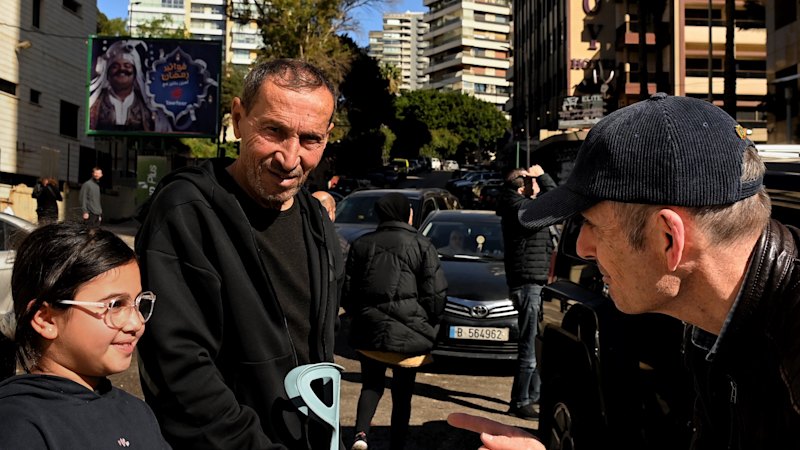
This week, I’ll introduce you to our reporters who have been on the ground in Lebanon, David Crowe and Kate Geraghty, and give you a glimpse of how they navigated a war zone.
Geraghty, the Herald’s chief photojournalist, is one of Australia’s most experienced war photographers. Her first conflict was in 2003, when she covered the invasion of Iraq. Since then, she has covered many more. I ask her if it’s frightening. “I don’t think scared is the word,” she tells me. “I don’t really think about it, to be honest. I think about the people we’re going to be meeting, and how it will probably be the worst day of their lives. I’m more focused on telling the story, that there’s a job to do – and that is to share these stories with the Australian public.”
Her experience of conflict has changed over the years. “It’s a different war zone now,” she says. “Airstrikes – they don’t differentiate between civilians, combatants and media. Years ago, being a journalist was somewhat protected. Now that’s not the case at all.”
The first challenge with war zones can be getting the reporters into them. In this case, the difficulty was getting Geraghty to Europe, due to problems in the Gulf states. (Crowe is based in London.) Eventually, she was able to fly from Istanbul to Beirut. As the plane neared the Lebanese capital, there were messages from the pilot about airstrikes on the southern suburbs. Geraghty had her camera in her hand; passengers swapped seats with her so she could photograph the plumes of smoke.
Crowe was waiting for her. But navigating this tricky terrain isn’t just left to the journalist and photographer; the team also has a risk adviser, a driver and a local expert – often a local journalist – known as a “fixer”, who acts as translator, guide and conduit. Geraghty first worked with their Lebanese driver and fixer in a 2006 conflict. “This is a 20-year relationship,” she says. The role of risk adviser, in this case a former British soldier, is a relatively recent addition to the team.
“We take the advice from our local colleagues, on where the story might be going, what local media is saying – their intuition, their experience, their knowledge,” Geraghty says. “All of us come up with ideas of what the story will be for the next day, or where we should be going. Your plan could change in any minute due to forced evacuation warnings, due to someone maybe not being available because they had to flee or a crisis had happened to them, or you could not get to a particular area because local authorities have said it is about to be under airstrikes.”
Sometimes it can take several attempts to tell a story. Crowe cites an attempt to drive into a community that looked deserted; all the shops were closed. “There were a few other cars, and ambulances heading in the other direction to us, but no other signs of life,” he says.
At word that there might be airstrikes in the area, the security adviser suggested they turn around. They did, but they didn’t give up. “A day or two later, we were in the same community, and it was just as deserted, but we found our way to the local hospitals. We did some of our best interviews there, with good medical staff who told us of the daily casualties. This highlighted the way it takes time to do this reporting. And therefore it costs money. It was frustrating to not make it on the first attempt, but we were able to get there in the end.”
In addition to the security adviser, fixer and driver on the ground, Crowe and Geraghty had significant support from their colleagues at the Herald and The Age in Australia – particularly world editor Supratim Adhikari and his team, who rarely get an unbroken sleep as they support our international correspondents. National editor David King and managing editor Monique Farmer were in close contact, ready to jump into action if anything went wrong. The work that Crowe and Geraghty filed was magnificent, but every editor at the Herald and The Age breathed a sigh of relief when they arrived home safely this week.
The key to a trip like this can be the rapport between the photographer and journalist. They are the ones on the ground, making decisions and driving the story together. Geraghty and Crowe were a formidable team, with deep respect for the other’s professionalism and judgement. Crowe, says Geraghty, had a gentle empathy that quickly inspired trust from the broken, terrified people they met. And Crowe describes Geraghty as “a force of nature”. No one who knows her would disagree.
Have a good weekend.
Get a note directly from our foreign correspondents on what’s making headlines around the world. Sign up for our weekly What in the World newsletter.
From our partners
Read the full article here


