



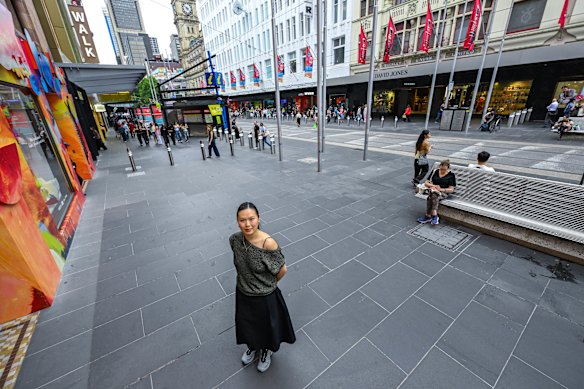
When London-born Louise Huynh flew to Australia at the height of the pandemic to join her partner, she thought she was leaving big-city life behind.
A two-week stay in hotel quarantine in Sydney in late 2021 was followed by a few weeks in Traralgon in Gippsland, her partner’s hometown, where nature and quiet reigned.
But Huynh soon moved to Melbourne, searching for a more urban existence. What she found there surprised her again.
“Beyond eating and drinking at the pub or a bar, there’s not much to do past 3pm in Melbourne,” Huynh says. “Unless you’re in certain areas on certain days, most of the time you can’t shop past 5pm, which I find really bizarre.”
Huynh, a 30-year-old marketer and content creator, says her fellow British expats think it equally peculiar they can’t find a coffee or pastry in Melbourne of a late afternoon. She also bemoans a lack of places in the CBD to find independent Australian designers’ fashion under one roof.
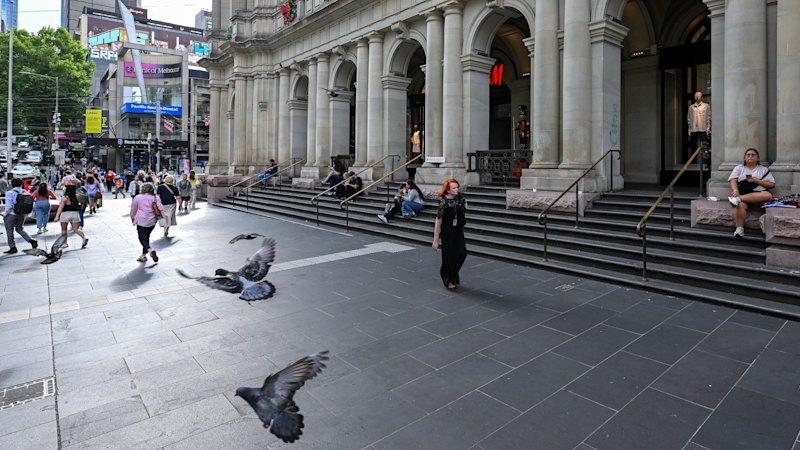
The exceptions to her post-5pm rule are the city’s designated retail precincts, including Bourke Street Mall – but it, too, has fallen out of vogue as a shopping destination.
A lack of retail diversity in the CBD means most stores can be found in local shopping centres, and parking is “terrible and expensive”, Huynh says.
“I could just go to [Chadstone Shopping Centre] for the same amount of time – or actually, I travel longer to go to The Glen rather than shopping in the CBD because there’s better variety and I can do everything in one hit,” she says.
“I know everything is going to be open until the same time. You don’t know that in the CBD.”

Analysis of City of Melbourne foot traffic data reveals 27,000 people visited Bourke Street Mall on an average weekday 10 years ago, compared with about 15,500 post-pandemic in the 2022-23 financial year.
While other parts of the city rebounded after lockdowns, the mall’s downturn continued, with the loss of another 2400 pedestrians by 2024-25.
Historically, Bourke Street Mall was at the top of Melbourne’s retail hierarchy, but it has slid over the past 10 years as centres like Chadstone muscled up their offering, says KPMG urban economist Terry Rawnsley.
“Even Highpoint [and other shopping centres] have got a much more diverse retail mix,” he says.
The mall’s post-pandemic decline was compounded by more people shopping online and working from home at least two days a week, Rawnsley adds.
But there’s a big caveat to the data: it ends in the 2024-25 financial year, pre-dating Mecca’s August opening of its three-storey flagship store on the strip.
Age analysis of additional calendar year data shows a boost in pedestrian traffic of an average of a few thousand people in the months since, culminating in a December peak of more than 24,000 people.
However, that’s still below pre-COVID levels.
Rawnsley suspects the boon will be short-lived – likewise with the recent Melbourne Walk development – as people eventually revert to shopping at their local stores.
Mecca’s chief new concepts officer Maria Tsaousis says the cosmetic giant picked Bourke Street Mall for its most ambitious flagship store yet, as the strip is one of Australia’s “most iconic retail addresses”.
More than 50,000 people have visited weekly since it opened, exceeding expectations, Tsaousis says.
But tucked away in the ornate, arched halls of the neighbouring Royal Arcade – the longest-surviving arcade in Australia – traders haven’t noticed a difference.

Behind the dip in foot traffic, a battle over safety
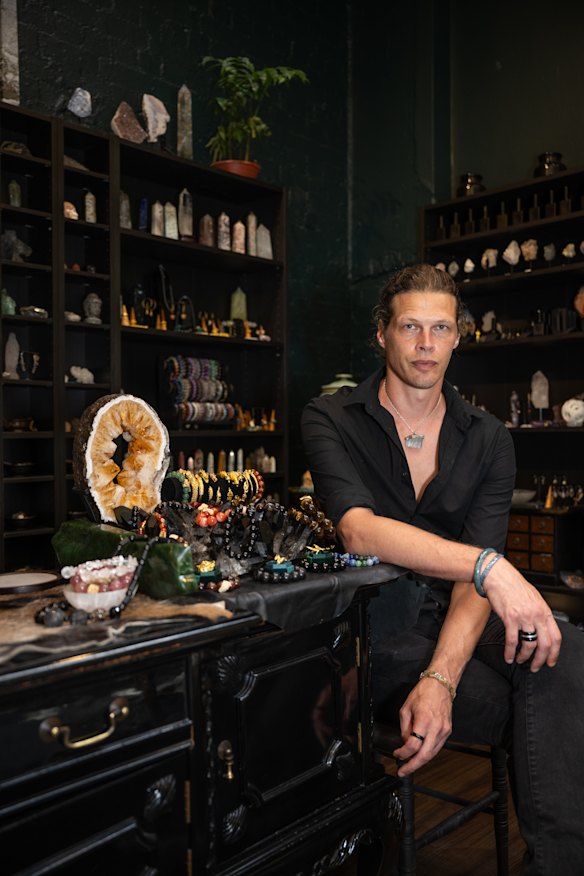
Dan Zizys slowly rotates a row of crystal bracelets draped over a black holder, carefully considering his selection as the stones shift under warm light. Some are thought to offer healing properties; others, protective.
It’s the kind of thing he might gift a teenager visiting his shop, making them feel safe and welcome in a city they’re meant to explore without fear.
“Kids, they’re young, you know,” Zizys says. “University students are young, and they’re all potential targets for less salubrious people.”
Talk to traders around Bourke Street Mall, and you’ll hear the same thing: they want a feeling of security in the city they love.
For Zizys – who co-owns gift and jewellery shop Curiosity Merchants with his wife, Zora Bell Boyd – it’s about navigating a path between over-policing, particularly when it comes to society’s most vulnerable people (homeless and drug-addicted), and targeting the people who shamelessly abuse the desperation of others.
City of Melbourne council recently employed 11 permanent community safety officers, who have reported more than 4500 incidents since October, and tracked down the culprits behind 32 thefts.
Traders say the city felt the safest it has in a long time when Victoria Police declared the whole of Melbourne’s CBD a “designated area” for six months.
Criminals fled the city, fearing they could be stopped and searched without a warrant, Zizys says. “They went straight away,” he says.
The force scrapped the declaration after just 41 days, ahead of a Federal Court challenge. The court in January found the declaration was invalid and unlawfully breached the human rights charter.
A few doors down in Royal Arcade, Jeeba Jewellery co-partner Amber Hall says crime is a major deterrent for people shopping in the city, especially the elderly.
Australian Restaurant and Cafe Association chief executive Wes Lambert argues a “perception shift” is needed on Melbourne’s safety, and that responsibility lies with the Allan government.
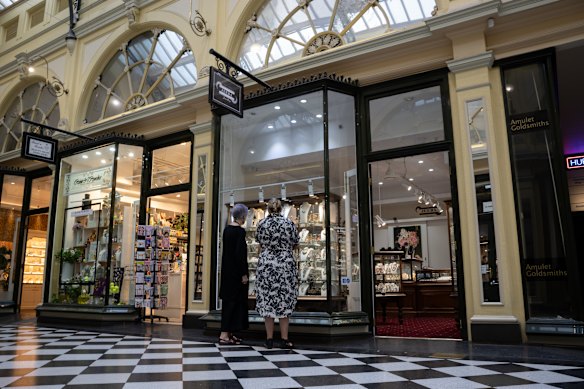
But Hall and her mum, who started their business in 1983, have noticed another worrying trend: their regulars stopped popping by after the pandemic.
“We used to know most of our customers by first name,” Hall says. “We don’t really know people now who are walking in. So they tend to be tourists.”
Hall attributes this change to a post-pandemic “double whammy”: the cost-of-living crisis combined with more people working from home.
Extending free weekend public transport beyond February, or even to weekdays, could be the answer to drawing them back, she suggests.
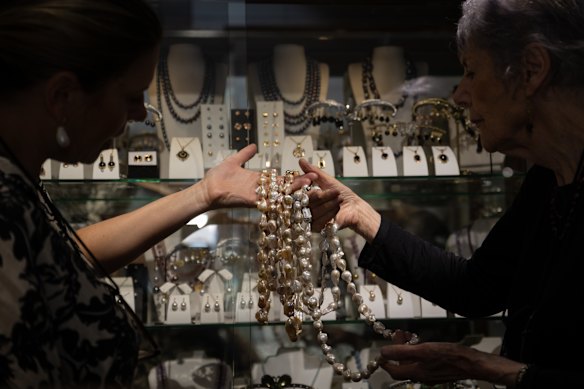
“The traffic into the Royal Arcade over this Christmas was reduced considerably,” Hall says.
Zizys suggests customers are more discerning in the post-pandemic world. He says they want experiential retail, rather than the capacity-driven department store model that prevails in Bourke Street Mall.
David Jones maintains that its recently refurbished Bourke Street flagship is a key drawcard for the precinct, offering world-class experiences, including its revamped beauty floor.
Myer says more than two million people visited its Christmas windows in 2025, as it brings in new brands, and creates an “engaged and elevated” in-store experience.
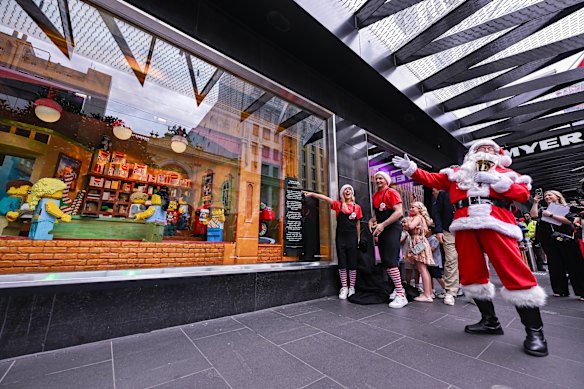
Zizys says the big stores appear focused on dominating space rather than capitalising on foot traffic; a hangover from the old-school shopping centre model.
“Mecca has done it really well … if you’re going to have a flagship store, it needs to be a sensorial wonder to pull people in.”
Zizys says he focuses on residents of the inner city and surrounds, who are the one constant in a trade where so much, including tourism, is in flux.
Use the interactive below to select a Melbourne pedestrian sensor location and view data for foot traffic trends over the past decade:
Start the day with a summary of the day’s most important and interesting stories, analysis and insights. Sign up for our Morning Edition newsletter.
Read the full article here


