



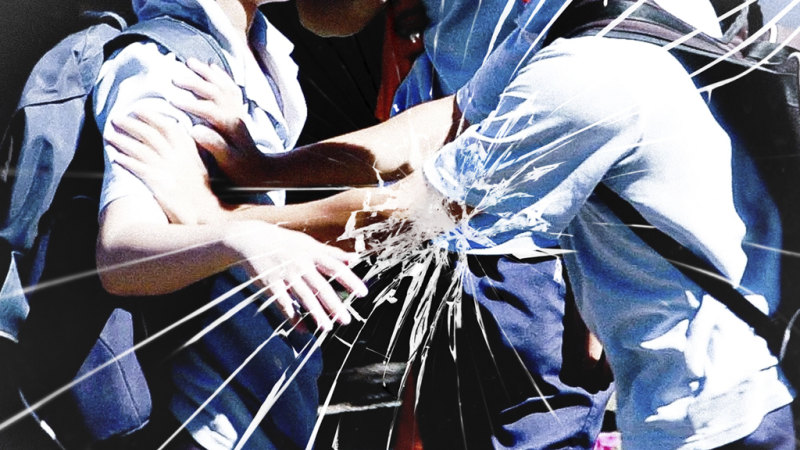
About 150 students are suspended each school day in Victoria as experts urge principals to be brave enough to tackle problems differently.
New data, obtained by The Age through freedom-of-information laws, shows the number of students suspended last year climbed to almost 30,000. In the past three years, there were 87,073 suspensions in Victorian public schools.
There was an increase of 1029 suspensions in 2025 from the previous year, rising to 29,709 and representing almost 4.5 per cent of the student cohort.
University of Melbourne associate professor Lisa McKay-Brown said the problematic figure showed “what we’re doing isn’t as effective as we would hope it would be.
“It’s certainly problematic that the suspension rate is not going down, and it probably aligns with the fact that attendance rates aren’t improving in schools as well,” she said.
The Grattan Institute think tank has called tackling absenteeism a moral imperative as Australian students on average missed 4½ weeks of learning in 2025.
The data also comes amid rising violence and harassment in schools. National research led by Monash University into the toll on principals showed about 65 per cent of those surveyed had experienced a critical incident involving physical violence, threats of violence or gendered violence, sexual harassment or sexual abuse.
This includes misogynistic behaviour from students directed at staff, physical fights between students and offensive parent behaviour.
“Principals are very concerned about student and staff wellbeing,” McKay-Brown said.
“It’s a tricky balance for them because they’ve got the right of the child or the young person to be at school, but also the safety of everybody else in the school.”
In June last year, the state government announced new principal powers to suspend or expel students when their behaviour outside school or online put other students or staff at serious risk.
At the time, Education Minister Ben Carroll said the strengthened powers made it clear that harmful behaviour had consequences, even if it was outside school hours.
But former principal and chief executive of Real Schools Adam Voigt said the suspension rate was too high.
He said that while suspensions could be an effective tool, he had concerns about attempts to solve a school culture problem with a political response. Without changing anything in schools, he said, there was a risk that it could become a vicious cycle.
Voigt also cautioned that keeping students away could compound issues and problems could resurface when the student returned.
“What we know is that when you suspend a kid, you increase the likelihood that they are suspended again,” he said.
“And secondly, we know that, in those increased numbers, there’ll be a disproportionately high representation of kids who are low socio-economic, who are affected by trauma, or who have disabilities.
“They’re the ones we’ve got to look after, and what we’re effectively doing is, is [casting them out] from the place that can help them.”
In England, suspensions hit record levels after the COVID-19 pandemic. The Guardian reported nearly 1 million suspensions in the 2023-24 school year.
But from this year, England’s Education Department will reserve suspension for the most serious cases, including violence.
Voigt urged authorities in Victoria to be brave and look at local success stories.
There were schools, he said, that had flipped their suspensions, behavioural referrals and sanctions.
Clarence High School, in Tasmania, had reduced suspensions dramatically, said Voigt, while Wangaratta High School had reduced disruptive behaviour and improved overall culture.
“Until we’re brave enough to actually think about the problem differently, we’re likely to have increasing numbers of student suspensions, increasing numbers of kids who are on a school-to-prison pathway, and we’re going to have more community unrest as a result.”
Wangaratta High School principal Dave Armstrong said the school had focused on school-wide positive behaviour shifts, and believed in responsibility, accountability and ownership.
“The language we use with our students is important. If we get that right, suspension falls away on its own,” Armstrong said.
He said the school’s students felt known and safe, and worked together.
“Suspensions are the last resort in that space. If we want to make [students] feel bad, then tell them how bad they are. Which is not what we do.
“A good school isn’t one where nothing ever goes wrong. What we want to do is know how to handle that well: genuine relationships, boundaries and expectations.”
The president of the Australian Principals Federation, Andrew Cock, said the rise in suspensions likely reflected a rise in antisocial behaviour, and the strengthened powers were justified.
“We’ve seen probably more department supports in place to allow our principals to suspend students for behaviour that is inappropriate or impacting the health and safety of others, or impacting the running of the school,” he said.
Cock said the decision to suspend a student was never made lightly.
“The reality is that schools are putting in many, many strategies to support students,” he said. “Suspension is never the first decision that’s made.”
He conceded that for teenagers who tried to push boundaries, it was a challenging space.
Parents Victoria chief executive Gail McHardy agreed that when student or staff safety was at risk, issuing a suspension was justified.
However, she said reducing suspensions could be achieved with earlier support and intervention.
“Governments need to ensure schools have access to specialist support, inclusion expertise, wellbeing staff and early intervention programs so that challenging behaviour can be addressed effectively and fairly,” she said.
Carroll said students and staff should feel safe at school.
“We make no apologies for giving principals the powers they need to enforce that,” he said.
“We’re backing principals with stronger powers to suspend students and ban adults who threaten the safety of school communities.”
Start the day with a summary of the day’s most important and interesting stories, analysis and insights. Sign up for our Morning Edition newsletter.


From our partners
Read the full article here


