



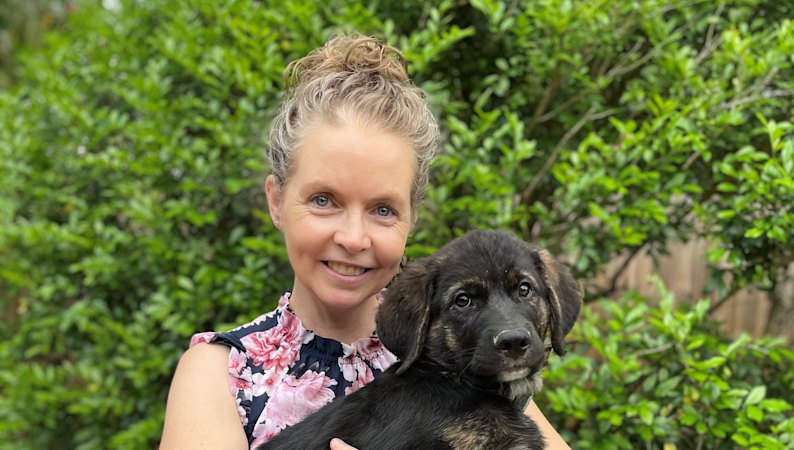
Dr Katrina Moss has spent much of her career studying reproductive health, but when it came to her own infertility, the University of Queensland researcher was unprepared for the toll the journey would take on her mentally and emotionally.
“I did 13 cycles of IVF [in-vitro fertilisation], and it was honestly the hardest thing I’ve ever done,” Moss said.
“I’m a psychologist and researcher on stress and coping, and I just looked around and went, ‘why is there not more support?’”
Moss did not sit on the question, using her experience and affiliation with UQ’s Australian Women’s and Girls’ Health Research Centre to lead the development of My IVF Support, an Australian-first support website designed to tackle the impact of fertility treatments.
“Only about one in three [IVF] cycles results in a live birth,” Moss explained.
“So for most people, it’s not going to be a one-and-done sort of situation. A lot of people are going to end up having to do multiple cycles, and the more cycles you do, the harder it gets.
“That emotional burden is actually one of the top three reasons people stop doing fertility treatment.”
Research shows up to 75 per cent of people doing fertility treatment experience anxiety or depression, but less than 25 per cent receive any mental health support.
“[Often] when you’re starting out, you don’t know what to expect when you’re in it,” Moss said.
“You don’t know if your emotional rollercoaster is normal … [or] what to do to feel better.”
My IVF Support has tools to track moods and develop coping strategies, with sections tailored to patients, partners and supporters. This includes information guiding people through different types of treatment, what to expect during each phase and how to manage fertility expectations.
“There is a lot of misinformation [about IVF], and it’s easy to disappear down a rabbit hole and get lost in the jargon,” Moss said.
“[And] no matter how good your clinical team is, you’re going to have questions later, and decision-making can take a long time. So it’s useful to be able to have a resource you can go back to and just read through again.”
The website was built in partnership with experts from Monash University and Cardiff University, written by psychologists, medical specialists and nurses, and informed by hundreds of surveys and interviews with patients, partners and supporters.
Moss started working on the project about halfway through her IVF treatment.
“It started with trying to understand my own experience and whether it was normal, then evolved into realising there was a big gap in the support available.”
After 13 cycles and several early pregnancy losses, she made the difficult decision not to continue with IVF. While “it’s had its moments”, she says bringing My IVF Support online has been deeply rewarding.
“Some days haven’t been very easy because it’s pretty triggering,” Moss said.
“But it’s also really nice to be able to turn that experience into something positive that’s going to be able to help people.
“It’s the shiniest silver lining I can find.”
Start the day with a summary of the day’s most important and interesting stories, analysis and insights. Sign up for our Morning Edition newsletter.
From our partners
Read the full article here


