



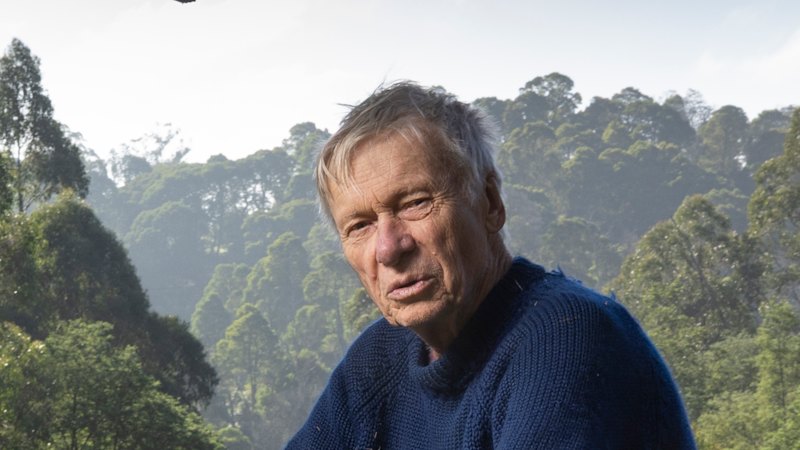
Richard Leppitt was walking in his 40-hectare property in South Gippsland when he made a disturbing discovery.
Someone had been on his land without his knowledge. And they were recording.
He found a small camera about the size of a bulky mobile phone attached to a fence post in a far corner of his land.
For more than 50 years, he and a fellow owner have been transforming a former dairy farm into a wildlife haven near the town of Foster. They have planted thousands of trees over the decades, which have attracted myriad native bird and animal species where there was once cleared grazing land.
But the discovery of the camera three years ago left Leppitt feeling exposed, with the knowledge that trespassers had been on his property and were possibly returning to check the footage.
“It was a shock that people had been coming here,” he said.
About a year ago, Leppitt found another camera, which was mounted beside a creek. Leppitt has since downloaded the images captured by both cameras.
Known as camera traps, the devices are commonly used by hunters and ecologists to record the presence of wildlife. Leppitt believes the intruders on his property were tracking another group of unwelcome guests – feral deer.
One of the cameras on Leppitt’s property captured images of a man carrying what appeared to be a rifle. There were also images of another man’s face, as well as foxes and deer. Leppitt is confident the photographs were taken on his property because he recognised the landscape.
“It’s quite invasive, for sure,” he said.
Leppitt is planning to take the images to an acquaintance who lives nearby and is a police officer.
Feral deer have done extensive damage on Leppitt’s property, leaving tracks, damaging trees and trampling the landscape he has worked so hard to rejuvenate.
He has welcomed shooters on his property who have asked permission and discussed how they will hunt safely and responsibly. But the explosion in feral deer numbers across Victoria has triggered another concern for private property owners and the Invasive Species Council advocacy group: illegal hunting.
Leppitt often hears shooting in the area, particularly at night, and is unsure of who is hunting.
“You never know how far away they are,” he said.
A 2023 study of deer density by government agency Arthur Rylah Institute cited reports that feral deer numbers ranged from several hundred thousand to more than 1 million in Victoria.
The introduced animals trash the natural environment and cause widespread damage to farms.
The Invasive Species Council’s Victorian conservation advocate, John Kelly, said the state government’s classification of deer as game rather than pest species meant the animals were effectively protected for hunting.
He said recreational hunting could be part of the control strategy for deer, but not on its own. Kelly said methods deployed in other states, including corralling deer and greater use of aerial culling, would help alleviate the disastrous environmental impact the animals caused in Victoria.
But the game classification for deer, he said, meant the animals were proliferating across the Victorian landscape. There have been reports of deer moving along waterways as far as Melbourne’s inner suburbs.
“They’re becoming a more noticeable and problematic presence,” Kelly said.
Kelly said the council had been receiving increasing reports of illegal hunting. He said the small village of Walhalla was just one location where the problem was rife. Walhalla is surrounded by state forest where shooting deer is legal.
Walhalla resident Brian Brewer said deer were a menace, but so too were illegal hunters. Brewer runs ghost tours at night in the town and often hears shooters nearby.
“We’ve had shooters active in the town while we’ve been walking around with a group of people,” he said. “That’s not safe.”
In one case, he said hunters chased a wounded deer into the main street during the day and killed it with knives.
“We’re a tourist town. We don’t want that sort of thing,” Brewer said.
But he agreed the feral deer problem required stronger action. He has had to replace fences and historic stone walls after deer destroyed them.
“It’s infuriating,” he said.
It is illegal to shoot on private property without permission. Victoria Police were unable to provide figures on the extent of illegal hunting in Victoria.
Environment Minister Enver Erdogan said the classification of deer as game did not prevent deer control. He said the government was working with communities and experts to deliver its control strategy, including measures taken across more than 1 million hectares last year.
Erdogan said recreational hunters had removed 158,500 deer from the environment last year, which was 66 per cent above the long-term average.
The government insists deer are unprotected on private land, which means landholders can shoot them without authorisation where they are causing damage or posing a risk.
But Erdogan did not respond to questions relating to concerns about illegal hunting.
Richard Leppitt supports the push to declare deer a pest species. He said changing the feral animal’s classification would put the onus on the state government and its agencies to act with greater co-ordination and urgency to tackle the problem.
And that might also help prevent deer from wandering onto his property – and the trespassers who follow them in.
Start the day with a summary of the day’s most important and interesting stories, analysis and insights. Sign up for our Morning Edition newsletter.


From our partners
Read the full article here


