



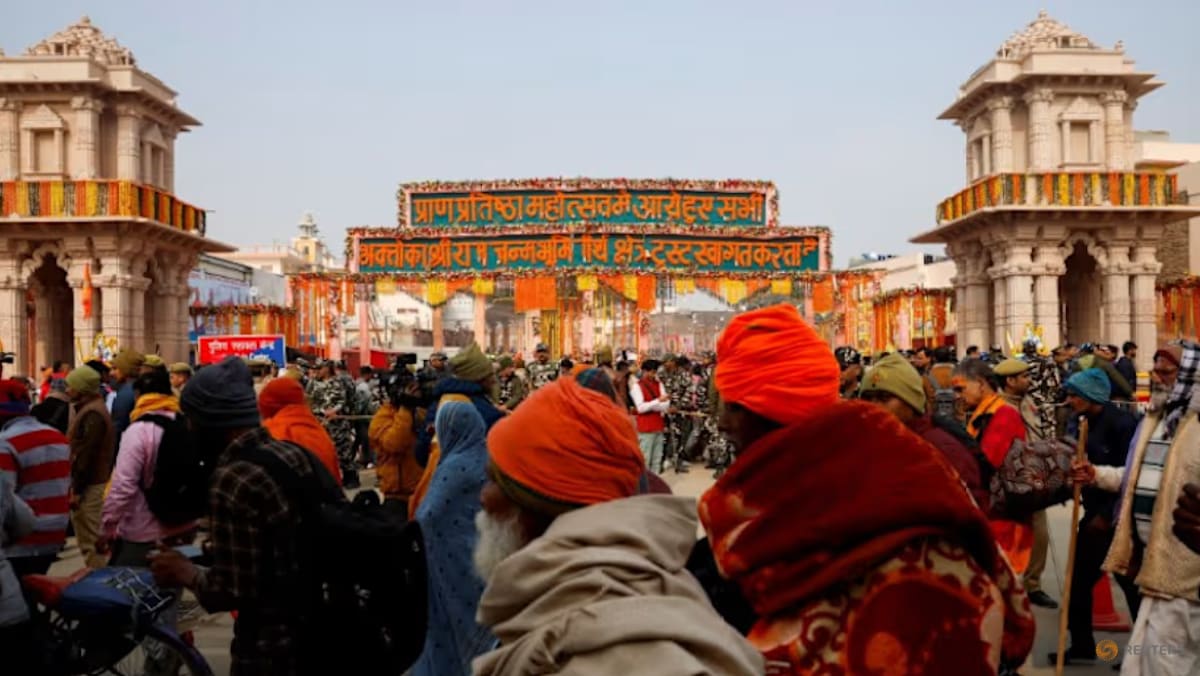
Devout Hindus believe that the god Ram was born there more than 7,000 years ago, but that the Babri mosque was built over his birthplace by a 16th-century Muslim emperor.
The dispute erupted into nationwide unrest in 1992 when Hindu mobs demolished the mosque, triggering violence that killed more than 2,000 people.
In 2019, the Supreme Court awarded the disputed site for construction of the temple, paving the way for a huge fundraising drive across the country to finance the project.
According to the trust which manages the temple, the campaign raised some US$341 million.
GROWING MARKET
India’s religious and spiritual market was valued at US$70.14 billion in 2025 and is projected to reach US$135.41 billion by 2034, according to consultancy firm IMARC.
Legal experts say oversight varies widely across India because religious institutions operate under multiple laws and tax systems.
“There is no uniform national framework prescribing consistent standards of financial transparency across all religious institutions,” said Sonam Chandwani, managing partner at KS Legal & Associates.
Easwar pointed to the challenges posed by mass events such as the Kumbh Mela pilgrimage, where millions of devotees gather and large volumes of offerings are collected.
Political analyst Anurag Naidu said temples regularly handling huge amounts of cash need systems comparable to those in large public institutions.
“Religious institutions have grown far beyond traditional places of worship,” he said.
“They need institutional systems with financial controls and independent oversight.”
Read the full article here


