



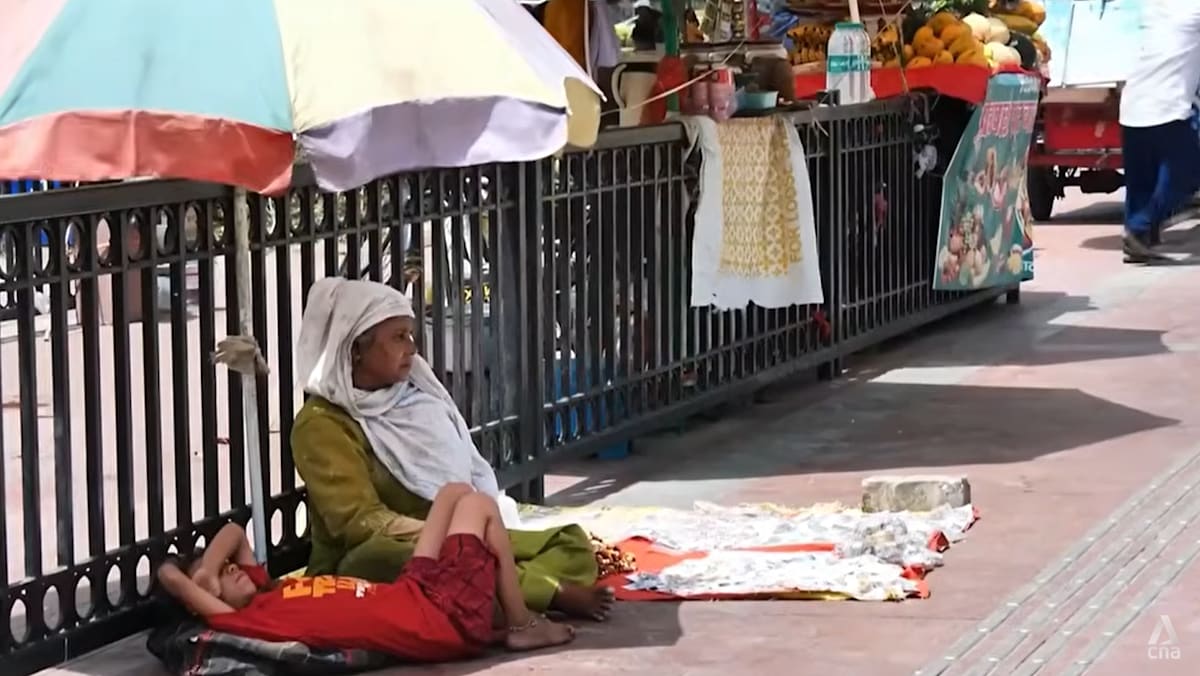
HEALTH CONSEQUENCES
Medical professionals are increasingly concerned about the health consequences of extreme heat.
At Ram Manohar Lohia Hospital in New Delhi, doctors – who are running a first-of-its-kind dedicated heat stroke unit in northern India – said rapid cooling is the only thing that can save lives during a heatwave.
While ice immersion therapy is the fastest way of cooling, it needs to be done under medical supervision.
Most of the hospital’s patients are admitted in an unconscious state, noted its head of emergency medicine Amlendu Yadav.
“The usual mortality of a heat stroke patient is 80 per cent if a patient doesn’t get treatment, but if the patient gets timely, adequate treatment, this mortality can be brought down to just 10 per cent. And in 2024, our mortality data was 27 per cent,” he added.
The hospital treated more than 75 heat stroke patients in 2024, which was the last year temperatures reached similarly dangerous levels.
Dr Yadav said he fears that number could be even higher this year.
While measures such as cooling tents and specialised heat wards are welcome, experts argue that heat plans in India are focused more on emergency responses than on long-term changes to make cities heat-resilient.
Dr Radhika Khosla, research director at the Oxford India Centre for Sustainable Development and co-author of a recent Oxford University study, said policymakers should rethink urban design.
The study found that India is likely to be among the countries with the largest populations exposed to extreme heat if climate change continues to worsen in the coming decades.
“Are there low-cost solutions which … have existed for a long time that enable shading, ventilation, access to green spaces, access to water?” she questioned.
“I think if we act now and quickly, we can save ourselves a lot of damage.”
Read the full article here


