



DOMESTIC RISKS AND DIPLOMATIC OPPORTUNITIES
Beyond diplomatic implications, Indonesia’s decision to accept the invitation is also seen as potentially carrying domestic political risks. Teuku warned the move could “create serious problems at home” and believes that Indonesia should have declined the offer.
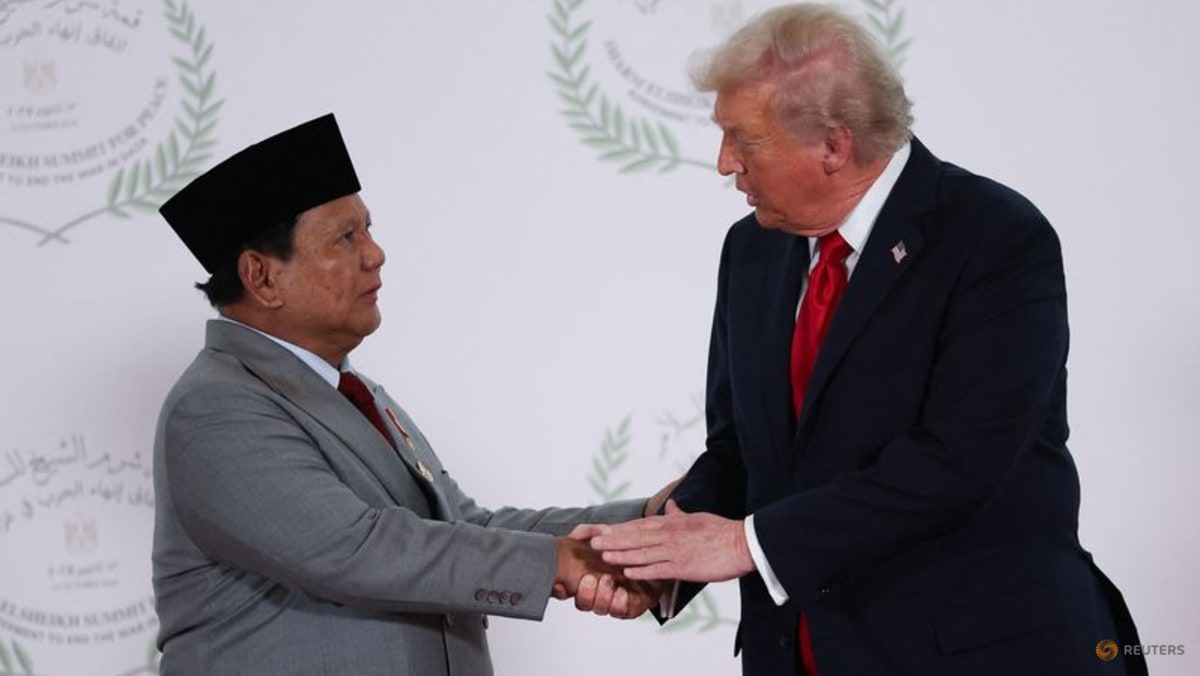
President Prabowo Subianto’s image could also suffer if he were to be seen seated alongside Israeli Prime Minister Benjamin Netanyahu, Teuku said, noting that seating arrangements at international conferences are often determined alphabetically.
“Sentiment towards Palestine is very strong and has become a domestic issue. President Prabowo’s image could be severely damaged in the eyes of Indonesia’s Muslim community,” Teuku warned.
Despite the risks, Akbar said that Indonesia’s membership in the Board of Peace could enhance its diplomatic role on the global stage, particularly if it becomes one of the organisation’s founding members.
“Indonesia would gain closer access to US interests and those of other countries that may join,” he said.
“The organisation could also serve as an additional platform to raise other peace-related issues, such as the conflict in Myanmar.”
Yon said Indonesia’s invitation to join the board reflects its growing importance in global affairs. However, he stressed that Indonesia’s role would only be meaningful if it can actively raise global issues within the organisation, rather than being “used as a tool to fulfil Trump’s wishes”.
“Indonesia must not remain under Trump’s shadow, but instead play an equal and strategic role, so that the institution does not depend solely on Trump’s will and risk dissolution if his interests are not met,” Yon said.
Ahmad Khoirul Umam, an associate professor of political science and international studies at Paramadina University, said any forum offering direct access to major power decision-making centres should be utilised, as long as it does not compromise Indonesia’s core foreign policy principles.
“In this context, Indonesia’s participation is not about legitimising a unilateral agenda, but about opening space for influence,” Ahmad said.
He added that the Board of Peace could be relevant given the structural deadlock surrounding the Palestinian issue, “where UN resolutions are not implemented, multilateral mechanisms are weakening, and major powers have become part of the problem”.
“By being inside the Board of Peace, Indonesia has an opportunity – albeit a limited one – to inject a Global South perspective … and push back against reducing the Palestinian issue to merely a matter of Israeli security,” he said.
Ahmad stressed that Indonesia’s participation must be accompanied by a clear strategy to avoid isolation within the forum.
“Indonesia needs to build coalitions of middle powers within and around the forum, so that pressure on the peace process does not stand alone,” he said.
“Indonesia is not tying itself to Trump’s political design, but is using the available space to fight for humanitarian interests and international justice.”
Read the full article here


