



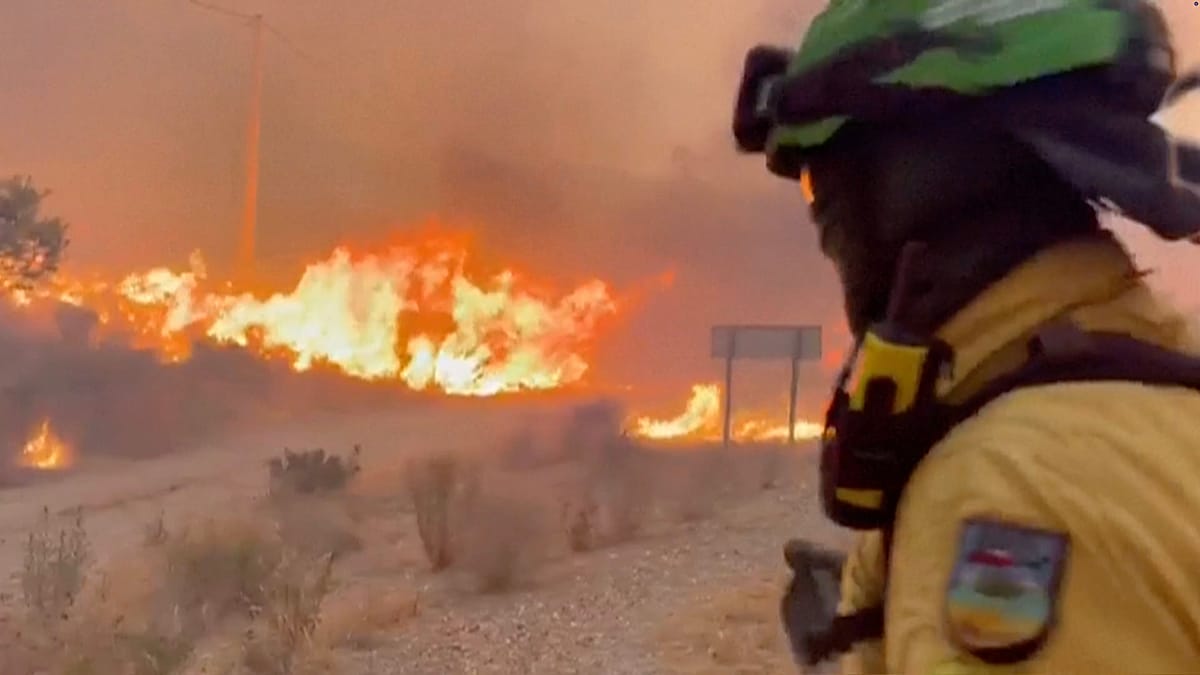
The wildfire that broke out on Thursday and is ravaging southern Spain has already left at least 12 people dead and has once again raised the question that almost nobody asks until it is too late: what to do if the flames catch up with you.
The blaze is now the second most serious in the country in terms of loss of life and has forced the preventive evacuation of around 800 people from the municipality of Bédar and several neighbouring hamlets.
Civil Protection, the Military Emergency Unit (UME) and the rescue services always stress the same point: following a few basic guidelines can make the difference between life and death.
If a fire catches you outdoors
The first rule is not to run blindly. You need to move away from the fire front along the sides, against the direction of the wind and, if the terrain allows, seek shelter in an area that has already burned. In areas like that, the fuel has already disappeared and the fire can’t reignite.
It is advisable to avoid ravines, slopes and narrow valleys, because hot air rises and fire climbs much faster than on flat ground. If you have a handkerchief to hand, wetting it and covering your nose and mouth helps to filter out the smoke; breathing close to the ground, in short breaths, does too. And one piece of advice that often surprises those who do not know it: never take refuge in wells or caves, because oxygen can run out sooner than you think.
If you’re caught by fire inside your vehicle
Many might think that a car is a death trap in a wildifre but it does not have to be if you keep a cool head. First, look for a stretch with no vegetation or that has already burned and stop there, never in the middle of a road shrouded in dense smoke.
Then close doors and windows, switch off the ventilation so that smoke cannot enter and turn on the lights, so that rescue teams can locate the vehicle. Running out of the car without a plan is one of the riskiest decisions you can take: outside it is hotter and you can easily become disoriented.
And if you encounter a fire while driving, you must never accelerate towards the flames and the smoke. Visibility can drop to almost zero and you may end up crashing into something you cannot see. In that situation, it is best to turn round and go back the way you came, as long as you can do so safely.
If you receive a warning when you are at home
When the flames threaten a home and it is time to evacuate, you should take only what is essential: documents, medication, water and your mobile phone, and close doors and windows before leaving if time allows.
And here comes the point that is hardest to grasp in the heat of the moment: you must use only the routes indicated by the emergency services, never a forest track or shortcut of your own choosing.
Uncoordinated secondary roads are, in fact, where some of the most tragic situations of recent hours in Almería have occurred, where the speed of the fire ended up trapping groups fleeing on their own initiative.
Antonio Sanz, Andalusia’s minister for emergencies, said the majority of the 12 victims appeared to be foreign nationals.
“Everything indicates that the deceased are, mostly or entirely, foreign nationals.”
He said the victims reportedly strayed from designated evacuation routes and sought an alternative exit via a river, a decision that ultimately turned into “a trap” when they were overtaken by the fire.
If your clothes catch fire
If your clothes catch fire, avoid running, as movement can intensify the flames. Instead, lie down on the ground and roll over until the fire is out, or cover yourself with a blanket to smother the flames. Once the fire has been extinguished, do not try to remove the burnt clothing, as it may be stuck to the skin.
If you find someone with burns and the surroundings are safe, try to keep them lying on their side and do not remove garments affected by the fire. The priority action is to call emergency services immediately and wait for them to arrive and provide the necessary medical care.
What you must never do
Ignore an evacuation order. Try to return to an area that has been cleared before the authorities authorise it. Stop to film the fire in the middle of an escape route. And, of course, try to extinguish it without equipment or training. None of these decisions save lives and in most cases, have cost them.
Read the full article here


