



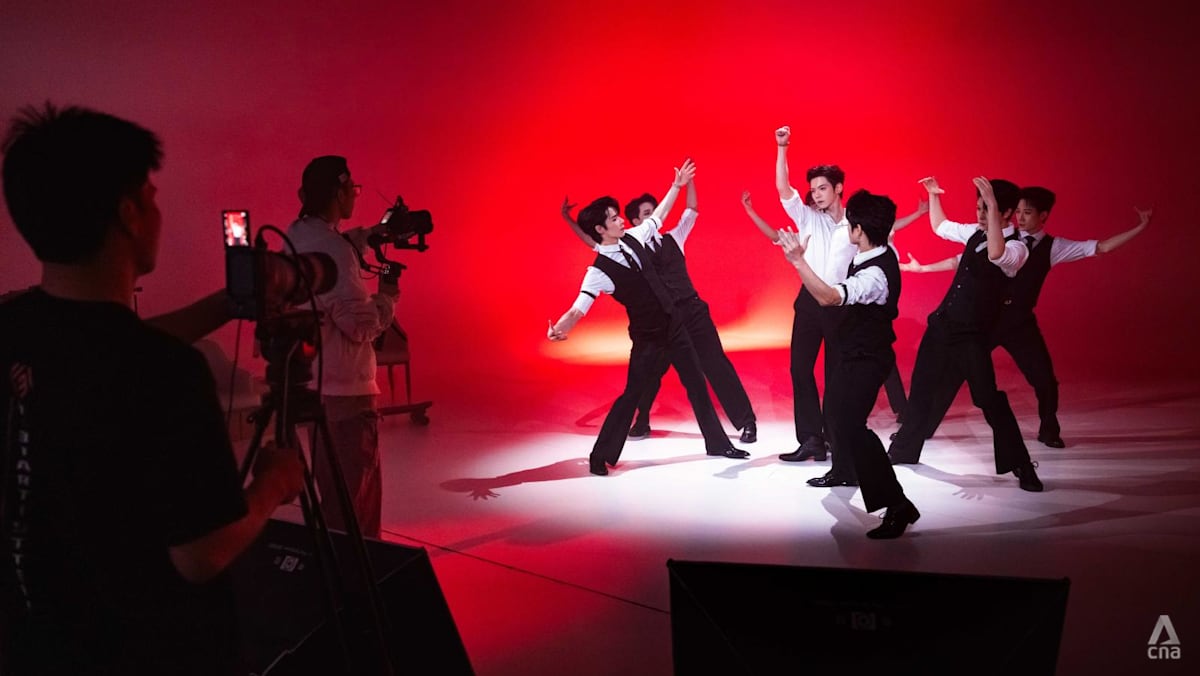
The 15,000 square metre office, the largest of the company’s three livestreaming bases across Shenzhen, houses multiple studios which operate around the clock.
The company, which previously focused on traditional video production and product livestreaming during the pandemic, was among the first in China to break into group livestreaming, founder Hou Shuojun told CNA.
“In the past, audiences only watched celebrities from afar. Now they want participation and interaction,” Hou said.
CHINA’S NEW “TUANBO” WORKFORCE
Though relatively new compared to other forms of livestreaming like gaming broadcasts and commercial shopping streams, tuanbo has rapidly grown into a massive industry in China.
Last year, more than 8,000 group livestream rooms went live daily nationwide, according to a report by the China Association of Performing Arts.
Part performance, part fan economy, tuanbo sessions often feature groups of hosts and entertainers dancing, singing and interacting live with viewers on Chinese social platforms like Douyin and Kuaishou.
Sessions can range from 30 minutes to an hour, as audiences compete to send them virtual gifts that boost performers’ rankings, visibility and earnings.
Read the full article here


