





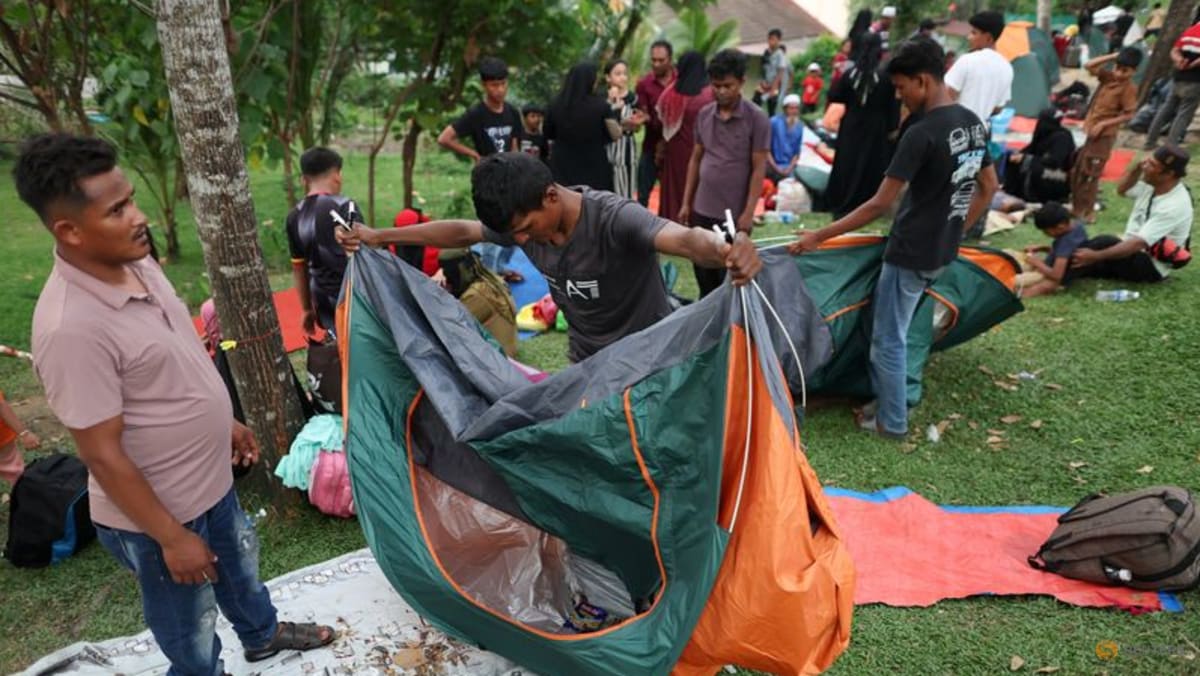
“No one has the right to take over any part of the city,” he said in a video posted on social media. Bryony Lau, deputy Asia director at Human Rights Watch, said Rohingya refugees in Malaysia live under constant threat of arrests and raids in a climate of fear that has only gotten worse due to the surge of online hate directed towards them.
“The Malaysian government should prioritise protecting refugees who have been evicted from their homes instead of terrifying them further by detaining them,” she said.
Around 126,000 Rohingya Muslims were registered with the UNHCR in Malaysia as of the end of February, according to the agency’s website, though rights groups say many more remain undocumented.
UNHCR SAYS IT IS CONCERNED BY ONLINE HATE SPEECH
Syed Kasim, one of the Rohingya refugees, said he had arrived with his wife and children at the UNHCR building in the early hours of Monday but the group had received no assistance from any authority.
“Nobody helped (with) our problem, nobody understands,” he said, adding he had been living in Malaysia for 20 years.
The UNHCR office in Kuala Lumpur did not immediately respond to a request for comment. It told Reuters on Friday that it was concerned by rising online hate speech, disinformation and dehumanising narratives targeting Rohingya and other refugees, which it said could fuel harassment and discrimination offline.
Though it is not a signatory to the UN refugee convention and regards asylum seekers as illegal migrants, Muslim-majority Malaysia has long been seen as a safe haven for Rohingya fleeing persecution in largely Buddhist Myanmar. That changed during the COVID-19 pandemic, when the Rohingya were accused of spreading the virus, disrespecting cultural norms and competing with locals for jobs.
Read the full article here


