



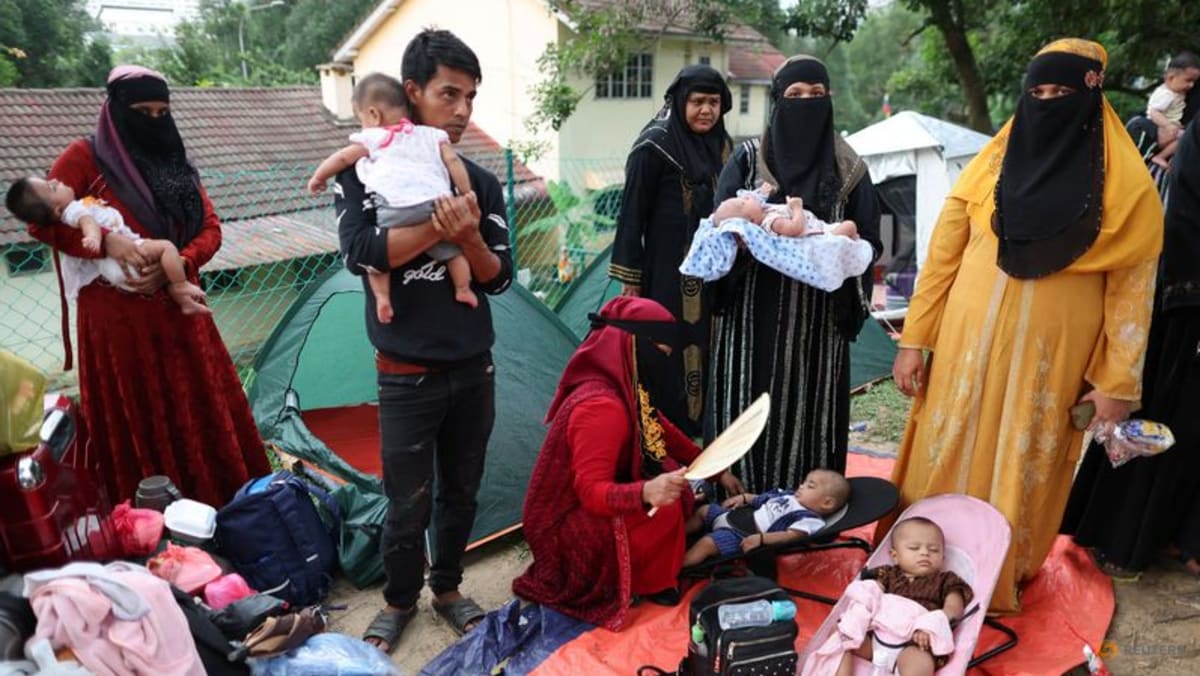
Prime Minister Anwar Ibrahim announced in July that Myanmar had agreed to take back 5,000 members of the Rohingya, in a rare repatriation push that has prompted concern from rights groups.
Observers say mounting public fatigue over refugees, along with domestic political expediency, were among the factors behind Malaysia’s shift in its policies towards refugees, even as some refugees told CNA it was still unsafe to return to their homeland.
The repatriation plan was announced after authorities detained more than 100 Rohingya who had gathered outside the UN refugee agency’s office in Kuala Lumpur.
The refugees were seeking help after being threatened with eviction from an informal settlement in northern Penang state.
They were later released after officials confirmed they held valid UN documentation.
Myanmar earlier this month pledged “safe and dignified” returns for its citizens displaced abroad, after criticism from the United Nations and rights groups.
Anwar also said he would invite Myanmar’s coup leader-turned-civilian president Min Aung Hlaing for an official visit to help expedite the repatriation process.
Malaysia, which shelters one of Southeast Asia’s biggest refugee populations, is not a signatory to the 1951 Refugee Convention and does not formally recognise refugee status.
AFP fact-checkers have found that Rohingya refugees in Malaysia have been targeted by online disinformation campaigns that rights advocates say are fuelling xenophobia and intimidation.
Many of the Rohingya, a mostly Muslim group, escaped Myanmar during a brutal military crackdown in 2017.
Read the full article here


