



Mosquito season is coming around again, and this year it could be particularly bad for many Americans living in some of the biggest cities in the nation, as experts warn of a spike in their numbers this summer.
The populations of these blood-sucking insects in the U.S. have grown tenfold over the last century or so, according to a study published on Nature Communications in 2016, and their active season is getting longer due to warmer temperatures.
Crucially, their ability to transmit dangerous diseases like Dengue fever and West Nile virus is also increasing across the country.
‘Top Public Health Threat’
“Mosquitoes are not just annoying, they are a top public health threat,” Dr. Roberto Barrera, lead entomologist at CDC’s Dengue Branch, said in a statement. “These tiny troublemakers are responsible for spreading viruses that affect millions of people.”
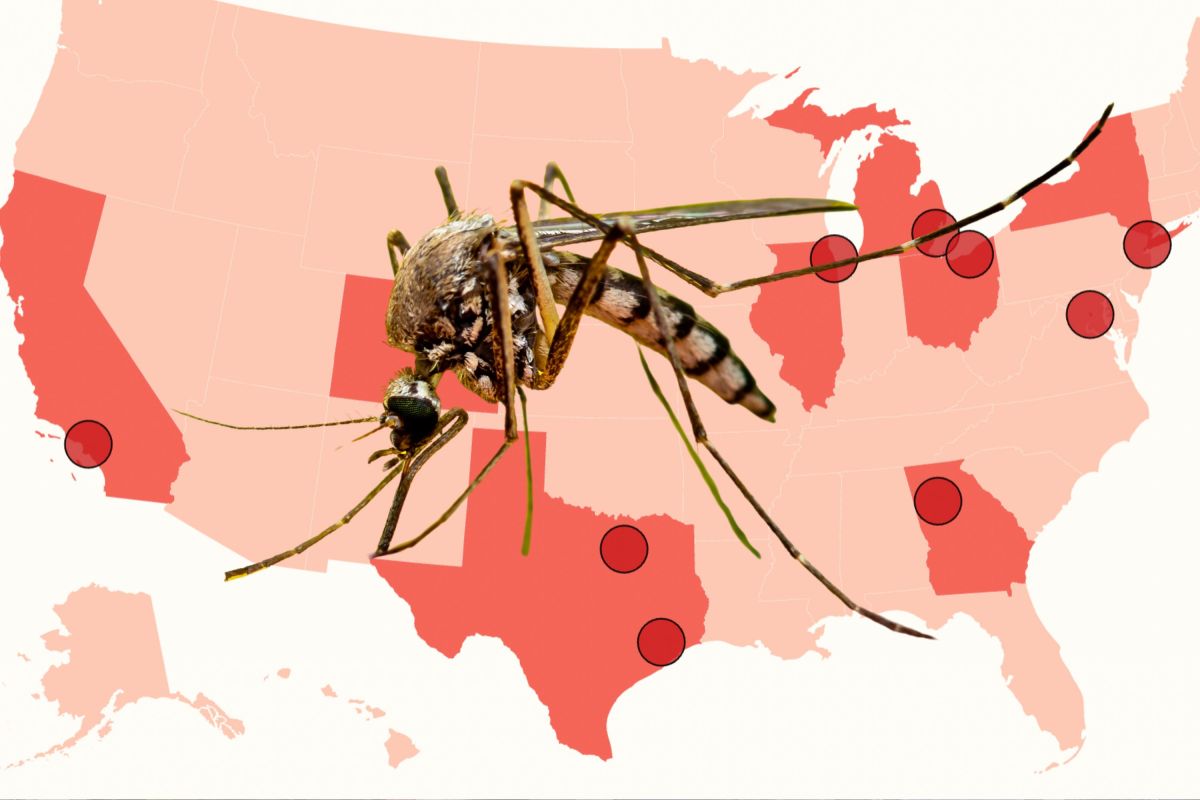
Depending on where they live, Americans should be extra careful this summer to avoid the widely hated insects. Pest control company Orkin identified ten “hot spots” for mosquito activity this summer, placing Los Angeles, Chicago and New York City at the top.
Detroit is the number four hot spot in the country for mosquito activity this summer, according to Orkin, followed by Atlanta, Washington, D.C., Houston, Dallas, Cleveland and Denver.
It is not a coincidence that the cities expected to see a spike in mosquito activity this summer are also some of the biggest in the country.
Mosquitoes are attracted to densely populated metros offering good feeding opportunities, an abundance of sheltered breeding grounds (like clogged gutters and stagnant water), a lack of natural predators, and a warmer microclimate due to the urban heat effect.
Some of the states who made Orkin’s “hot spot” list for this summer generally have the worst mosquito problems in the country.
These include Texas, where more than 85 species of mosquitoes can be found; New York, which during its hot, humid summer becomes a fertile breeding ground for mosquitoes; and Michigan, where an abundance of standing water makes the state both an outdoor lover’s paradise and a mosquito ideal place to lay eggs.
Mosquitoes, however, are present in all 50 states—and their activity is particularly bad in states that did not make it in Orkin’s list, including Alabama, Florida, Louisiana, North Carolina, South Carolina, and Kentucky.
What Mosquitoes Should You Look Out For?
No mosquito bite is ever a pleasant experience. But some can be extremely dangerous—and potentially fatal. Mosquitoes are, in fact, the world’s deadliest animal, causing about 725,000 deaths each year, according to Envu Global.
The Centers for Disease Control and Prevention (CDC) recommends Americans look out for the Aedes aegypti mosquito, which can spread Dengue, Zika, chikungunya, and yellow fever.
With its dark brown body, the insect is easily recognizable by the white bands on its legs, the white spots on the body, and stripes on the upper body. It is usually found in the Southern and Southwestern states.
Another dangerous mosquito type is Aedes albopictus, also known as the Asian Tiger Mosquito. It is black, with white bands on the legs and white spots on the body, usually found in the South and Southwest, and they can spread Dengue, Zika and chikungunya.
Because they feed on animals as well as humans, however, they are less likely to pass these dangerous on to people.
How to Defend Yourself Against Mosquitoes
There are a few ways people can protect themselves against mosquito bites. These include:
- Blocking access to the skin by wearing loose, long-sleeved shirts and long pants;
- Using EPA-registered insect repellent;
- Installing tight-fitting screen on windows or make sure existing ones are in good repair;
- Trimming vegetation around the home to reduce mosquito resting areas;
- Eliminating standing water where mosquitoes can lay eggs;
- Installing fans in front of outdoor porches or patios.
Read the full article here


