



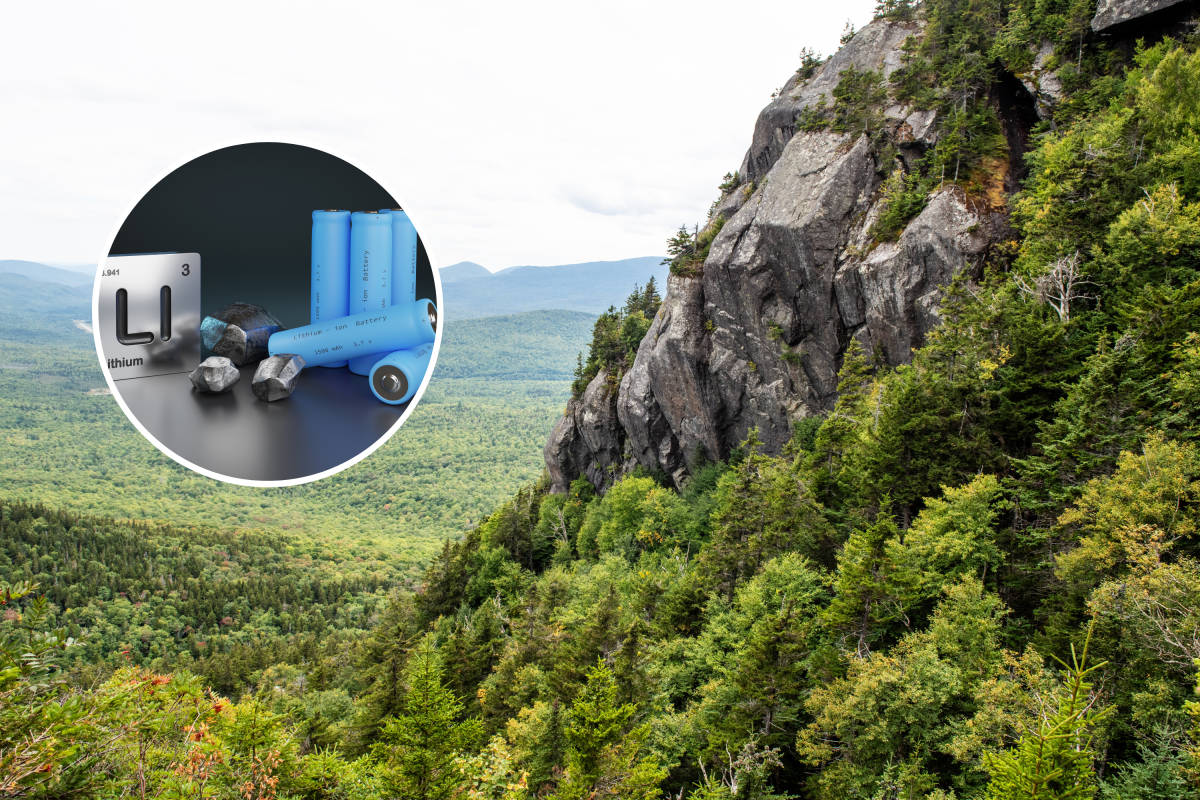
A major lithium discovery in the Appalachians is fueling fresh hopes for U.S. energy independence, after federal scientists said the region contains enough of the critical battery metal to replace American imports for hundreds of years.
Lithium sits at the heart of the clean-energy transition, powering EV batteries, renewable energy storage, and countless consumer devices. Yet the U.S. remains heavily dependent on imports and on Chinese-controlled refining capacity, leaving supply chains exposed at a time of rapidly rising global demand. Federal scientists say the latest findings could mark a turning point, potentially strengthening U.S. energy self‑sufficiency while delivering economic benefits across several states.
The U.S. Geological Survey (USGS) estimates that lithium resources identified across the Appalachian region could replace U.S. lithium imports for 328 years, based on current consumption rates. While the findings show clear geographic concentrations, it also underscores a central uncertainty: identifying lithium does not guarantee it can or will be mined.
Newsweek reached out to the USGS by email for comment.
Where Lithium Is and What It Would Take To Extract It
The USGS assessment distinguishes between northern and southern sections of the Appalachian Mountains, with significant implications for where mining could eventually occur.
The Northern Appalachians hold 900,000 metric tons of lithium that “may be economically extractable,” the USGS report said, with the highest concentrations located in western Maine. However, the report does not guarantee mines will be built.
The lithium is embedded in pegmatite, a coarse-grained rock similar to granite that has long been associated with lithium mineralization. Extracting lithium from pegmatite requires conventional hard‑rock mining, rather than the brine extraction methods used in places like Chile.
Even more lithium was identified in the Southern Appalachians, with up to 1.4 million metric tons identified from Maryland to Alabama, with most of it concentrated across the Carolinas. Details regarding that discovery will be shared at a later date, the report said.
Mining Remains Far From Certain
Despite the scale of the discovery, the path from geological promise to operating lithium mines is uncertain and potentially contentious.
Mining is required to extract lithium from rock, and although the U.S. government has indicated it intends to use the lithium discovered across the Appalachians, there has yet to be an announcement regarding any new lithium mines in the region as a result of the report.
States like Maine have some of the strictest mining regulations in the country, and previous efforts to develop hard‑rock mines there have faced environmental and public opposition. Any future projects would also need to clear lengthy permitting processes, address water and land‑use concerns, and secure financing at a time when lithium prices have been volatile.
Who Stands To Benefit?
If mining does move forward, financial gains would likely be distributed across multiple stakeholders. Private mining and battery companies could benefit directly, while states hosting projects could see increased tax revenue, infrastructure investment, and job creation.
Interior Secretary Doug Burgum emphasized that potential in a recent post on X, writing that the Appalachian region contains enough lithium to replace hundreds of years of imports, a claim echoed by USGS officials.
“[USGS] has found that the Appalachian region of the U.S. contains enough lithium to replace 328 YEARS of imports! Thanks to world-leading mineral science, permitting reform and renewed investment in domestic mining, @POTUS has reclaimed America’s mineral independence,” Burgum posted on X.
The economic upside extends beyond mining itself. Domestic lithium could support EV manufacturing, battery plants, and grid‑scale storage projects.
How the U.S. Stacks Up Globally
Globally, lithium production is currently dominated by Australia, Chile and China, with China controlling a majority of the world’s lithium refining capacity even when the raw material is mined elsewhere. The U.S., by contrast, operates only one major lithium mine, in Nevada.
The Appalachian discovery does not immediately alter that balance of power. Mining, refining, and processing infrastructure would take years to build, and China’s grip on refining remains a major bottleneck.
What’s Next
For now, the map shows possibility, not certainty. Whether lithium mining becomes a reality in the Northeast will depend as much on politics, regulation, and public acceptance as on geology buried deep beneath America’s oldest mountains.
Read the full article here


