



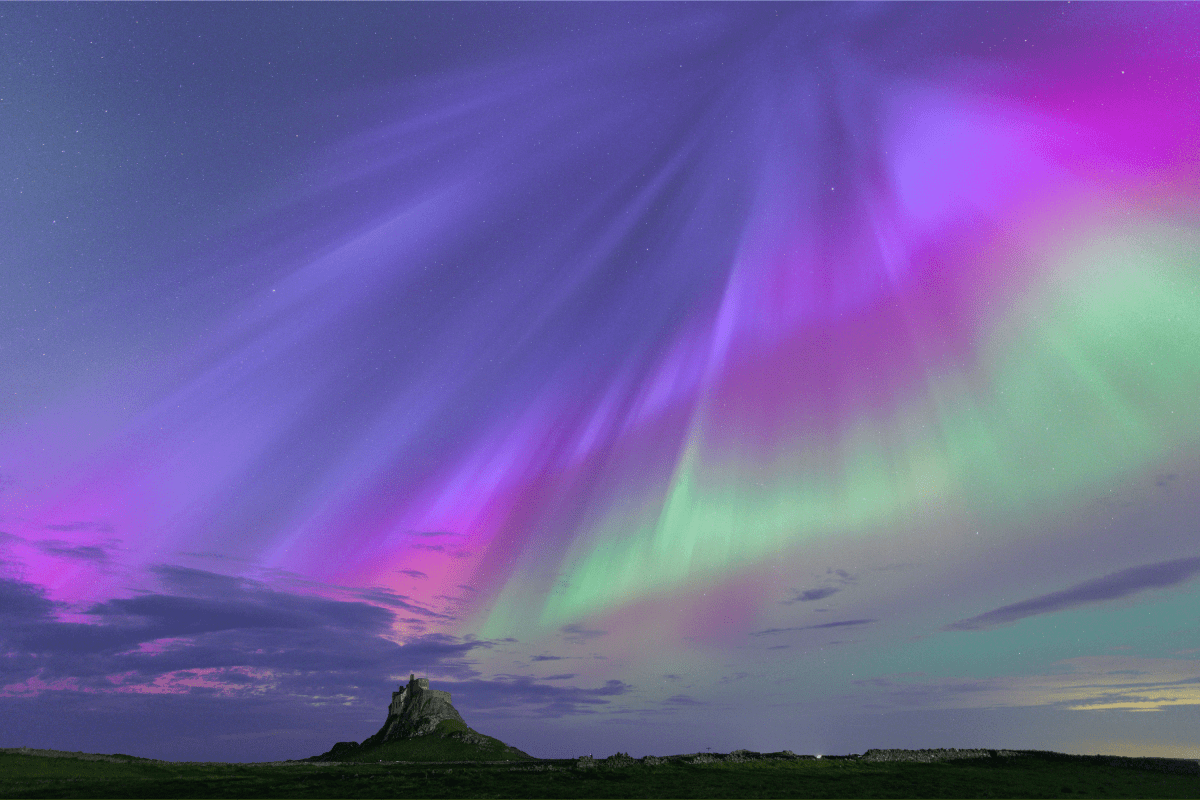
A rare celestial display could light up skies across parts of the United States on Sunday night, with forecasters reporting that the aurora borealis (also called the northern lights in the northern hemisphere) may be visible far beyond its usual northern boundaries, thanks to heightened solar activity.
The northern lights—typically seen in places like Alaska and northern Canada—are expected to dip into parts of the continental U.S. this weekend due to a geomagnetic storm, a disturbance in Earth’s magnetic field caused by charged particles from the sun.
Where the Northern Lights Could Be Visible
The best chance of seeing the aurora remains in the northern tier of the U.S., where skies are closest to the natural “auroral oval”—the region where the phenomenon is most active.
According to Forbes, the highest visibility is expected in:
- Alaska (the strongest and most reliable views)
- Washington
- Idaho
- Montana
- North Dakota
- South Dakota
- Minnesota
- Wisconsin
- Michigan
- Maine
However, if the storm intensifies to a stronger level, the viewing zone could expand significantly farther south.
States that could catch a faint glimpse include:
- Oregon
- Wyoming
- Nebraska
- Iowa
- Illinois
- Indiana
- Ohio
- New York
- Vermont
- New Hampshire
Experts note that even in these areas, the lights may appear as a subtle glow on the northern horizon rather than the vivid overhead displays seen in higher latitudes.

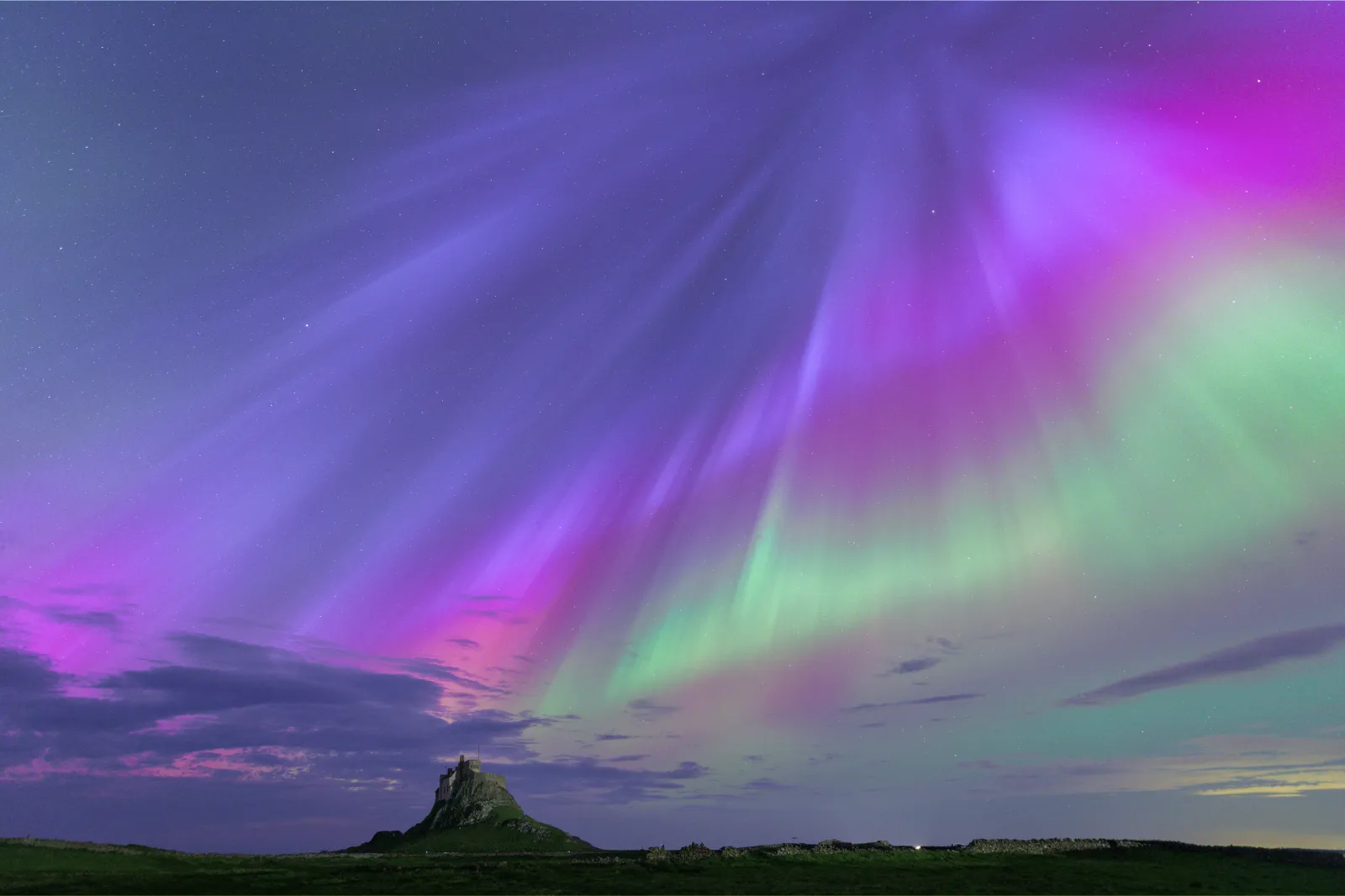
What Are the Northern Lights?
According to the Space Weather Prediction Center, the aurora borealis forms when charged particles from the sun collide with gases in the Earth’s upper atmosphere, releasing energy as light.
These particles travel on the solar wind and are guided toward the poles by Earth’s magnetic field. When activity increases—such as during solar flares or high-speed solar wind streams—the aurora becomes brighter and pushes further from the poles.
The colors—typically green, but sometimes pink, purple, or red—depend on which gases are involved and how high in the atmosphere the collisions occur.
Why This Weekend Is Special for the Northern Lights
Auroras are always occurring somewhere near the poles, but it is relatively rare for them to be visible across large portions of the U.S.
This weekend’s event is being driven by a high-speed stream of solar wind escaping from a coronal hole on the sun, creating geomagnetic storm conditions strong enough to expand the aurora’s reach.
Even a minor (G1) geomagnetic storm can push the lights into northern U.S. states, while stronger storms allow them to be seen much further south.
That makes this a standout opportunity—especially for those who don’t want to travel to Arctic regions—to witness one of nature’s most striking displays.
The Best Time to See the Aurora
Timing will be critical for anyone hoping to catch the lights. The best viewing window is typically:
- Late evening through early morning, especially between 10 p.m. and 2 a.m. local time
- Peak visibility often occurs around midnight, when geomagnetic activity aligns with the night side of the Earth
Observers are also advised to check for clear skies, as cloud cover can completely block the display.
How to View the Northern Lights
To maximize your chances:
- Get away from city lights—dark skies are essential.
- Look north toward the horizon.
- Allow your eyes time to adjust to the darkness.
- Use a smartphone camera—auroras can appear brighter in photos than to the naked eye.
Even with ideal conditions, auroras can be unpredictable, so patience is key.
What It Means for Viewers
For millions of Americans, Sunday night should offer a rare chance to see the lights without leaving the country—or even their home state.
While visibility is never guaranteed, the combination of active solar conditions and favorable timing means the skies could deliver a memorable show, with a chance for the display to stretch even further south if the storm strengthens.
Read the full article here


