



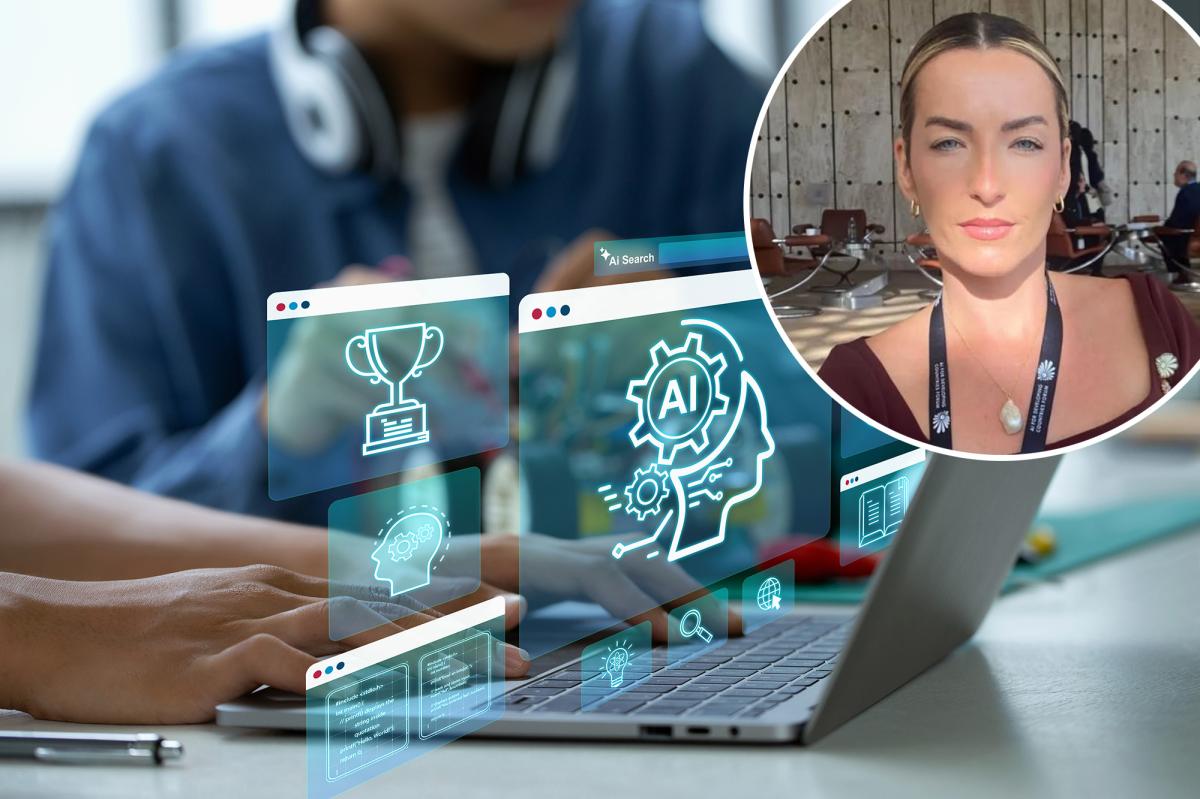
A mother has shared a new-age parenting technique that has worked wonders for both her and her children.
While many Australians use ChatGPT to predict the stock market or to diagnose a weird cough, Doctor Nici Sweaney has a whole other use for it.
“I actually have ChatGPT as my babysitter,” Sweaney told news.com.au
With four kids ranging between the ages of five and 12, the Sydney mother has a strong data science background and is now CEO of an AI consultancy business, AI Her Way.
With many balls to juggle, Sweaney has used her knowledge to transform from a time-poor mom to a mom who actually has time for herself.
“If you use it well, that frees up time and space and energy and more love,” she explained.
By offloading tasks, she’s “able to be more present”, and spend extra time with her family.
“I work less than 25 hours a week because of how much I use AI, which makes me a better parent,” she revealed.
From the pantry to homework at the kitchen table, the technology has helped ease the mental load of motherhood.
“We use it to plan all of our meals, and also write out all the recipes and our grocery list and make it stick to budget as well,” Sweaney said.
“We’ve been doing that for probably more than four months, and it’s within $5 of the budget every time we’ve been to the checkout”
She also uses the technology as a homework assistant for the kids.
Her second eldest child had been struggling with maths at school, so the mother used AI for the creation of a system that became incredibly effective.
“I got ChatGPT to be her daily tutor and give her questions that escalated in how hard they were based on how she answered,” Sweaney explains.
“She used to be at a ‘working towards’ level and now she’s at a consistent level across her mathematics within a year of doing that system.”
It’s also proven to be quite the confidant for moments that make being a pre-teen difficult.
Rather than forcing her daughter into a conversation about friend group drama, Sweaney sets up an AI chat to ask questions and help her daughter process her feelings.
“I find she tells the tool so much more than she’ll tell me,” she admits.
The mother looks back on the conversation afterwards, ensuring she is across the issues, while giving her daughter “that feeling of autonomy.”
In one instance, the transcript advised her daughter: “It’s not your responsibility to fix everybody else’s drama, and you’re allowed to disengage.”
The system has become so tuned into the family life that it can differentiate which of the four children are engaging and adjust to suit the needs to each child, particularly in live video mode.
“It knows each kid, and it knows how to talk to them, and it celebrates when they get things right. It can play different games with them. It listens to them talk to them and responds in real time,” Sweaney explained.
Sweaney has ensured there are what she refers to as “parenting behind-the-scenes” safeguards.
“Whenever I set it up to interact with my children, I give it explicit guidelines around the age and how to behave and what not to engage in,” she said.
She’s particularly cautious around sensitive topics such as body image, depression or anxiety, programming the AI with a strict rule – don’t engage. Instruct them to tell a parent.
While mom guilt is always looming, like it does for every mother, Sweaney refuses to feel a sliver of doubt over AI.
“I don’t think people should feel guilty. I think that’s an unfair feeling for seeking help,” she pointed out.
“How are we meant to do it all? We can’t.”
She does, however, caution parents looking to use AI in their own homes
“I’d say if you’re doing it with your children, especially if they’re kind of underage … it’s like kind of tapping a random person on the street to come and have a chat with your kids,” Sweaney warns.
“Put some effort into it before you hand it over to your children.”
She also says parents need to understand how to mitigate risk.
“Make sure that you understand that it can take on the persona of whatever brief you give it … always kind of intimately looking at what your children have been doing with it so you can kind of rectify anything that you detect is happening.”
Read the full article here


