







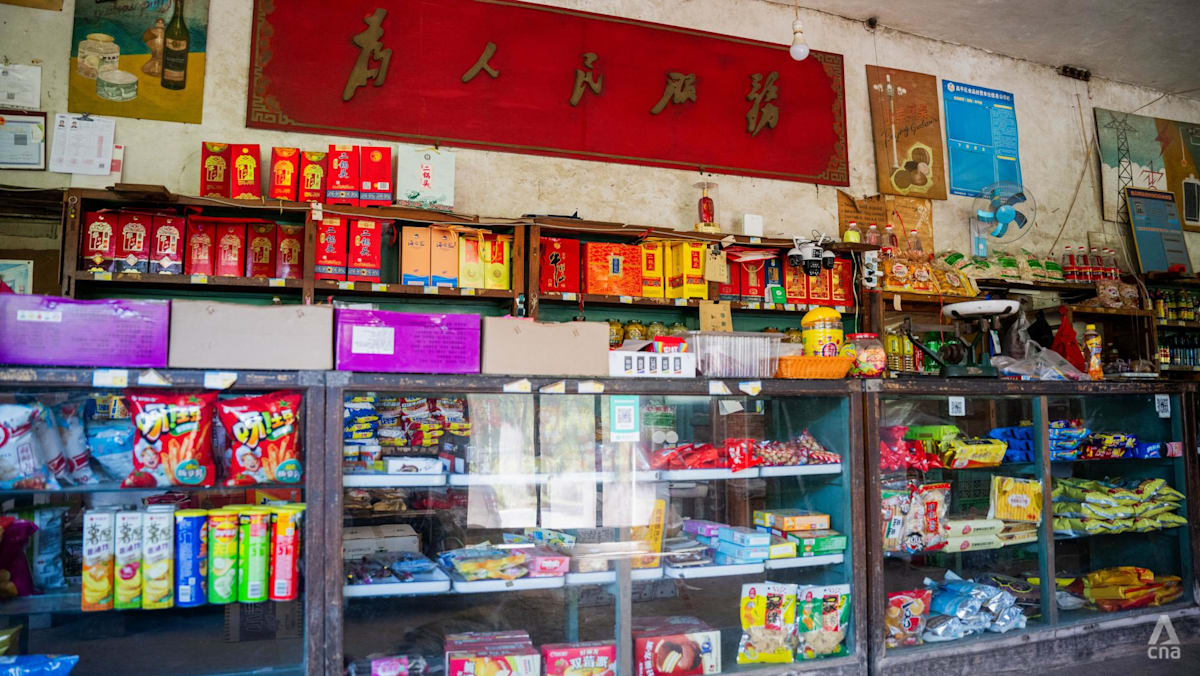
Supply and marketing cooperatives took shape in the early years of the People’s Republic of China, becoming a main channel through which the state supplied farmers with agricultural inputs and daily necessities, bought produce and moved goods between villages and cities.
By the early 1950s, tens of thousands of grassroots cooperatives were already operating across the country.
Their dominance faded after market reforms from the late 1970s, as private shops, wholesalers, supermarkets and later e-commerce transformed rural commerce. But the network itself has endured.
Today, the system has about 37,000 grassroots cooperatives and more than 856,000 operating and service outlets nationwide, according to the All-China Federation of Supply and Marketing Cooperatives, which heads the network.
While neighbourhood stores are their most visible face, operations extend far beyond retail – spanning agricultural services, produce distribution and logistics.
Under the latest five-year plan, China aims to build or upgrade around 100 national strategic agricultural-input reserve warehouses and about 1,000 county-level distribution centres by 2030, while expanding agricultural services, storage and emergency supply capabilities.
While the headline targets were already set under a separate programme, their inclusion in the blueprint reflects the importance Beijing continues to place on the cooperatives, analysts said.
Today, the bigger question is less whether the cooperatives are “coming back” than how they are trying to remain relevant in an economy where private supply and retail networks are already highly developed.
Among those making the trip to Laoyugou to visit was 53-year-old business owner Xing Sumei, who also runs a cooperative in another village in Shunyi, about a 40-minute drive away.
She told CNA she had come specifically to see how the older store was being run and whether there were ideas she could take back to improve her own operation, as Beijing puts fresh emphasis on developing the cooperative system.
Read the full article here


