



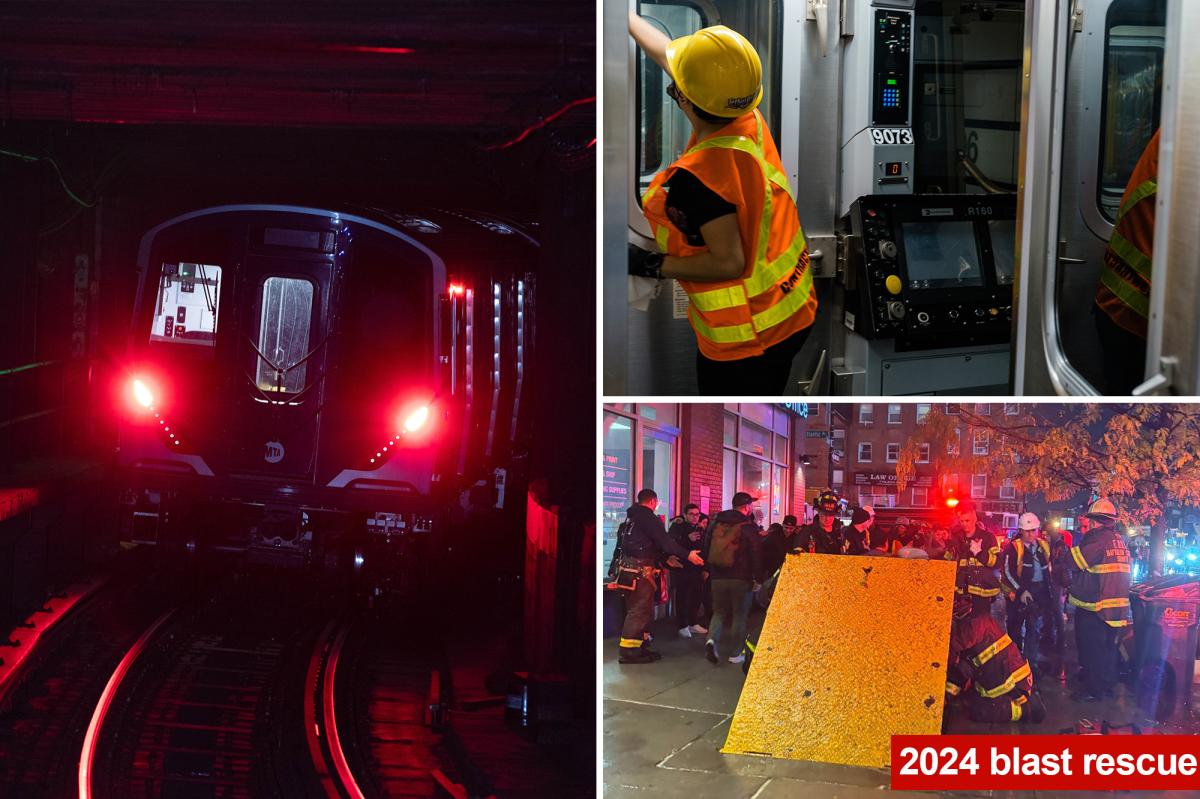
The transformer explosion that crippled Brooklyn subway service for thousands of passengers in 2024 came after workers failed to complete more than half of required safety checks at an electrical substation, according to the MTA inspector general.
The finding was part of a wider audit of New York City Transit’s substation maintenance program that found 19% of required maintenance assignments went unfinished systemwide in 2024, fire alarm “trouble” signals were routinely ignored, required safety protocols were not consistently followed and the agency didn’t have a centralized system for tracking equipment defects.
The December 11, 2024, explosion sent flames through a sidewalk grate and stranded more than 4,000 riders between the Jay Street-MetroTech and Hoyt-Schermerhorn stations for about two hours before first responders were able to evacuate passengers.
NYC Transit later determined that water had leaked through split copper tubing inside the transformer and mixed with synthetic oil, eventually triggering the explosion.
But the MTA never bothered to determine what caused the tubing to split — and sent a carpenter to inspect the faulty electrical equipment rather than an electrician, the report said.
“The post-incident assessment of the State Street substation was performed by NYC Transit personnel without electrical qualifications, not by a manufacturer or consultant with relevant expertise,” the inspector general wrote.
The carpenter said a specialist would be brought in to examine the transformer, but “no such expert assessment ever took place,” according to the report.
The equipment was disassembled during the carpenter’s assessment and later left outside in poor weather, destroying the possibility of determining why the copper tubing failed.
The shoddy attention to safety even in the aftermath of a major explosion followed a pattern of carelessness for the MTA.
The inspector general found that 52% of required maintenance assignments at the State Street facility in downtown Brooklyn had not been completed between April 2024 and the December blast.
The visits are to have workers inspect and maintain the sometimes decades-old equipment that sends electricity to the third rail.
The audit found other safety hazards across the rest of the system too.
At all six substations with fire alarm systems visited by investigators, fire alarm control panels displayed a “trouble” signal indicating the systems were not functioning properly — but MTA workers “took no notice,” the report said.
The inspector general also found that no MTA office or outside company was responsible for monitoring the panels’ trouble signals.
Smoke sensors were also not being maintained or tested, the report said.
Inspectors also found workers were not wearing the proper protective equipment for sudden electrical blasts, which can cause severe burns or be deadly.
The report noted NYC Transit improved its systemwide maintenance completion rate in 2025, with the share of uncompleted assignments falling to 10%.
But not at State Street where 14 of 35 scheduled assignments, or 40%, still went unfinished from April through November 2025.
NYC Transit President Demetrius Crichlow said the MTA has restructured its teams as a result of its embarrassing safety failures.
“Missed inspections of power substations are unacceptable and leadership of the Power Division has been restructured — splitting oversight of power and signals — to focus on improving maintenance practices and upgrading critical infrastructure,” Crichlow said.
Read the full article here


